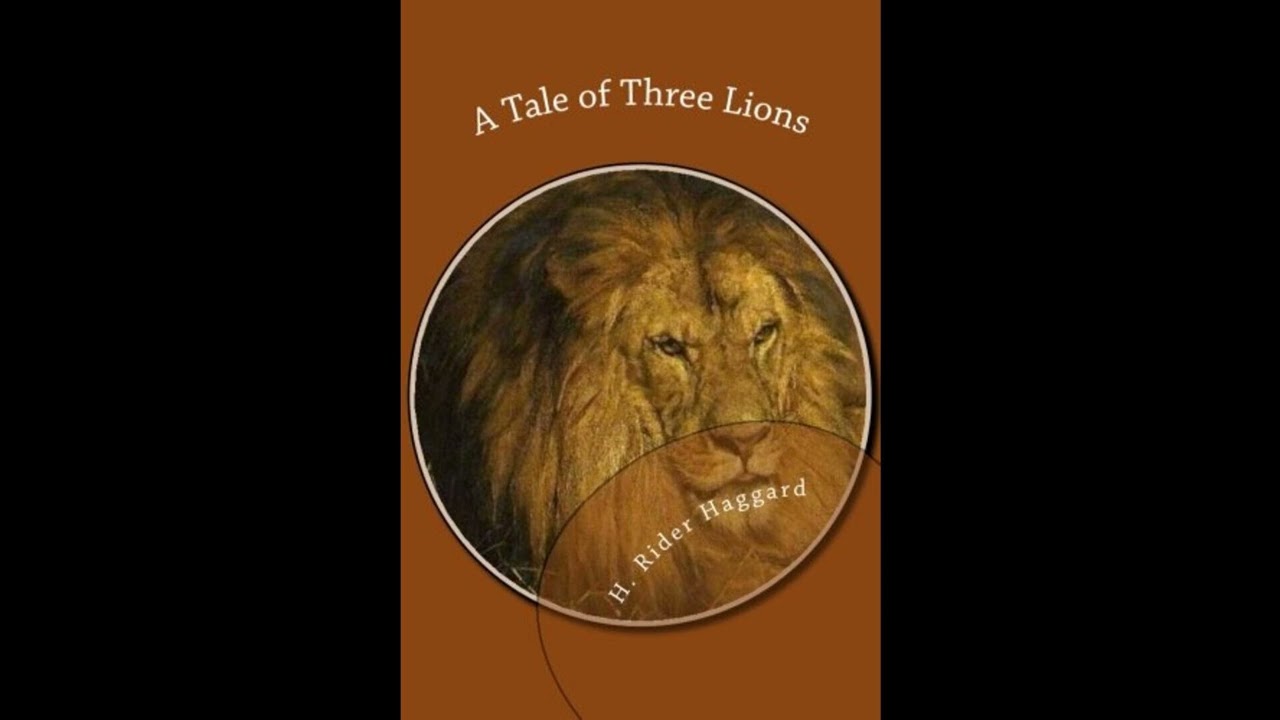
A Tale of Three Lions
Step into the sun-drenched, dust-swept veldt of colonial Africa with H. Rider Haggard's "A Tale of Three Lions," a classic adventure that continues to grip listeners with its stark portrayal of man versus nature. This is not merely a hunting story; it is a primal confrontation, a test of will and courage against the formidable power of the wild. Haggard, a master of the adventure narrative, transports us to a world where survival is a daily struggle, where the line between hunter and hunted blurs, and where the raw majesty of the African wilderness dictates the terms of existence. For anyone who appreciates stories of daring, cunning, and the enduring human spirit in the face of overwhelming odds, this vivid account offers a compelling escape and a keen insight into an era long past. The story drops us into the heart of an untamed land, where the protagonist, an experienced hunter much like Haggard's iconic Allan Quatermain, finds himself in pursuit of a particularly dangerous pride. The narrative unfolds against a backdrop of scorching sun, endless grasslands, and the oppressive silence of the bush, broken only by the calls of unseen creatures. Our hunter, accompanied by his loyal native trackers and porters, is not merely seeking trophies; he is responding to a threat posed by three magnificent, yet terrifying, lions who have become a menace to local communities and livestock. These are no ordinary beasts; they are described with an almost mythical grandeur, possessing an intelligence and ferocity that set them apart. The central conflict quickly establishes itself: it is a battle of wits and strength between the cunning predators and the resourceful hunter. As the pursuit intensifies, the story ratchets up the tension, transforming a simple hunt into a relentless, high-stakes game. The hunter and his companions track the lions across vast distances, encountering false leads, close calls, and the constant threat of ambush. Haggard excels at portraying the psychological strain of such an ordeal—the fatigue, the fear, and the unshakeable determination to see the task through. Each encounter with the elusive trio pushes the hunter's skills and resolve to their limits, forcing him to adapt and innovate in a landscape where a single mistake can spell disaster. The narrative carefully builds towards a climactic confrontation, hinting at the desperate measures required to face down such formidable opponents without revealing the ultimate resolution of this tense and dangerous odyssey. H. Rider Haggard, born in England in 1856, lived a life almost as adventurous as his fictional heroes. His experiences in South Africa profoundly shaped his writing, providing the authentic backdrop for many of his most celebrated tales. At the age of nineteen, he moved to Natal, South Africa, and later worked for the British administration in the Transvaal, even witnessing the annexation of the territory. This direct exposure to the African continent—its landscapes, cultures, and political realities—imbued his subsequent literary output with an unparalleled sense of realism and wonder. After returning to England, he initially pursued a career in law, but his true calling emerged with the publication of King Solomon's Mines in 1885, a novel that instantly established him as a major voice in adventure fiction. He quickly followed this success with other influential works like She (1887) and Allan Quatermain (1887), solidifying his reputation as a master storyteller. Haggard's novels, with their blend of exotic settings, thrilling action, and imaginative elements, were immensely popular and helped to define the "lost world" genre. He was a prolific writer, penning dozens of novels and short stories over his career, many of which continued to feature the intrepid Allan Quatermain. His literary legacy extends far beyond simple entertainment; he became a crucial figure in the development of popular adventure literature, influencing countless writers who came after him, from Edgar Rice Burroughs to J.R.R. Tolkien, demonstrating his enduring place in the canon of imaginative fiction until his death in 1925. "A Tale of Three Lions" powerfully enacts several enduring themes. Primarily, it stands as a testament to the primal conflict between humanity and the untamed wilderness. Haggard illustrates this through the meticulous descriptions of the hunter's tracking skills pitted against the lions' natural cunning, such as when the hunter must decipher subtle signs on the ground or interpret the wind's direction to anticipate his quarry's movements. This constant strategic dance underscores the profound respect, however grudging, that the hunter holds for his formidable prey. The story also powerfully expresses the theme of courage and resourcefulness in the face of extreme danger. For instance, moments where the hunter faces a sudden charge or must act instantaneously with limited resources highlight the sheer bravery and quick thinking demanded by such an environment, transforming each near-miss into a stark lesson in survival. Furthermore, the narrative subtly touches upon themes of colonial presence and the human desire to master nature. While primarily an adventure, the story is set within a historical context where European expansion into Africa was viewed through a particular lens, often portraying the land as something to be tamed or exploited. The hunter's perspective, though respectful of the animals, still frames the lions as an obstacle to be overcome, representing a broader attitude towards the continent itself. Ultimately, the book's lasting significance lies in its contributions to the adventure genre, showcasing how vivid descriptions, a relentless pace, and compelling characters could create truly immersive and thrilling narratives that captivated the popular imagination, even if some of its underlying assumptions about colonialism are now viewed with a critical eye. The late nineteenth century, when "A Tale of Three Lions" was published, was an era defined by the zenith of the British Empire and the intense period known as the "Scramble for Africa." European powers were rapidly colonizing the continent, driven by economic interests, geopolitical ambitions, and a thirst for adventure and discovery. This period fueled a widespread public fascination with the "Dark Continent," leading to a demand for stories set in exotic, uncharted territories. Big-game hunting was a popular pursuit among gentlemen of means, seen as a sport that tested courage and skill, and provided thrilling narratives for eager readers back home. Haggard's stories perfectly tapped into this cultural zeitgeist, offering thrilling escapism that resonated with prevailing attitudes towards exploration, empire, and the confrontation with the unknown, positioning his work squarely within the literary tradition of imperial adventure fiction. Listening to "A Tale of Three Lions" as an audiobook truly elevates the experience, allowing the raw immediacy of Haggard's prose to come alive. A skilled narrator breathes life into the sun-baked landscapes and the palpable tension of the hunt. The sustained run length of several hours provides an opportunity to become fully immersed, perhaps during a long drive or while engaged in quiet work, letting the sounds of the African bush and the hunter's determined voice fill your surroundings. Pay close attention to the pacing, which can dramatically build suspense during the tracking sequences and accelerate during moments of confrontation. The narrator's ability to convey the hunter's steely resolve, the native trackers' wisdom, and the implied growls and roars of the formidable lions will transport you directly into the heart of this classic adventure, making you feel every stalk and every heart-pounding encounter.
Enjoyed A Tale of Three Lions? A few ways to support us
Audible & Amazon links are affiliate; we may earn a small commission at no extra cost.
About this production
Human narration by a volunteer reader from LibriVox.org, the public-domain audiobook project. LibriVox volunteers record literary works whose copyright has expired in the United States, releasing the resulting recordings into the public domain.
A Tale of Three Lions by H. Rider Haggard. The underlying text is in the U.S. public domain. We do not republish any modern copyrighted edition, translation, or commentary.
The 4K cinematic visuals accompanying this audiobook are generated by an AI image model from prompts derived from the source text. No copyrighted photos, paintings, or stock footage are used. AI generation is disclosed on every video on our YouTube channel as required by YouTube's altered/synthetic content policy.
English subtitles are transcribed from the LibriVox recording with OpenAI Whisper. Translations into the 11 other supported languages are produced by Meta's NLLB-200 neural translation model. No human translator's copyrighted translation is used.
Questions about sourcing or rights? See our DMCA & Sourcing policy or contact us.
Enjoyed this audiobook?
If you'd like to own a copy of A Tale of Three Lions or hear a professionally produced edition, the links below help support free audiobook production at no extra cost to you.
As an Amazon Associate we earn from qualifying purchases. Audible / print links are affiliate.