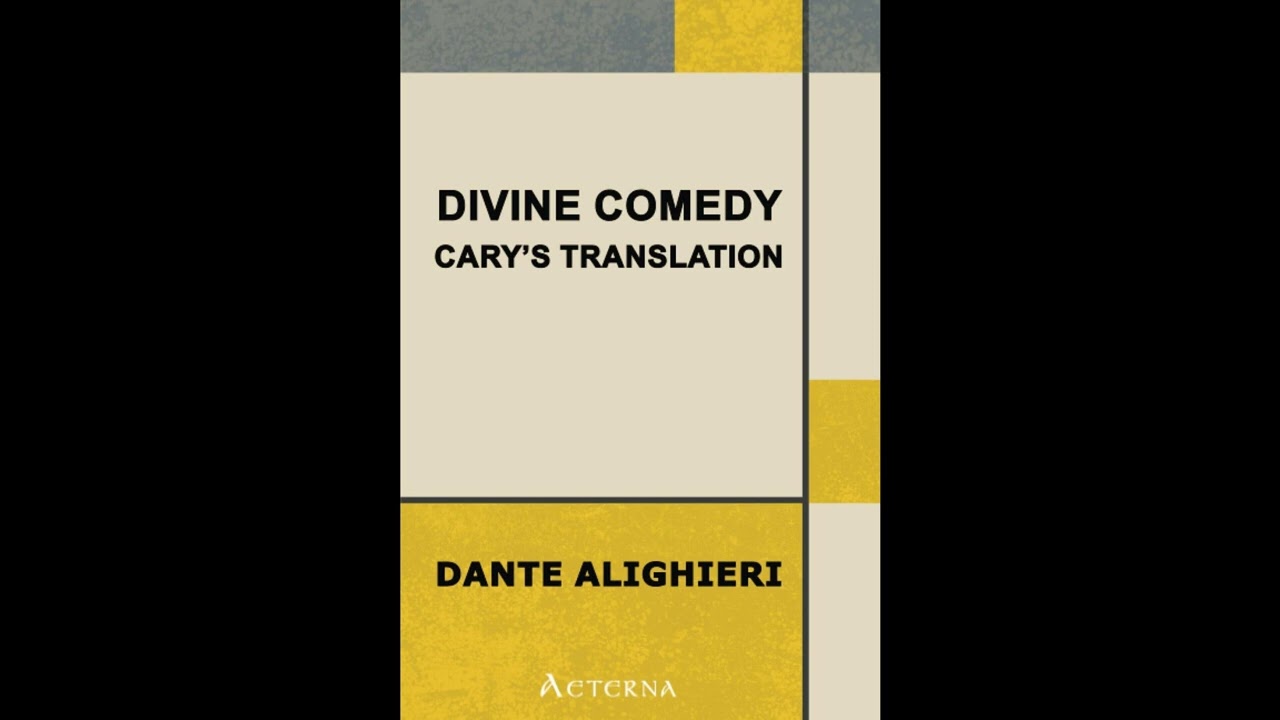
Divine Comedy, Cary's Translation, Complete
For centuries, Dante Alighieri’s Divine Comedy has stood as a monumental testament to the power of human imagination and spiritual introspection, offering a profoundly detailed vision of the Christian afterlife. Far more than a mere religious text, it is a searing political commentary, a philosophical treatise on sin and salvation, and a deeply personal account of one man's struggle for moral and intellectual illumination. To engage with the Comedy is to step into a world where poetry and theology intertwine, where the horrors of hell, the trials of purgatory, and the glories of paradise are rendered with astonishing vividness, confronting listeners even today with enduring questions about justice, redemption, and the ultimate nature of love. The narrative commences on the eve of Good Friday in the year 1300, with Dante, the pilgrim, finding himself lost and disoriented in a "dark wood," representing spiritual confusion and error. As he attempts to ascend a sun-drenched hill, three beasts—a leopard, a lion, and a she-wolf—block his path, symbolizing various sins. Just as despair threatens to consume him, the shade of the ancient Roman poet Virgil appears, sent by a heavenly messenger to guide Dante on a perilous path through the realms of the dead. Their initial destination is Hell, the Inferno, a vast, funnel-shaped abyss located beneath Jerusalem, structured into nine concentric circles, each punishing a specific category of sin with fitting, often grotesque, torment. Here, Dante witnesses the eternal suffering of souls, from the lustful swept by eternal winds, to the fraudulent enduring contorted forms, to the traitors frozen in ice, all while encountering historical and mythological figures who serve as stark examples of human depravity. Having traversed the terrifying depths of Hell, Dante and Virgil emerge on the far side of the Earth, at the base of Mount Purgatory, a symmetrical, seven-terraced mountain island in the Southern Hemisphere. This realm is where souls who died repentant, but not yet fully purified, undergo penitence to cleanse themselves of the seven deadly sins. Each terrace addresses one of these sins, from pride to lust, and the souls there endure tailored sufferings and spiritual exercises to purge their imperfections, climbing steadily towards the earthly paradise at the mountain's summit. This is a realm of hope and arduous effort, a stark contrast to the eternal despair of Hell. Upon reaching the summit, Virgil, as a pagan, cannot proceed further into Paradise, and Dante is met by Beatrice, his beloved from earthly life, who now serves as his guide through the celestial spheres. Dante Alighieri, born in Florence in 1265, was a towering figure of the late Middle Ages whose life was inextricably linked with the tumultuous politics of his time. His youth was marked by civic engagement and a profound love for a woman named Beatrice Portinari, whose early death profoundly impacted his literary output, inspiring his first major work, La Vita Nuova (The New Life), a collection of poems and prose recounting his spiritual love for her. Dante's active political involvement in Florence as a White Guelph led to his exile in 1302 after the Black Guelphs, supported by Pope Boniface VIII, gained power. This expulsion from his beloved city became a pivotal moment, shaping the bitterness, longing, and prophetic zeal that permeate the Divine Comedy, much of which was composed during his years of wandering. Though he never returned to Florence, Dante continued to write prolifically, producing not only his epic poem but also works like Convivio (The Banquet), a philosophical treatise, and De Vulgari Eloquentia (On Eloquence in the Vernacular), a defense of writing in the Italian vernacular. His decision to compose the Comedy in Tuscan rather than Latin was revolutionary, elevating the spoken language to a literary art form and thereby laying the foundation for modern Italian literature. He died in Ravenna in 1321, leaving behind a legacy that would profoundly influence the Renaissance and Western thought for centuries, establishing him as one of the literary giants of all time, whose work stands alongside Homer and Shakespeare in its scope and influence. The Divine Comedy masterfully addresses several profound themes, most notably that of sin and divine justice. Throughout the Inferno, Dante meticulously details the doctrine of contrapasso, where the punishment meted out to a soul directly corresponds to the sin committed in life. For instance, the wrathful and sullen are submerged in the muddy Styx, eternally fighting or gurgling beneath the surface, mirroring their earthly rage and suppressed anger. This intricate system of retribution serves not merely as a spectacle of suffering but as a stark theological argument for a divinely ordered universe where moral choices bear eternal consequences, demonstrating justice as an immutable aspect of God’s love. Conversely, the theme of redemption and spiritual growth finds its fullest expression in Purgatory. Here, souls willingly endure suffering to purge their attachments to sin. On the terrace of the envious, for example, their eyelids are sewn shut with iron wire, much like falcons, because their earthly vision was obscured by bitterness at the good fortune of others. Yet, alongside this penance, they hear voices reciting examples of generosity, gradually reorienting their desires towards love and community. This arduous, yet hopeful, ascent illustrates a profound belief in humanity's capacity for repentance and purification, transforming the human spirit from its fallen state towards a state of grace and readiness for Heaven. The poem also functions as a powerful political and moral critique, with Dante frequently using his encounters with historical figures to condemn the corruption of the Church and the internecine conflicts of Italian city-states, demonstrating how personal sin could lead to societal decay. The emergence of the Divine Comedy in the early 14th century was deeply rooted in the complex historical and intellectual climate of medieval Italy. This period was characterized by intense political fragmentation, with powerful city-states like Florence, Venice, and Milan constantly vying for dominance. The papacy itself was a formidable political player, and its temporal ambitions often clashed with its spiritual mandate, leading to widespread corruption and cynicism, which Dante fiercely criticizes. Intellectually, the work synthesized elements of classical philosophy, particularly the works of Aristotle filtered through scholastic thinkers like Thomas Aquinas, with a profound Christian worldview. It also marked a crucial transition from a purely Latin-dominated literary culture to one that embraced the burgeoning vernacular languages, making sophisticated thought accessible to a wider audience and fundamentally shaping the development of the Italian language itself. Dante, a product of his time, yet a visionary ahead of it, crafted his epic as a moral compass for a world he perceived as having lost its way. Listening to Cary’s complete translation of The Divine Comedy as an audiobook offers a uniquely immersive and profound experience, bringing the poem closer to its medieval oral traditions. The translator, Henry Francis Cary, captured the grandeur and solemnity of Dante’s verse in English, providing a version that has been cherished for its poetic sensibility and faithful rendering of the original's spirit. Over its several hours, listeners can truly sink into the vast scope of Dante’s vision, allowing the narrative’s distinct atmospheres—from the visceral terror of the Inferno, to the solemn hope of Purgatorio, to the ethereal wonder of Paradiso—to unfold gradually. A skilled narrator can expertly convey the varied voices and emotional states of Dante, Virgil, Beatrice, and the myriad souls encountered, using pacing and inflection to highlight the poem’s dramatic encounters, its philosophical discussions, and its moments of sublime beauty. To hear the Comedy read aloud is to be guided, as Dante was, through an unforgettable landscape of human sin and divine grace, delivered with the power and clarity only the spoken word can command.
Enjoyed Divine Comedy, Cary's Translation, Complete? A few ways to support us
Audible & Amazon links are affiliate; we may earn a small commission at no extra cost.
About this production
Human narration by a volunteer reader from LibriVox.org, the public-domain audiobook project. LibriVox volunteers record literary works whose copyright has expired in the United States, releasing the resulting recordings into the public domain.
Divine Comedy, Cary's Translation, Complete by Alighieri Dante. The underlying text is in the U.S. public domain. We do not republish any modern copyrighted edition, translation, or commentary.
The 4K cinematic visuals accompanying this audiobook are generated by an AI image model from prompts derived from the source text. No copyrighted photos, paintings, or stock footage are used. AI generation is disclosed on every video on our YouTube channel as required by YouTube's altered/synthetic content policy.
English subtitles are transcribed from the LibriVox recording with OpenAI Whisper. Translations into the 11 other supported languages are produced by Meta's NLLB-200 neural translation model. No human translator's copyrighted translation is used.
Questions about sourcing or rights? See our DMCA & Sourcing policy or contact us.
Enjoyed this audiobook?
If you'd like to own a copy of Divine Comedy, Cary's Translation, Complete or hear a professionally produced edition, the links below help support free audiobook production at no extra cost to you.
As an Amazon Associate we earn from qualifying purchases. Audible / print links are affiliate.