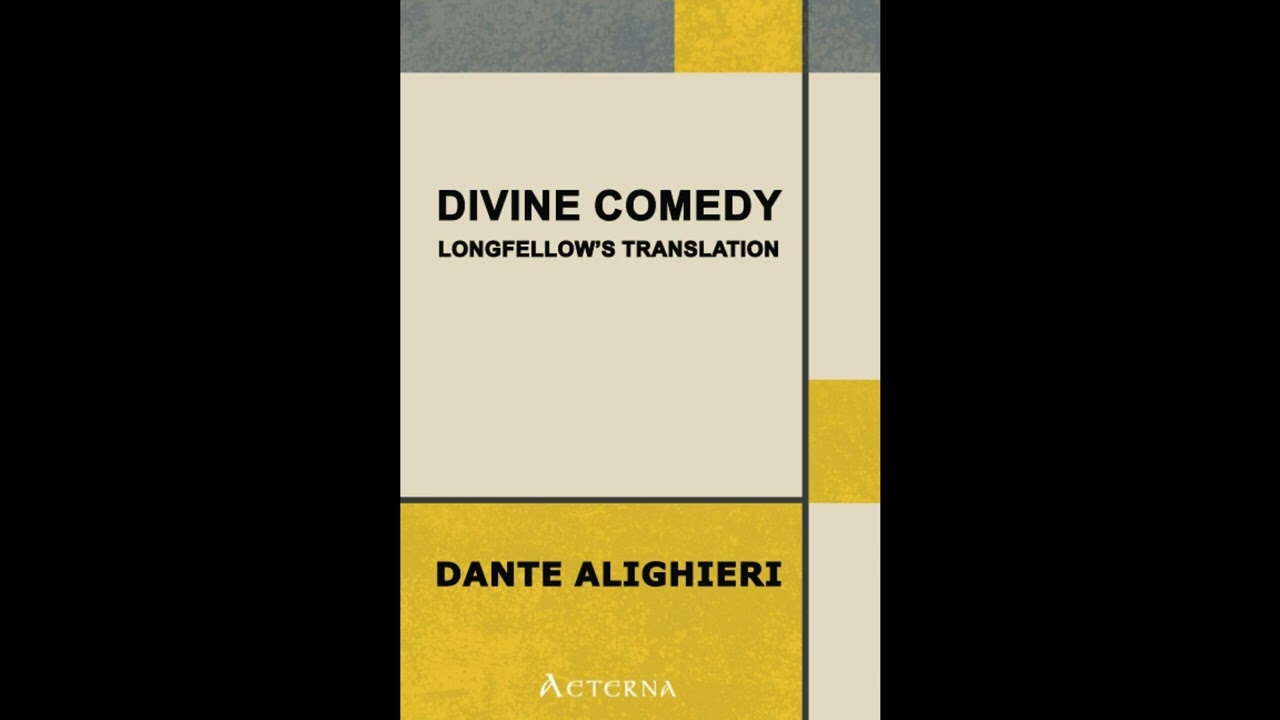
Divine Comedy, Longfellow's Translation
Few literary creations have imprinted themselves upon the collective imagination quite like Dante Alighieri’s The Divine Comedy. More than a simple story, it is a grand, sweeping vision of the afterlife, a comprehensive theological and philosophical landscape that reshaped how Western civilization conceived of Heaven, Purgatory, and Hell. This isn't merely a historical document; it's a profound examination of sin, repentance, justice, and the soul’s desperate, unending quest for meaning and divine love. Even today, centuries after its conception, its power resonates, compelling us to confront our own moral compass, our understanding of consequence, and the enduring human struggle for redemption. It stands as a testament to both individual suffering and universal hope, a spiritual odyssey that continues to challenge and inspire. The poem commences on the night before Good Friday in the year 1300, when Dante, the pilgrim, finds himself hopelessly lost in a dark wood, overwhelmed by spiritual despair and moral error. He is beset by three beasts—a leopard, a lion, and a she-wolf—representing lust, pride, and avarice, which block his ascent towards a sun-dappled hill. Just as all hope seems lost, the shade of the ancient Roman poet Virgil appears, sent by Beatrice, Dante's idealized love, to guide him. Virgil explains that the only path to salvation is to descend through the realms of the damned. Thus begins their descent into the Inferno, a meticulously structured Hell consisting of nine concentric circles, each punishing specific sins with a gruesome, often ironic, contrapasso—a fitting retribution that mirrors the sin itself. Here, Dante witnesses the suffering of the unbaptized, the lustful, the gluttonous, the wrathful, the treacherous, and many more, encountering historical figures, mythological creatures, and even contemporary Florentines, all bound by their earthly transgressions. After surviving the horrors of Hell, Dante and Virgil emerge on the shores of Mount Purgatory, a towering mountain on the antipodes of Jerusalem. This is the realm where souls repent and purify themselves of the seven deadly sins before ascending to Heaven. Each terrace of Purgatory corresponds to one of these sins—Pride, Envy, Wrath, Sloth, Avarice, Gluttony, and Lust—and souls endure specific penances designed to purge their failings. The atmosphere here contrasts sharply with Hell; while still arduous, it is suffused with hope and community, as the souls know their suffering is temporary and leads towards ultimate bliss. Virgil, representing human reason, can guide Dante only so far. At the summit, in the Earthly Paradise, he must bid farewell to Dante, for human reason alone cannot comprehend the divine mysteries. Beatrice, symbolizing divine revelation and grace, then takes over as Dante’s guide, leading him through the celestial spheres of Paradise, towards the ultimate vision of God. The story concludes not with an ending, but with a profound, personal transformation, as the pilgrim draws ever closer to the source of all light and love, finding ultimate peace in the divine. Dante Alighieri, born in Florence in 1265, lived a life deeply entwined with the tumultuous politics of his time. His formative years in the thriving, yet politically fractious, Tuscan city saw him receive a comprehensive education, steeped in classical literature, philosophy, and theology. His personal life was profoundly shaped by his unrequited love for Beatrice Portinari, whose early death spurred him to poetic expression, notably in La Vita Nuova (The New Life), an intensely personal collection of poems and prose. Dante's intellectual pursuits soon broadened into public service, and he rose to prominence in Florentine politics as a White Guelph, a faction opposed to papal temporal power. His political career, however, proved to be his undoing. In 1302, while Dante was away on a diplomatic mission to Rome, the Black Guelphs seized power in Florence with the backing of Pope Boniface VIII. Dante was summarily convicted of corruption, fined, and sentenced to perpetual exile from his beloved city. This forced displacement, which lasted until his death in Ravenna in 1321, became a crucible for his greatest literary output. It was during this period that he composed The Divine Comedy, alongside other significant works such as Convivio (The Banquet), a philosophical treatise, and De Monarchia (On Monarchy), a Latin work advocating for a unified secular empire. Dante's forced separation from Florence imbued his poem with a biting social commentary and an intense longing for justice, cementing his reputation as a formidable intellectual figure and the "Father of the Italian Language" for his revolutionary choice to write such a serious work in vernacular Tuscan. At its core, The Divine Comedy is an extended meditation on divine justice and retribution, visibly enacted through the contrapasso punishments of the Inferno. We witness the avaricious and the prodigal endlessly pushing great weights against each other, forever locked in futile opposition, mirroring their earthly obsession with material gain. Likewise, the flatterers are immersed in human excrement, reflecting the foulness of their deceptive words. This precise, almost poetic, balancing of sin and punishment is a central organizing principle, demonstrating a universal moral order. Beyond justice, the poem extensively considers the nature of love, both human and divine. The tragic tale of Paolo and Francesca in the second circle of Hell illustrates the destructive power of illicit earthly passion, forever entwined in a whirlwind. In stark contrast, Beatrice's serene, selfless love guides Dante through the celestial spheres, representing the purifying, redemptive power of divine love that ultimately brings the pilgrim into the light of God. The poem also grapples with the concept of redemption and spiritual growth, illustrating the profound transformation of the human soul. Dante's own character arc serves as the primary example, moving from a state of spiritual confusion and sin to one of enlightened understanding and grace. His arduous climb up Mount Purgatory, enduring the various penances alongside the other repentant souls, is a literal and symbolic ascent towards purification. Each step upwards signifies a shedding of sin and a spiritual refinement. Finally, the work champions the interplay between reason and faith. Virgil, as the embodiment of classical reason and wisdom, can competently lead Dante through the moral wilderness of Hell and the preparatory trials of Purgatory. However, it is Beatrice, representing theological wisdom and divine revelation, who must usher him into the mysteries of Paradise, demonstrating that human intellect, while essential, has its limits when confronting the divine. When Dante began composing The Divine Comedy in the early 14th century, Europe was still in the High Middle Ages, a period marked by profound religious fervor, scholastic philosophy, and the ongoing struggle between secular and ecclesiastical powers. Italy, in particular, was a patchwork of warring city-states and powerful families, constantly vying for control. Dante’s own Florence was a hotbed of political factionalism, culminating in his exile—a personal catastrophe that infused the poem with a searing critique of corruption and a yearning for a just social and moral order. This was also an era when Latin reigned supreme as the language of serious literature, philosophy, and theology. Dante's audacious decision to write his monumental work in the Tuscan vernacular was a pivotal moment, elevating Italian from a regional dialect to a literary language capable of expressing the most complex ideas, profoundly influencing Petrarch, Boccaccio, and generations of writers to follow. Listening to Longfellow's translation of The Divine Comedy as an audiobook offers a singular opportunity to connect with this epic poem. The spoken word breathes life into Dante's vivid imagery and intricate narratives, allowing the listener to truly experience the dramatic descent into Hell's abyss and the serene ascent into Paradise. A skilled narrator can artfully differentiate the myriad voices Dante encounters—from the guttural cries of the damned to the whisperings of the repentant, and the beatific pronouncements of the blessed. The sheer length of the work, often experienced over many hours, becomes an immersive experience, perfect for sustained listening, where the rhythm of the verse and the emotional weight of each canto can sink in deeply. Listen for the distinct shifts in atmosphere, the pacing that mirrors Dante's spiritual progress, and the nuances of each character's voice, which together paint an unforgettable sonic landscape.
Enjoyed Divine Comedy, Longfellow's Translation? A few ways to support us
Audible & Amazon links are affiliate; we may earn a small commission at no extra cost.
About this production
Human narration by a volunteer reader from LibriVox.org, the public-domain audiobook project. LibriVox volunteers record literary works whose copyright has expired in the United States, releasing the resulting recordings into the public domain.
Divine Comedy, Longfellow's Translation by Alighieri Dante. The underlying text is in the U.S. public domain. We do not republish any modern copyrighted edition, translation, or commentary.
The 4K cinematic visuals accompanying this audiobook are generated by an AI image model from prompts derived from the source text. No copyrighted photos, paintings, or stock footage are used. AI generation is disclosed on every video on our YouTube channel as required by YouTube's altered/synthetic content policy.
English subtitles are transcribed from the LibriVox recording with OpenAI Whisper. Translations into the 11 other supported languages are produced by Meta's NLLB-200 neural translation model. No human translator's copyrighted translation is used.
Questions about sourcing or rights? See our DMCA & Sourcing policy or contact us.
Enjoyed this audiobook?
If you'd like to own a copy of Divine Comedy, Longfellow's Translation or hear a professionally produced edition, the links below help support free audiobook production at no extra cost to you.
As an Amazon Associate we earn from qualifying purchases. Audible / print links are affiliate.