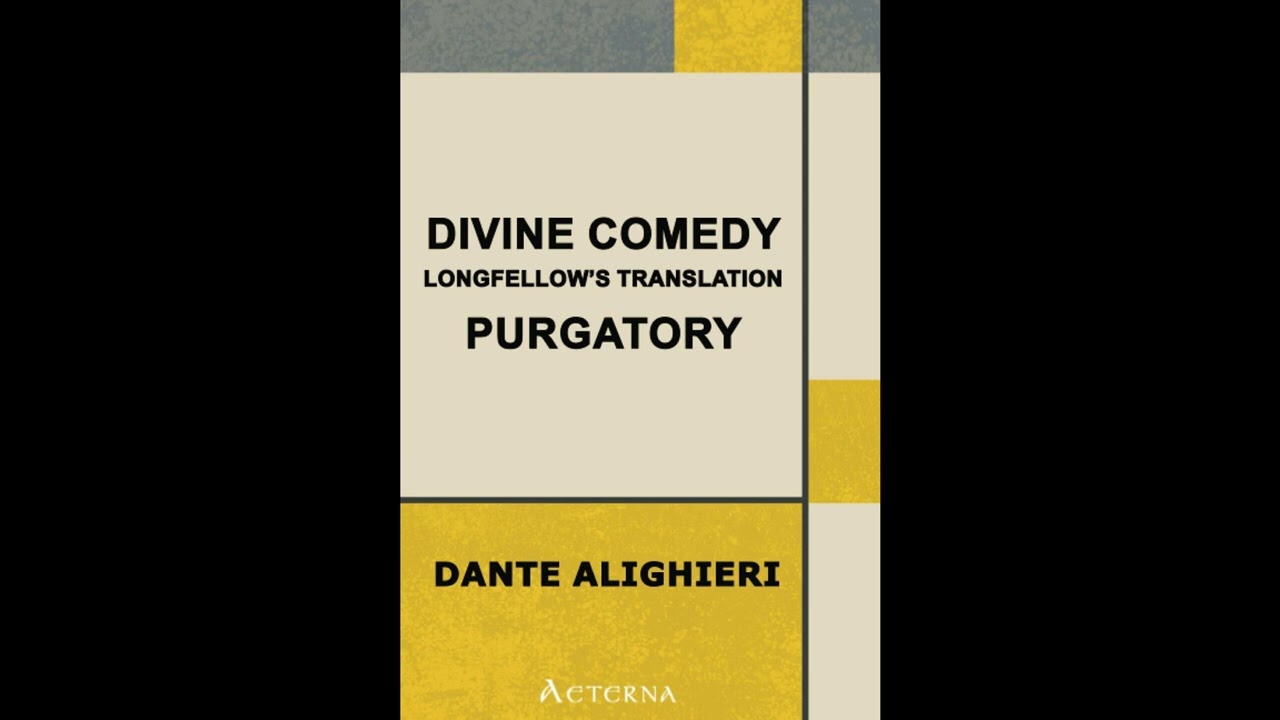
Divine Comedy, Longfellow's Translation, Purgatory
Imagine a world where suffering is not an end but a crucible, where every ache and strain refines the soul, drawing it closer to a luminous perfection. This is the heart of Dante Alighieri’s Purgatory, the second canticle of his colossal Divine Comedy. Far from the infernal torments of hell, this section presents a realm of hope and arduous upward striving, a place where penitent souls willingly undergo purgation to shed the weight of earthly sin. It offers a profound meditation on human potential for change, the necessity of acknowledging one’s faults, and the ultimate promise of grace—concepts that resonate powerfully even in our own complex modern lives, reminding us that transformation is always possible, and that true healing often begins with confronting what hinders us. The narrative picks up as Dante, guided by the Roman poet Virgil, emerges from the depths of Hell just before dawn on Easter Sunday. They find themselves on the shores of an island mountain, the singular landmass in the Southern Hemisphere, rising from the ocean. This mountain is Purgatory itself, an ordered structure where souls cleanse themselves of the seven deadly sins. The early stages, known as Ante-Purgatory, house those who delayed their repentance—the excommunicated, the indolent, those who repented at the last minute, and the negligent princes. Here, they must wait, sometimes for centuries, before beginning the true ascent. Their longing for purification, however, is palpable, setting a tone of hopeful anticipation distinct from the despair of the Inferno. As Dante and Virgil climb, they pass through seven terraces, each corresponding to one of the seven capital vices: Pride, Envy, Wrath, Sloth, Avarice and Prodigality, Gluttony, and Lust. On each terrace, the souls endure a specific form of penance designed to counteract their former sin, often mirroring the sin in a contrapuntal way. The proud, for instance, are bent double under immense weights, forced to contemplate humility. The envious have their eyes sewn shut with iron wire, deprived of the sight of others’ good fortune. Along the way, the poets encounter numerous historical and mythological figures, as well as real-life contemporaries of Dante, who share their stories and offer insights into the nature of sin and redemption. Each terrace presents examples of the corresponding virtue and vice, carved into the mountain or voiced by spirits, providing a constant lesson in moral rectitude. The journey is an extended spiritual education for Dante the pilgrim, preparing him for the ultimate spiritual revelation. Dante Alighieri, born in Florence in 1265, was a poet and political thinker whose life was dramatically shaped by the tumultuous politics of late medieval Italy. His family, though not aristocratic, held some prominence, and Dante himself became involved in Florentine public life. He served on various city councils and as one of the six Priors of Florence, holding the highest executive office. However, his political affiliation with the White Guelphs, a faction that opposed papal influence in Florentine affairs, led to his permanent exile from the city in 1302. This banishment, which he never saw lifted, profoundly impacted his literary output and provided much of the bitter context and personal reflection found throughout the Divine Comedy. He died in Ravenna in 1321, far from his beloved Florence. Dante’s other significant works include La Vita Nuova, a collection of poems and prose reflecting on his love for Beatrice Portinari, and De Monarchia, a treatise advocating for a universal monarchy independent of papal authority. He wrote the Divine Comedy in the Tuscan vernacular, a revolutionary choice at a time when most serious literature was written in Latin. This decision played a crucial role in establishing Italian as a literary language, earning him the title "Father of the Italian Language." He stands at a pivotal point in literary history, bridging the medieval scholastic tradition with the nascent humanism of the Renaissance, weaving classical philosophy, Christian theology, and personal experience into a monumental Christian allegory. Henry Wadsworth Longfellow, the celebrated American poet of the nineteenth century, undertook the monumental task of translating the Divine Comedy into English, bringing Dante's vision to a wider Anglophone audience with scholarly devotion and poetic grace. One of the central themes woven into the fabric of Purgatory is the concept of redemption through purification. Unlike the eternal damnation of Hell, every soul on this mountain has the potential for ultimate salvation, provided they undergo a penitential process. For example, on the terrace of Sloth, souls are compelled to run tirelessly, mirroring their past inaction with frantic effort, demonstrating that overcoming spiritual lethargy requires active, sustained exertion. This physical and spiritual work is not imposed punishment but a willed act of cleansing, driven by a profound longing for God. Another significant theme is the dynamic interplay between human will and divine grace. While the souls freely choose to suffer and climb, it is divine love that establishes the order of Purgatory and provides the ultimate goal. The process underscores the idea that humanity possesses free will to choose between good and evil, but true spiritual progress often requires divine assistance and a divinely ordained path to navigate. The text also enacts the theme of divine justice balanced with mercy, demonstrating how God's order is both rigorous and compassionate. Each penance perfectly counteracts the specific sin, yet the underlying tone is one of hope, not despair. The sufferers know their pains are temporary and serve a higher purpose. A third theme is the crucial role of memory and reflection in repentance. The souls are constantly reminded of both their former sins and examples of virtue, often through vivid celestial visions or earthly carvings. The gluttonous, for instance, pass by trees laden with tempting fruit and water, yet are starved, forcing them to recall their past excesses and the virtues of temperance. This constant engagement with memory aids their spiritual reorientation, transforming past errors into lessons for growth. Dante composed the Divine Comedy during a period of profound political and social upheaval in Italy, roughly from 1308 to his death in 1321, though he likely began work earlier. The late thirteenth and early fourteenth centuries saw intense rivalries between city-states like Florence, Siena, and Venice, and a constant struggle for power between the Papacy and the Holy Roman Empire. Dante's Florence, a wealthy commercial hub, was itself torn by factionalism, notably between the Guelphs (who supported the Pope) and the Ghibellines (who supported the Emperor). Dante's own exile was a direct result of these internecine conflicts, and his longing for a unified, just society under both spiritual and temporal authority permeates his work. The intellectual climate of the era was dominated by Scholasticism, a philosophical system that sought to reconcile classical philosophy, particularly Aristotle, with Christian theology. Dante was deeply influenced by this tradition, and Purgatory itself reflects a meticulously ordered cosmos, where every aspect of the climb is imbued with theological significance, representing a comprehensive medieval worldview applied to the spiritual quest. Listening to Purgatory as an audiobook offers a singular opportunity to engage with Dante’s verse in its most immediate form, even through translation. Longfellow's rendition, known for its faithful adherence to Dante’s terza rima scheme and its deliberate, elevated language, benefits immensely from skilled narration. A good reading can highlight the inherent rhythm of the poetry, the solemnity of the penitential process, and the quiet joy of discovery as Dante ascends the mountain. The length of several hours allows for a sustained immersion in this complex spiritual landscape, providing ample space to absorb the myriad stories of the souls encountered, the profound theological discussions, and the rich sensory details of each terrace—from the biting winds to the sweet scent of prayer. The careful pacing of a narrator can help listeners track the pilgrim’s slow but steady progress, emphasizing the weight of the burdens carried by the penitent and the eventual lightness that comes with release, making the listener a fellow traveler on this extraordinary ascent towards grace.
Enjoyed Divine Comedy, Longfellow's Translation, Purgatory? A few ways to support us
Audible & Amazon links are affiliate; we may earn a small commission at no extra cost.
About this production
Human narration by a volunteer reader from LibriVox.org, the public-domain audiobook project. LibriVox volunteers record literary works whose copyright has expired in the United States, releasing the resulting recordings into the public domain.
Divine Comedy, Longfellow's Translation, Purgatory by Alighieri Dante. The underlying text is in the U.S. public domain. We do not republish any modern copyrighted edition, translation, or commentary.
The 4K cinematic visuals accompanying this audiobook are generated by an AI image model from prompts derived from the source text. No copyrighted photos, paintings, or stock footage are used. AI generation is disclosed on every video on our YouTube channel as required by YouTube's altered/synthetic content policy.
English subtitles are transcribed from the LibriVox recording with OpenAI Whisper. Translations into the 11 other supported languages are produced by Meta's NLLB-200 neural translation model. No human translator's copyrighted translation is used.
Questions about sourcing or rights? See our DMCA & Sourcing policy or contact us.
Enjoyed this audiobook?
If you'd like to own a copy of Divine Comedy, Longfellow's Translation, Purgatory or hear a professionally produced edition, the links below help support free audiobook production at no extra cost to you.
As an Amazon Associate we earn from qualifying purchases. Audible / print links are affiliate.