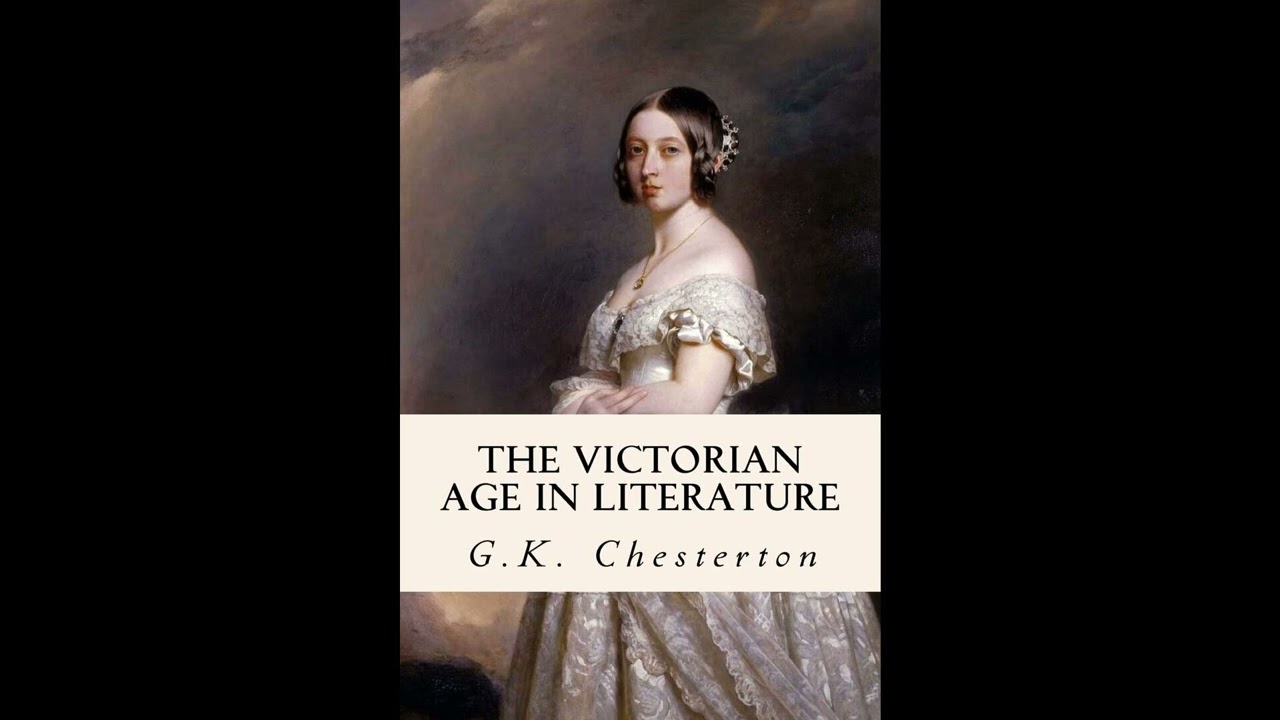
The Victorian Age in Literature
Stepping back into the Victorian era often feels like entering a grand, cluttered, and profoundly earnest drawing-room, full of strong opinions and moral pronouncements. Yet, to truly understand the period, we need more than just a historical survey; we need a guide with an incisive mind and a playful wit to cut through the fog of hindsight and convention. G.K. Chesterton's The Victorian Age in Literature offers precisely this—a brilliant, opinionated, and often uproarious dissection of the very foundations of modern English thought and art. This is not a dry academic tome, but a conversation with a literary giant about other giants, a spirited defense and critique that asks us to reconsider everything we thought we knew about an age that, for better or worse, shaped our own. Listening to Chesterton is to engage with a truly original perspective, one that refuses to be bored or boring, and whose insights, even a century after their first articulation, continue to spark fresh debate about literature, society, and the enduring human spirit. Chesterton's unique "plot," if one can call it that in a work of literary criticism, unfolds as an intellectual expedition through the minds and texts of the nineteenth century's most influential English writers. The "setting" is not a physical place but the vast, complex mental landscape of Victorian Britain, a time of immense social change, scientific upheaval, and fervent philosophical debate. Chesterton introduces us to the literary giants of this epoch, treating them less as static historical figures and more as dynamic "characters" in his overarching argument. We encounter the foundational voices: the moralizing power of Thomas Carlyle and John Ruskin, the lyrical beauty and doubt of Alfred, Lord Tennyson, the psychological dramas of Robert Browning, and the towering social realism and imaginative genius of Charles Dickens and William Makepeace Thackeray. The central conflict animating Chesterton's narrative is his spirited challenge to the common, often oversimplified, perceptions of the Victorian age. He wrestles with the era's perceived contradictions—its public piety versus private hypocrisy, its scientific rationalism alongside lingering romanticism, its industrial progress against social squalor. Chesterton positions himself as an intellectual combatant, eager to correct facile dismissals and to celebrate overlooked virtues. His narrative arc sweeps from the early, more confident voices of the Victorian dawn, through the mid-century's complex self-awareness, and into the era's twilight, characterized by figures like Robert Louis Stevenson and Oscar Wilde, who foreshadowed the coming twentieth century. He shows how each writer, in their unique way, contributed to the colossal, often paradoxical, edifice that was Victorian literature, all the while filtered through Chesterton's distinctive brand of Christian paradox and common-sense philosophy. G.K. Chesterton, born in London in 1874, was an intellectual phenomenon whose influence spanned literature, journalism, philosophy, and theology until his death in 1936. A prolific writer known for his imposing physical presence and even more imposing intellect, Chesterton championed "common sense" and a deeply held Christian worldview, often expressed through dazzling paradoxes and good-natured humor. His early life saw him immersed in art school before he turned to writing, quickly establishing himself as a formidable essayist and critic. He was a central figure in the Edwardian literary scene, famously engaging in friendly but fierce debates with contemporaries like George Bernard Shaw and H.G. Wells, intellectual sparring partners who sharpened his own formidable rhetorical skills. Chesterton's conversion to Catholicism in 1922 marked a significant pivot in his public life, though his Christian sympathies were apparent much earlier. Beyond his literary criticism, he produced an astonishing array of works: the enduring Father Brown detective stories, which subtly explore moral and theological mysteries; the philosophical defenses of Christianity like Orthodoxy and The Everlasting Man; and the whimsical, yet profound, novel The Man Who Was Thursday. He was a key proponent of Distributism, an economic theory advocating for widespread ownership of productive property. Chesterton occupies a unique and significant place in the English literary canon—a defender of tradition and dogma, yet an innovator in prose and thought, whose voice remains distinct and compelling. One of the foremost themes woven through Chesterton's critique is the power of paradox and contradiction. He sees the Victorian age not as a monolithic entity but as a complex interplay of opposites, and he delights in exposing these. For example, he masterfully shows how Charles Dickens, often seen as a champion of sentimentality, was equally a furious satirist and a keen observer of urban squalor, demonstrating a capacity for both profound warmth and biting social critique. Chesterton himself uses paradox as his primary analytical tool, revealing how what appears to be a flaw in a writer or an era can, from another angle, be its greatest strength, or how a virtue can subtly lead to a vice. Another significant theme Chesterton addresses is the tension between moral earnestness and nascent skepticism. The Victorians were famously earnest, grappling with questions of faith, duty, and social responsibility. Tennyson, in poems like In Memoriam A.H.H., wrestles publicly with doubt in the face of scientific discovery, embodying an age that both clung to traditional belief and felt the cold breath of scientific materialism. Chesterton highlights how this struggle often fueled their greatest literary achievements, imbuing their work with a profound, if sometimes heavy, sense of purpose. He also frequently champions the role of imagination and romance against what he saw as a creeping Victorian tendency towards utilitarianism or bleak realism, often praising authors who dared to dream and create worlds beyond the strictly rational. When Chesterton penned The Victorian Age in Literature in the early twentieth century, the intellectual landscape was shifting dramatically. The Edwardian era was a period of transition, looking back at the long reign of Queen Victoria with a mix of reverence, revisionism, and often, outright rebellion. Younger generations were keen to shed what they perceived as the Victorians' stifling moralism, hypocrisy, and aesthetic conservatism. This cultural moment saw the seeds of modernism being sown, and a general intellectual ferment that questioned established norms in art, politics, and society. Chesterton's work emerged from this environment, but rather than simply joining the chorus of Victorian detractors, he offered a more nuanced and characteristically contrarian view. He sought to understand the Victorians on their own terms, to separate genuine artistic achievement from mere historical baggage, and to highlight their enduring contributions to English thought, often defending them against the very criticisms that were then fashionable. His perspective was deeply informed by his own philosophical battles against determinism and pessimism, which he saw as lingering shadows of late Victorian thought. Listening to G.K. Chesterton's distinctive prose as an audiobook offers an experience akin to having a brilliant conversationalist speak directly to you. His writing style is inherently oral—full of rhetorical flair, sudden dramatic pronouncements, and the kind of witty asides that truly come alive when spoken aloud. The run length of several hours makes it an ideal companion for commutes, long walks, or simply settled moments of focused listening. A skilled narrator can convey the precise weight of Chesterton's irony, the unexpected punch of his paradoxes, and the underlying passion beneath his playful rhetoric. Pay attention to the shifts in his voice as he moves from affectionate praise for an author like Dickens to sharp, pointed critiques of the era's intellectual fashions. The rhythm of his sentences, often long and winding, yet always clear and impactful, becomes a kind of intellectual music in the spoken word, allowing the listener to truly savor the depth and breadth of his critical acumen.
Enjoyed The Victorian Age in Literature? A few ways to support us
Audible & Amazon links are affiliate; we may earn a small commission at no extra cost.
About this production
Human narration by a volunteer reader from LibriVox.org, the public-domain audiobook project. LibriVox volunteers record literary works whose copyright has expired in the United States, releasing the resulting recordings into the public domain.
The Victorian Age in Literature by G.K. Chesterton. The underlying text is in the U.S. public domain. We do not republish any modern copyrighted edition, translation, or commentary.
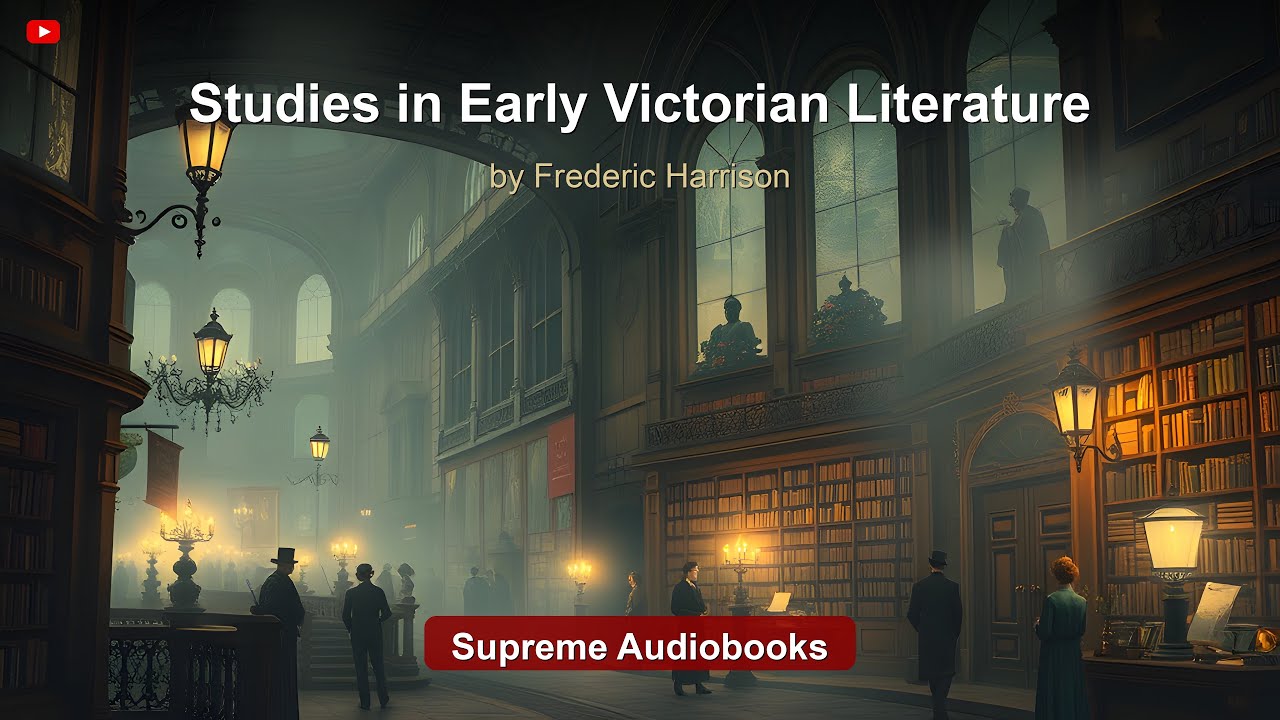
The 4K cinematic visuals accompanying this audiobook are generated by an AI image model from prompts derived from the source text. No copyrighted photos, paintings, or stock footage are used. AI generation is disclosed on every video on our YouTube channel as required by YouTube's altered/synthetic content policy.
English subtitles are transcribed from the LibriVox recording with OpenAI Whisper. Translations into the 11 other supported languages are produced by Meta's NLLB-200 neural translation model. No human translator's copyrighted translation is used.
Questions about sourcing or rights? See our DMCA & Sourcing policy or contact us.
Enjoyed this audiobook?
If you'd like to own a copy of The Victorian Age in Literature or hear a professionally produced edition, the links below help support free audiobook production at no extra cost to you.
As an Amazon Associate we earn from qualifying purchases. Audible / print links are affiliate.