COMMON SENSE How to Exercise It
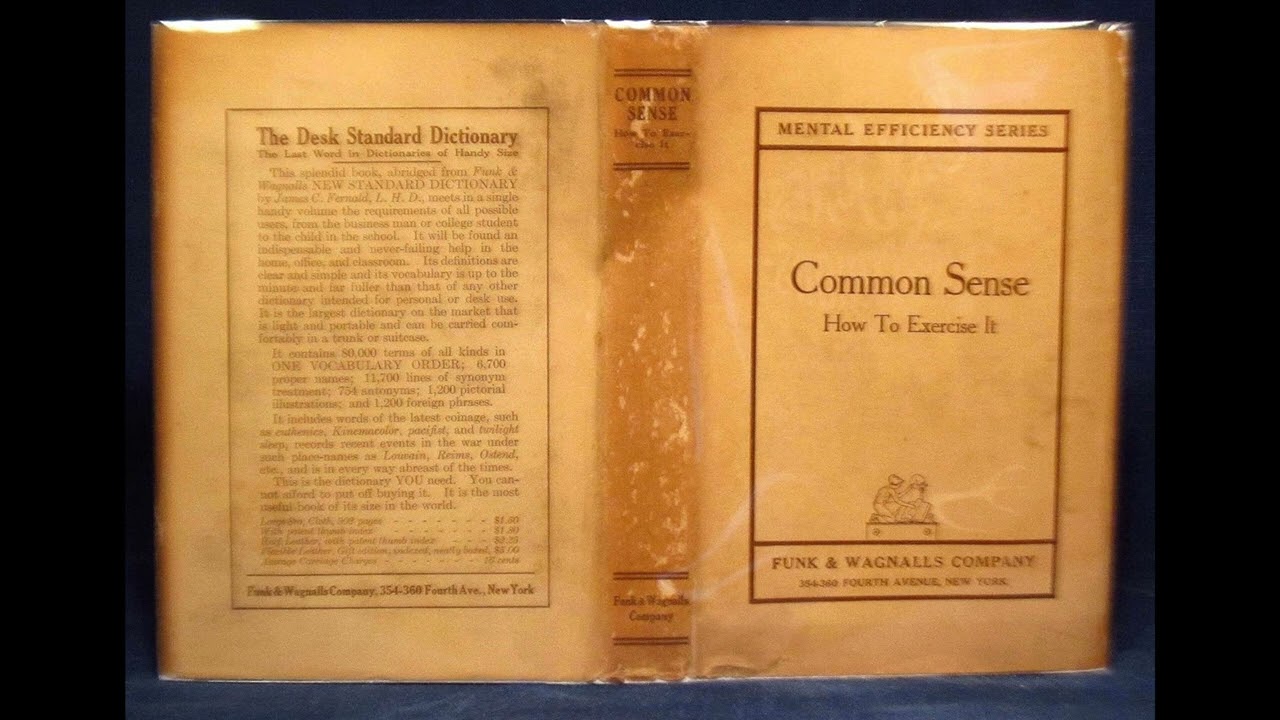
True discernment, that elusive capacity to cut through noise and make sound choices, remains a perennial human quest. In an age awash with information and constant distraction, the ability to apply clear, rational thought to everyday predicaments feels more vital than ever. COMMON SENSE How to Exercise It, presented under the intriguing pseudonym Yoritomo-Tashi, offers not merely a set of rules, but a philosophical framework for cultivating a mind resistant to error and predisposed to wisdom. Far from being a dusty relic, its principles resonate with remarkable force today, providing a much-needed anchor for those seeking clarity and efficacy in their personal and professional lives. This isn't just a book; it's an intellectual training ground, an invitation to sharpen the most fundamental tool at our disposal: our own judgment. The substance of COMMON SENSE How to Exercise It does not unfold as a conventional narrative with characters and dramatic conflicts, but rather as an ordered intellectual progression, guiding the listener through a deliberate process of mental refinement. The setting for this profound exploration is the landscape of human experience itself—the daily decisions, the social interactions, the internal deliberations that define existence. The author positions the listener as the central figure, a seeker yearning for greater clarity and effectiveness, while Yoritomo-Tashi functions as the sage guide, offering a structured approach to understanding and mastering the subtle art of good judgment. The central conflict addressed is the pervasive human tendency toward irrationality, emotional sway, and the blind acceptance of conventional wisdom, which often leads to missteps and regret. The work systematically breaks down the components of sound thinking, beginning with the importance of objective observation—the ability to see things as they are, stripped of preconception and prejudice. From this foundational principle, the exposition moves through a series of interlocking concepts designed to build a robust mental discipline. It examines the mechanisms of self-control, not as rigid suppression, but as a deliberate regulation of impulses necessary for thoughtful action. The author then addresses the pitfalls of hasty decision-making, advocating for a measured approach that considers all relevant factors without succumbing to analysis paralysis. Practical examples, presented as rhetorical scenarios, punctuate these discussions, illustrating how common errors in thinking can be avoided through disciplined application of the methods outlined. Listeners are encouraged to scrutinize their own mental habits, identify areas where emotions or ingrained biases might cloud their perceptions, and then actively practice the techniques for more deliberate reasoning. The arc of the work leads the listener from an initial state of perhaps unexamined assumptions towards a more intentional, self-aware mode of thought, culminating not in a definitive answer, but in a developed capacity for independent, effective judgment. The name "Yoritomo-Tashi" is itself a fascinating element of this work's legacy. It is a pseudonym, widely believed to have been adopted by a French author, possibly Madame Hélène S. Van Metter, in the early twentieth century. The choice of "Yoritomo" immediately evokes Minamoto no Yoritomo, the founder and first shogun of the Kamakura Shogunate in Japan, a figure synonymous with discipline, strategic thinking, and decisive leadership. The suffix "Tashi," an honorific often associated with a master or teacher, further solidifies the persona of a wise, ancient Eastern sage. This attribution was a deliberate literary device, designed to lend an aura of timeless, universal wisdom to the practical philosophy contained within the book, linking it to the revered traditions of Bushido and Zen. While the specific biographical details of the person behind the pseudonym are less widely known than the impact of the works themselves, the Yoritomo-Tashi persona gained significant traction in the self-improvement and business literature of its time. Publications under this name, appearing primarily in the early 1900s, often translated and adapted by various individuals, focused on cultivating mental discipline, leadership qualities, and personal efficiency. These works, including Influence: How to Exert It and Common Sense: How to Exercise It, presented a unique blend of Eastern philosophical principles—such as mindfulness and detachment—with Western ideas of self-help and practical psychology, aiming to equip individuals with tools for navigating the complexities of modern life and achieving personal mastery. The deliberate anonymity and historical evocation allowed the wisdom presented to stand on its own, seemingly outside the bounds of specific cultural or temporal limitations. Among the specific themes threaded throughout COMMON SENSE How to Exercise It, the paramount is undoubtedly the cultivation of rational objectivity. The author consistently argues for the necessity of stripping away personal bias and emotional interference to perceive situations clearly. For instance, in discussing decision-making, the text often presents scenarios where individuals err not from a lack of information, but from allowing fear of failure or desire for approval to dictate their choice, advocating instead for a detached, fact-based assessment. Another central theme is self-mastery through mental discipline. This manifests in the call for continuous self-observation and the deliberate practice of clear thinking. An illustrative section might describe the internal monologue of someone grappling with an impulse—say, to react angrily to a perceived slight—and then guides the listener through the steps of pausing, analyzing the situation without immediate emotional engagement, and choosing a more constructive response. Furthermore, the work emphasizes the theme of practical application of wisdom, distinguishing theoretical knowledge from effective action. It's not enough to merely understand principles; they must be actively employed in daily life. This is shown through sections that move from abstract concepts like foresight to concrete steps for planning and execution, underscoring that true common sense is measured by its utility in real-world outcomes. A fourth vital theme is the power of observation. The book repeatedly stresses the importance of truly seeing and hearing, rather than merely looking and listening. It might offer an example of someone failing to grasp a social dynamic because they are too preoccupied with their own thoughts, contrasting this with the astute observer who notices subtle cues and underlying motivations, thereby gaining a deeper and more useful understanding of their environment. This work emerged during a fascinating period, roughly the turn of the twentieth century, when rapid industrialization, burgeoning urban centers, and increasingly complex social structures presented new challenges for individuals. The era saw a rise in scientific management, psychological studies, and a general hunger for practical advice on how to navigate a changing world. It was a time when established certainties were being questioned, and people sought new frameworks for personal and professional success. The attribution to "Yoritomo-Tashi" tapped into a growing Western interest in Eastern philosophy and spiritual traditions, which were perceived as offering profound, yet practical, insights into human nature and conduct—a refreshing alternative to purely Western modes of thought. This fascination contributed significantly to the popularity of such works, as they promised a distillation of ancient wisdom applicable to modern dilemmas. Listening to COMMON SENSE How to Exercise It as an audiobook transforms the experience of engaging with its principles. The spoken word imbues the text with an immediacy and intimacy that enhances its didactic purpose. A skilled narrator, with a calm, authoritative, and thoughtful voice, can embody the persona of Yoritomo-Tashi, making the philosophical guidance feel like a direct, personal mentorship. The run length, several hours, makes it an ideal companion for focused listening during commutes, daily walks, or periods of dedicated reflection, allowing the principles to gradually sink in without overwhelming the listener. Pay attention to the deliberate pacing of the narration, which mirrors the methodical approach the author advocates for in thinking. The voice will often carry the weight of quiet conviction, allowing the listener to absorb complex ideas without feeling rushed. While there is no traditional dialogue, the rhetorical questions and internal arguments presented by the author create an atmosphere of contemplative engagement, encouraging listeners to pause and genuinely consider the advice as it unfolds.
Enjoyed COMMON SENSE How to Exercise It? A few ways to support us
Audible & Amazon links are affiliate; we may earn a small commission at no extra cost.
About this production
Human narration by a volunteer reader from LibriVox.org, the public-domain audiobook project. LibriVox volunteers record literary works whose copyright has expired in the United States, releasing the resulting recordings into the public domain.
COMMON SENSE How to Exercise It by Yoritomo-Tashi. The underlying text is in the U.S. public domain. We do not republish any modern copyrighted edition, translation, or commentary.
The 4K cinematic visuals accompanying this audiobook are generated by an AI image model from prompts derived from the source text. No copyrighted photos, paintings, or stock footage are used. AI generation is disclosed on every video on our YouTube channel as required by YouTube's altered/synthetic content policy.
English subtitles are transcribed from the LibriVox recording with OpenAI Whisper. Translations into the 11 other supported languages are produced by Meta's NLLB-200 neural translation model. No human translator's copyrighted translation is used.
Questions about sourcing or rights? See our DMCA & Sourcing policy or contact us.
Enjoyed this audiobook?
If you'd like to own a copy of COMMON SENSE How to Exercise It or hear a professionally produced edition, the links below help support free audiobook production at no extra cost to you.
As an Amazon Associate we earn from qualifying purchases. Audible / print links are affiliate.