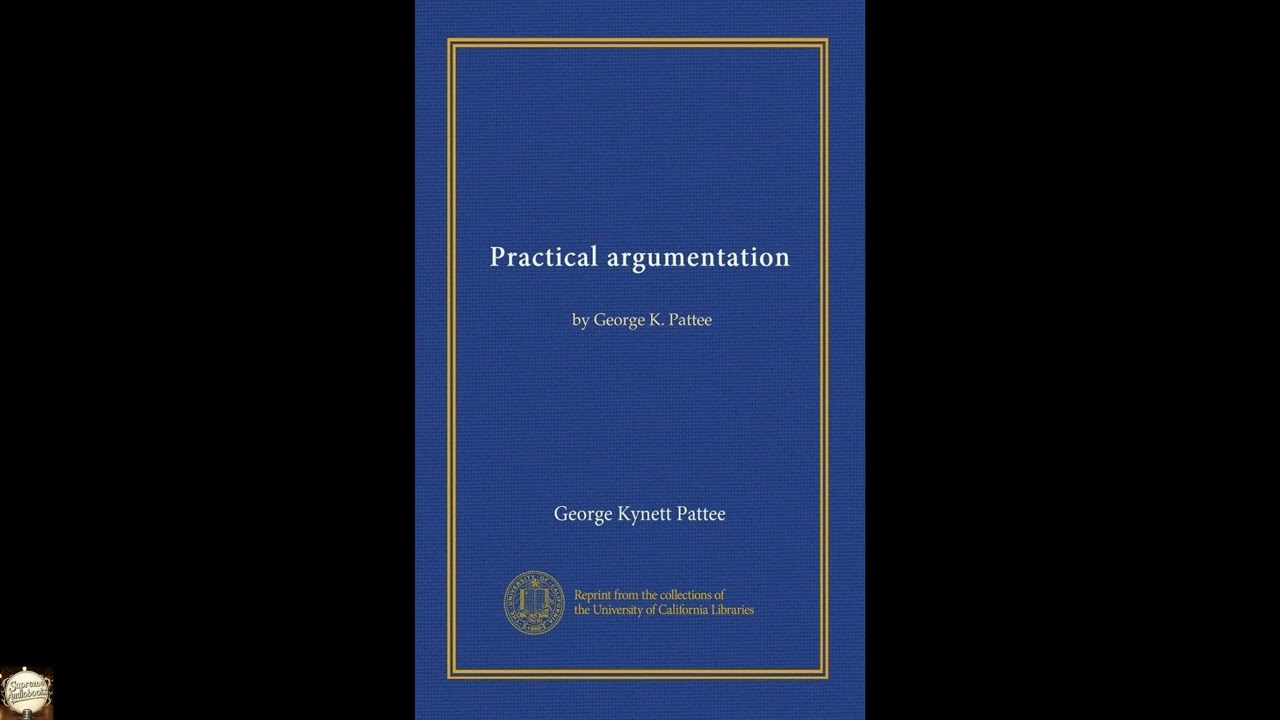
Practical argumentation:
The power of persuasion, the art of constructing a compelling case, the skill of dissecting an argument for its strengths and weaknesses—these abilities are not merely academic exercises but essential tools for navigating every facet of modern life. From the casual conversation to the courtroom, from political debate to scientific discourse, the ability to reason clearly and communicate effectively shapes our understanding of the world and our influence within it. George K. Pattee's "Practical Argumentation," though written over a century ago, stands as a foundational text that distills these critical processes into an accessible and practical guide. It offers not just theories, but a step-by-step methodology for anyone seeking to sharpen their intellect, articulate their ideas with precision, and engage in thoughtful, productive dialogue. This enduring relevance makes Pattee's clear-headed instruction as vital today as it was at its initial publication. Pattee's work unfolds with the logical rigor it advocates, guiding the student of argumentation through a structured curriculum designed to build proficiency from the ground up. The initial sections lay the groundwork by defining argument itself, distinguishing it from mere assertion, and establishing the foundational principles of logical thought. Listeners are introduced to the core concepts of proposition and proof, understanding how to identify a debatable point and what constitutes valid evidence to support it. Pattee then meticulously unpacks the two primary modes of reasoning: induction, which moves from specific observations to general conclusions, and deduction, which proceeds from general premises to specific certainties. He illustrates the common pitfalls and fallacies that can derail even the most earnest attempts at persuasion, equipping the reader to not only avoid these errors in their own arguments but also to swiftly recognize and dismantle them in the arguments of others. This careful progression from foundational definitions to complex logical structures provides a comprehensive education in the mechanics of reasoned discourse. As the instruction progresses, "Practical Argumentation" moves beyond the theoretical underpinnings to focus on the practical application of these principles. Pattee devotes significant attention to the crucial skill of brief-making, teaching how to systematically organize and outline an argument, ensuring coherence and logical flow. He demonstrates how to gather and evaluate evidence, distinguish between different types of proof, and integrate them effectively into a persuasive presentation. A crucial segment addresses the often-overlooked art of refutation—the ability to identify and dismantle opposing viewpoints respectfully but rigorously. Pattee provides strategies for anticipating counterarguments, finding their weaknesses, and responding with clarity and force. The text culminates in a consideration of the various forms of argument, from the written essay to the formal debate, always emphasizing the ethical responsibilities inherent in wielding such a powerful tool. Listeners will find themselves not merely absorbing information, but actively learning to construct, defend, and critique arguments with confidence and intellectual honesty. George Kynett Pattee, born in 1876, was an academic whose career was dedicated to the clear exposition of language and logic. He spent a significant portion of his professional life as an instructor of English and Argumentation at Pennsylvania State College, now Penn State University. It was within this academic environment, teaching successive generations of students the necessities of effective communication, that the ideas for "Practical Argumentation" ripened. Pattee understood the practical demands placed upon college students and citizens alike to think critically and express themselves persuasively, recognizing that a solid grounding in the principles of rhetoric was not just an academic nicety but a societal imperative. His work reflects a pedagogue's keen understanding of how to break down complex subjects into digestible, actionable lessons. Though "Practical Argumentation" remains his most recognized contribution, Pattee's efforts extended to ensuring the clarity and accessibility of language for his students. He lived through a period of immense change, both intellectually and socially, and his commitment to rational discourse stood as a bulwark against the potential for confusion and misinformation. Pattee passed away in 1944, leaving behind a legacy rooted in the belief that an educated populace capable of logical thought and articulate expression is fundamental to a functioning democracy and an advancing society. His pedagogical approach, emphasizing both the theoretical foundations and the concrete application of argumentative principles, solidified his position as a significant figure in the history of rhetoric and composition studies in American higher education. One of the central themes that "Practical Argumentation" enacts is the paramount importance of logic and reason in all forms of persuasive communication. Pattee consistently illustrates how a sound argument must rest on a foundation of valid inferences and coherent connections, rather than appeals to emotion or unsupported assertions. For instance, when he analyzes different types of fallacies, such as the ad hominem attack or the post hoc ergo propter hoc error, he provides concrete examples that show precisely how these logical missteps undermine credibility and obstruct truth. He is not merely cataloging errors but demonstrating why they fail as instruments of rational persuasion. This commitment to logical soundness is the bedrock upon which all other effective argumentation must be built, a principle Pattee reinforces in every chapter. Another core concept Pattee champions is the essential role of evidence-based reasoning. He meticulously differentiates between various forms of evidence—facts, statistics, expert testimony, and analogy—and provides clear guidelines for their proper collection, evaluation, and presentation. Patittee might, for example, present a scenario where a student is tasked with arguing for a specific policy change. He then walks through the process of distinguishing between anecdotal observations and verifiable data, showing how to assess the credibility of sources and integrate factual support seamlessly into a brief. This practical emphasis on verifiable data ensures that arguments are not merely exercises in rhetoric but genuine attempts to establish truth through substantiated claims. The book implicitly argues that without solid evidence, even the most eloquent rhetoric rings hollow, thus reinforcing the ethical obligation of the arguer to truth. When George K. Pattee penned "Practical Argumentation" in 1915, the world was on the precipice of profound change. The Progressive Era in America was in full swing, characterized by widespread social activism and political reform movements. Debates over public policy—from women's suffrage to corporate regulation—were vibrant and often contentious, demanding citizens capable of both making and evaluating complex arguments. Globally, tensions were escalating, and soon the First World War would underscore the critical need for clear communication and reasoned decision-making amidst international crises. Educational institutions, particularly colleges, were increasingly seen as crucibles for developing thoughtful, engaged citizens who could contribute meaningfully to public discourse. There was a growing recognition that effective communication was not just an innate talent but a teachable skill, and that the principles of rhetoric, once the exclusive domain of classical scholars, needed to be democratized for a modern industrial society. Pattee's work emerged directly from this cultural and educational moment. The rise of mass media, albeit in its nascent forms, meant that public opinion was increasingly shaped by published articles and public speeches. Citizens were bombarded with information and competing claims, necessitating tools for critical evaluation. His textbook provided students with the intellectual scaffolding required to navigate this evolving landscape. It reflected a pedagogical shift towards more practical, skills-based learning, moving away from rote memorization and towards the application of logical principles in real-world scenarios. "Practical Argumentation" was, therefore, not just an academic exercise but a response to the pressing societal need for individuals equipped to engage in rational, persuasive, and ethical communication during a period of rapid transformation. Listening to "Practical Argumentation" as an audiobook transforms what might appear to be a dense academic text into an accessible and engaging learning experience. The narrator's careful pacing allows listeners to absorb Pattee's meticulously constructed explanations, providing ample time to internalize the distinctions between inductive and deductive reasoning or to ponder the examples of logical fallacies. A skilled voice actor brings clarity to the didactic passages, ensuring that complex concepts—like the nuances of brief-making or the strategies of refutation—are not merely read but truly understood. The sustained flow of the narration makes it easy to follow the book's progressive arc, building knowledge incrementally. This format enables concentration on the logical structure of Pattee's arguments and the precise language he uses, enhancing retention and making the process of mastering effective argumentation a more fluid and less daunting endeavor.
Enjoyed Practical argumentation:? A few ways to support us
Audible & Amazon links are affiliate; we may earn a small commission at no extra cost.
About this production
Human narration by a volunteer reader from LibriVox.org, the public-domain audiobook project. LibriVox volunteers record literary works whose copyright has expired in the United States, releasing the resulting recordings into the public domain.
Practical argumentation: by George K. Pattee by George Kynett Pattee. The underlying text is in the U.S. public domain. We do not republish any modern copyrighted edition, translation, or commentary.
The 4K cinematic visuals accompanying this audiobook are generated by an AI image model from prompts derived from the source text. No copyrighted photos, paintings, or stock footage are used. AI generation is disclosed on every video on our YouTube channel as required by YouTube's altered/synthetic content policy.
English subtitles are transcribed from the LibriVox recording with OpenAI Whisper. Translations into the 11 other supported languages are produced by Meta's NLLB-200 neural translation model. No human translator's copyrighted translation is used.
Questions about sourcing or rights? See our DMCA & Sourcing policy or contact us.
View 10 famous quotes from this book →
Enjoyed this audiobook?
If you'd like to own a copy of Practical argumentation: or hear a professionally produced edition, the links below help support free audiobook production at no extra cost to you.
As an Amazon Associate we earn from qualifying purchases. Audible / print links are affiliate.
More Audiobooks
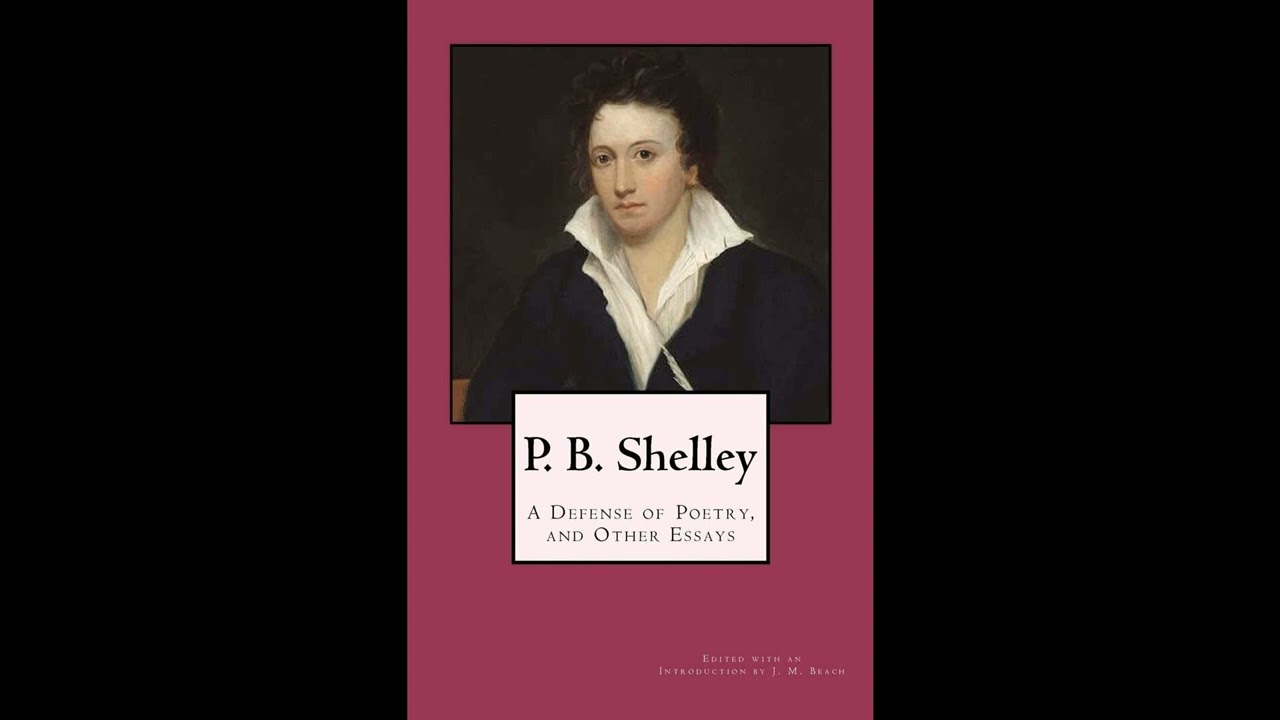
P. B. Shelley: A Defense of Poetry, and Other Essays
A Letter to the Society for the Suppression of Vice, on Their Malignant Efforts to P- Full Audiobook

Love, Life & Work: Being a Book of Opinions Reasonably Good-Natured Concerning How
Caxton's Book Of Courtesy