Letters of Catherine Benincasa
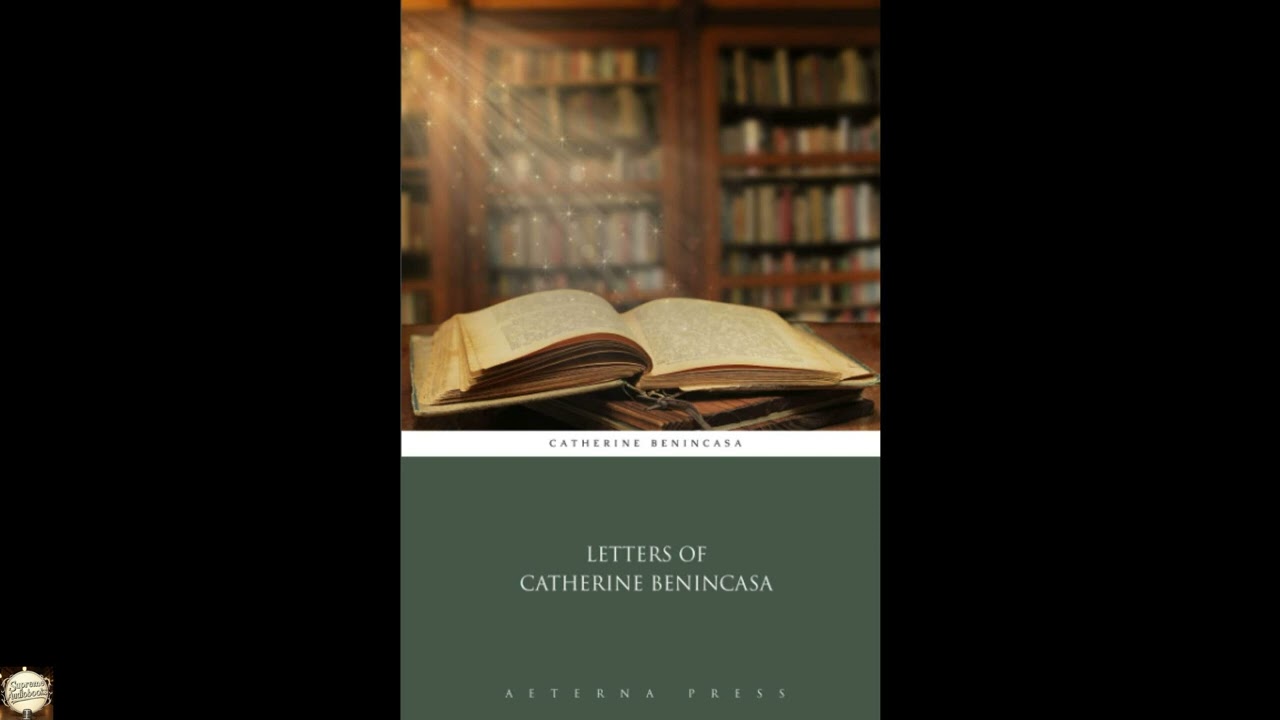
Imagine a voice from the distant past, burning with conviction, challenging popes and princes, comforting the afflicted, and shaping the very course of history from the pages of her correspondence. "Letters of Catherine Benincasa" presents that extraordinary voice directly, offering listeners an intimate window into the mind and heart of one of the most remarkable figures of the late Middle Ages. Far from being a dry historical document, these letters pulse with an urgent vitality, addressing issues of faith, politics, and human struggle that resonate powerfully even today. This is the unvarnished testament of a woman who, with nothing but her intellect, her faith, and her fervent words, dared to confront the moral failings of her world and demand spiritual renewal and tangible peace. The "plot" of these letters unfolds not through a single narrative arc, but as a dynamic chronicle of Catherine's life and epochal ministry in 14th-century Italy. From her humble home in Siena, Catherine Benincasa begins to dispatch missives to an ever-widening circle of recipients, initially offering spiritual counsel to her followers and friends. Soon, her correspondence expands to include political figures, mercenary captains, and even the Pope himself. The setting is a Europe scarred by the Black Death, rife with political factionalism among its city-states, and deeply troubled by the absence of the Papacy from Rome, exiled in Avignon for decades. Catherine emerges as a singular figure, driven by what she perceived as divine command, to address these profound spiritual and temporal crises. Her central "conflict" is the prevailing chaos of her age: the spiritual laxity she observes in the Church, the brutal conflicts between Italian states, and the scandal of the Avignon Papacy. She becomes an active, persistent voice for peace and reform, using her letters as instruments of persuasion, warning, and encouragement. Listeners follow her intense engagement as she mediates disputes, advises rulers on matters of justice, and, most famously, relentlessly urges Pope Gregory XI to return the Papacy to Rome. The collection illustrates her evolving influence, from a local spiritual adviser to an international figure whose words carried significant weight, chronicling her tireless efforts to unite a fractured Church and heal a divided continent through the power of her unwavering vision. Catherine Benincasa, born in Siena, Italy, in 1347, was the twenty-third child of a wool dyer. From a young age, she experienced profound mystical visions and felt an overwhelming call to a spiritual life. Despite her family's desires for her to marry, she resisted, eventually joining the Dominican Tertiaries, a lay order, at the age of sixteen. Unlike nuns who lived in cloisters, Catherine lived at home, dedicated to prayer, penance, and charitable work, particularly caring for the sick and the poor in Siena's hospitals. Her reputation for sanctity and wisdom grew quickly, drawing a devoted following of disciples—men and women, clerics and laypeople—who sought her spiritual guidance and accepted her extraordinary authority. Her public ministry began in earnest in her twenties. Despite being an unlettered woman who had to dictate her letters to scribes, Catherine became a formidable spiritual and political force. She traveled extensively throughout Italy, speaking, advising, and mediating, often at great personal risk. Her most famous diplomatic achievement was her instrumental role in convincing Pope Gregory XI to abandon Avignon and return the Papacy to Rome in 1377, a monumental event in European history. She continued her rigorous work even as her health declined, dying in Rome in 1380 at the age of thirty-three. Her profound legacy led to her canonization as Saint Catherine of Siena in 1461, and centuries later, in 1970, she was declared a Doctor of the Church—a rare honor shared by only a handful of women, acknowledging her theological profundity and spiritual guidance. These letters offer a potent testament to several significant themes. One prominent theme is the absolute imperative of spiritual reform and personal conversion. Catherine consistently challenges her correspondents, whether they are humble friars or powerful cardinals, to live lives of authentic virtue, to cast off sin, and to embrace a deep, personal relationship with God. For instance, in her letters to priests, she often laments clerical corruption and urges them to embody Christ-like humility and service, using vivid imagery of spiritual cleansing and rebirth. Another central theme is the pursuit of peace and justice, not merely as political ideals, but as moral necessities flowing from divine love. She passionately addresses warring factions and ruthless mercenaries, imploring them to lay down arms and seek reconciliation, frequently reminding them of their shared humanity and the Christian duty to love one's neighbor. A further significant theme is the unique expression of female authority in a patriarchal society. Catherine, as an uncloistered laywoman, defied societal expectations to exert immense influence over the most powerful men of her age, demonstrating a formidable spiritual and intellectual power that transcended conventional gender roles. Her direct, uncompromising language, full of biblical allusion and passionate appeals, serves as a literary enactment of her authority. Her letters also illuminate the mystical experience, offering a glimpse into her profound spiritual life. She often describes her visions and her intimate union with God using rich, symbolic language, offering listeners a window into the inner landscape of a mystic who believed she was acting as God's instrument in the world. Catherine's life and letters are deeply embedded in the tumultuous historical context of the 14th century, a period often described as one of crisis and transformation. Europe was still reeling from the demographic catastrophe of the Black Death, which had swept through the continent just before Catherine's birth, profoundly impacting social structures, economic life, and religious attitudes. Politically, Italy was a fragmented mosaic of independent city-states, constantly engaged in internecine warfare, often employing mercenary armies that ravaged the countryside. The most critical political and religious crisis of her time was the Avignon Papacy, the period from 1309 to 1377 when the popes resided in Avignon, France, rather than Rome. This "Babylonian Captivity of the Papacy" caused widespread disquiet and spiritual confusion, undermining the moral authority of the Church. It was against this backdrop of plague, war, and spiritual crisis that Catherine Benincasa emerged as a prophetic voice. Her insistence on the Pope's return to Rome was not merely a logistical concern; it was a symbolic act, a belief that the spiritual heart of Christendom needed to be restored to its rightful place to bring peace and order back to the world. Her work represents a powerful individual response to systemic crises, a demonstration of how one person, armed with faith and words, could engage directly with the greatest challenges of her era, foreshadowing in some ways the religious fervor and intellectual shifts that would characterize later centuries. Her emergence also highlights a latent potential for powerful female voices, even if exceptional, within a society largely dominated by men. Listening to the "Letters of Catherine Benincasa" as an audiobook offers an unparalleled immediacy, allowing her ardent, persuasive voice to truly come alive. The epistolary form, by its very nature, translates beautifully to the spoken word, creating the sensation of directly receiving these vital messages as they were dictated centuries ago. A skilled narrator can convey the various facets of Catherine's personality—her fierce conviction, her tender empathy, her righteous indignation, and her profound spiritual wisdom—bringing a nuanced interpretation to her often intense prose. The sustained run length allows for deep immersion into her world and her thought, fostering a contemplative engagement that complements the spiritual and intellectual depth of the text. Listen for the passion and urgency in the delivery, the careful pacing that underscores her arguments, and the distinct atmosphere of a distant yet intensely relevant past.
Enjoyed Letters of Catherine Benincasa? A few ways to support us
Audible & Amazon links are affiliate; we may earn a small commission at no extra cost.
About this production
Human narration by a volunteer reader from LibriVox.org, the public-domain audiobook project. LibriVox volunteers record literary works whose copyright has expired in the United States, releasing the resulting recordings into the public domain.
Letters of Catherine Benincasa by Catherine Benincasa. The underlying text is in the U.S. public domain. We do not republish any modern copyrighted edition, translation, or commentary.
The 4K cinematic visuals accompanying this audiobook are generated by an AI image model from prompts derived from the source text. No copyrighted photos, paintings, or stock footage are used. AI generation is disclosed on every video on our YouTube channel as required by YouTube's altered/synthetic content policy.
English subtitles are transcribed from the LibriVox recording with OpenAI Whisper. Translations into the 11 other supported languages are produced by Meta's NLLB-200 neural translation model. No human translator's copyrighted translation is used.
Questions about sourcing or rights? See our DMCA & Sourcing policy or contact us.
Enjoyed this audiobook?
If you'd like to own a copy of Letters of Catherine Benincasa or hear a professionally produced edition, the links below help support free audiobook production at no extra cost to you.
As an Amazon Associate we earn from qualifying purchases. Audible / print links are affiliate.