Charlotte Temple
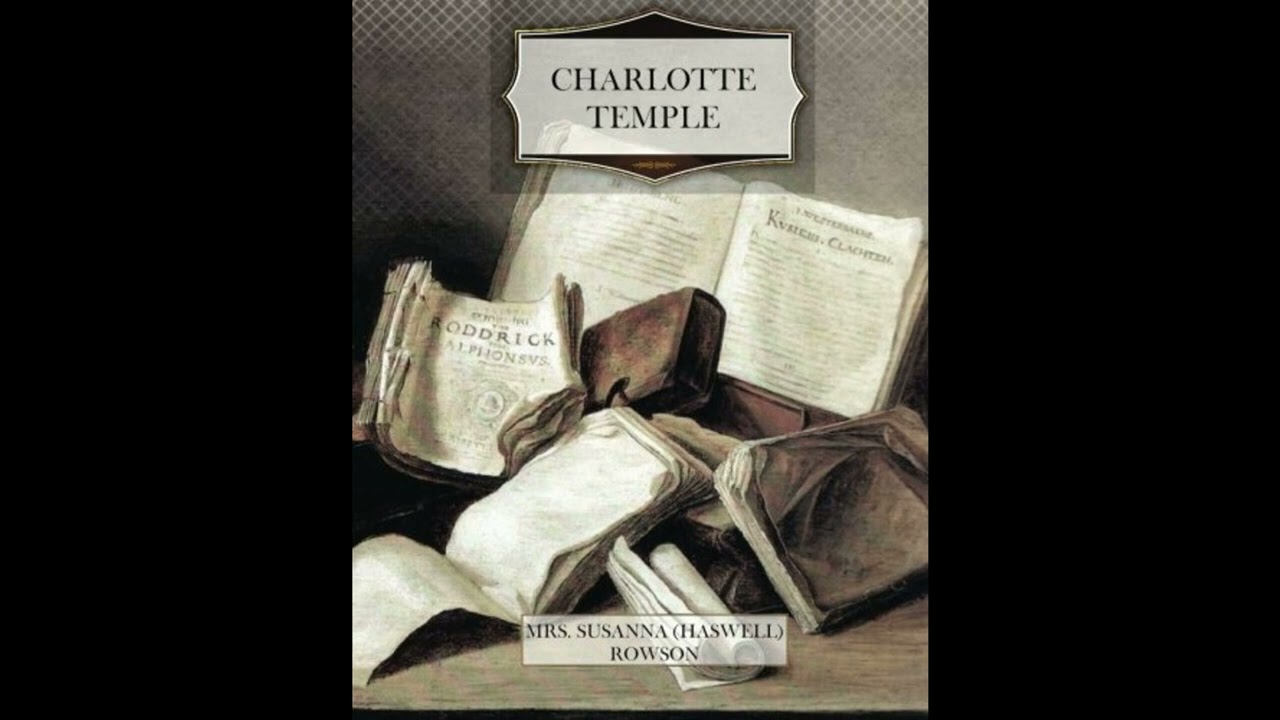
When we speak of enduring American literary achievements, we often conjure images of towering figures from later centuries. Yet, long before the grand epics and psychological dramas, a modest novel captivated a nascent nation, becoming its first true bestseller and a touchstone of American literary history. That book is Charlotte Temple, a story that, despite its late 18th-century origins, resonates with startling clarity in our modern world. It is a poignant, often heartbreaking, examination of innocence, seduction, and the crushing weight of societal judgment—themes that, regrettably, remain as relevant today as they were over two hundred years ago. This narrative invites listeners to confront the timeless vulnerabilities of youth, the dangerous allure of false promises, and the enduring consequences of a single misstep in a world often unforgiving to young women. The story begins in the serene English countryside, introducing us to the titular Charlotte Temple, a young woman of exquisite beauty and unparalleled naivete, attending a boarding school with her friend Lucy. Her tranquil existence is irrevocably disrupted by the arrival of Lieutenant Montraville, a charming and dashing British officer en route to America, who quickly sets his sights on Charlotte. Aided by the manipulative and morally corrupt French teacher, Mademoiselle La Rue, Montraville skillfully woos Charlotte, presenting himself as a devoted suitor. Despite her parents' deep love and the warnings of her true friends, Charlotte—blinded by Montraville’s declarations and La Rue's deceitful counsel—is persuaded to abandon her family and elope with the officer to New York. Once in the bustling, unfamiliar landscape of post-Revolutionary America, Charlotte's fragile happiness begins to unravel. Montraville, increasingly distracted by the superficialities of his military life and the allure of other women, gradually grows cold and distant, influenced by his cynical companion Belcour. Charlotte finds herself isolated, her reputation irrevocably stained, and her precarious situation worsened by mounting financial hardship and the cruel machinations of those around her. As her circumstances grow more dire, she becomes a stark illustration of the devastating speed with which a young woman’s social standing—and her very means of survival—can be stripped away by the callousness of others and the unforgiving gaze of society. The author, Susanna Haswell Rowson, was a figure as remarkable and spirited as the era she inhabited. Born in Portsmouth, England, in 1762, she immigrated to America with her Loyalist father as a child, only to return to England during the Revolutionary War. This early experience of displacement and cultural friction likely informed her later writings. She married William Rowson, an actor, and for a time pursued a career on the stage, which exposed her to various societal types and human dramas. However, her true calling emerged in education and letters. She founded and successfully ran several highly regarded schools for young women, primarily in Boston, emphasizing moral and intellectual development. Her work as an educator deeply influenced her literary output, positioning her as a moral guide for the young women of her time. Rowson was an incredibly prolific writer, producing novels, plays, poems, and textbooks. While Charlotte Temple, first published in London in 1791 (and then in America as Charlotte: A Tale of Truth in 1794), remains her most famous creation, she also penned other notable works such as Trials of the Human Heart and Reuben and Rachel; or, Tales of Old Times. She operated within the literary movement of sentimentality, a style popular in the late 18th and early 19th centuries that emphasized emotional appeals and moral instruction. Rowson holds a unique and significant place in American literary history as one of the first successful female novelists in the young republic, cementing her legacy as a foundational voice in the development of American fiction and a powerful advocate for women's education and moral well-being. Charlotte Temple enacts several profound themes that lend it enduring power. One central theme is the peril of youthful naivete and seduction. Charlotte, despite her innate goodness, becomes a victim of her own inexperience and the deceptive charm of Montraville. A particularly stark scene is when Montraville and La Rue conspire to persuade Charlotte to leave her boarding school, painting a romanticized picture of elopement while subtly undermining her filial duty and common sense. Her inability to discern true character from superficial allure forms the tragic core of the narrative. Another critical theme is the devastating impact of social stigma and the fragility of a woman's reputation. Once Charlotte’s situation becomes known in New York, she is shunned by respectable society, her former innocence and Montraville's abandonment making her an outcast. This is powerfully shown in scenes where she faces coldness and outright contempt from those who once might have offered assistance, highlighting the severe social penalties for women who transgress societal norms, even unknowingly. The novel also portrays the hypocrisy of a patriarchal society where men often escape the consequences of their actions, while women bear the full weight of judgment. Montraville, though responsible for Charlotte's downfall, largely continues his life unimpeded, eventually marrying a woman of good standing, his reputation barely scratched. Conversely, Charlotte’s suffering intensifies precisely because society refuses to forgive her perceived moral failing. Finally, the story powerfully renders the themes of parental grief and filial piety. Mr. and Mrs. Temple's anguish over their daughter’s disappearance and their relentless attempts to find her underscore the profound bonds of family love. Charlotte’s growing remorse and longing for her parents’ forgiveness, expressed in her letters home, further amplify the emotional intensity and moral warnings embedded within the narrative. When Susanna Rowson penned Charlotte Temple, the world was in a state of flux. The late 18th century was a period immediately following the American Revolution, a time when the new nation was grappling with its identity, its values, and its place in the world. Culturally, there was a widespread interest in didactic literature—stories that aimed to teach moral lessons, particularly to young women, who were seen as the moral guardians of the burgeoning republic. The novel itself was still a relatively new and sometimes controversial literary form, often viewed with suspicion for its potential to corrupt impressionable minds. Charlotte Temple emerged directly from this context, functioning both as a cautionary tale warning against the dangers of seduction and elopement, and as a sympathetic portrayal of female vulnerability. Its immense popularity reflected the anxieties of a society concerned with virtue, reputation, and the moral education of its youth, especially as young women navigated a world of shifting social expectations. Listening to Charlotte Temple as an audiobook offers a uniquely intimate and powerful experience. The several-hour runtime allows for a deep immersion into Charlotte’s tragic circumstances and the emotional landscape of the late 18th century. A skilled narrator can bring to life Charlotte's youthful sincerity, Montraville's seductive yet ultimately hollow promises, and the profound sorrow of her loving parents. Listeners will hear the subtle shifts in pacing that reflect Charlotte's escalating despair, the careful enunciation of period dialogue that transports them to another era, and the atmospheric qualities that underscore the novel's sentimental tone. The spoken word allows the narrative’s emotional weight—its appeals to sympathy, its moral warnings, and its heart-wrenching scenes of abandonment and suffering—to land with directness, truly enabling the listener to feel the story rather than just read it.
Enjoyed Charlotte Temple? A few ways to support us
Audible & Amazon links are affiliate; we may earn a small commission at no extra cost.
About this production
Human narration by a volunteer reader from LibriVox.org, the public-domain audiobook project. LibriVox volunteers record literary works whose copyright has expired in the United States, releasing the resulting recordings into the public domain.
Charlotte Temple by Mrs. Susanna (Haswell) Rowson. The underlying text is in the U.S. public domain. We do not republish any modern copyrighted edition, translation, or commentary.
The 4K cinematic visuals accompanying this audiobook are generated by an AI image model from prompts derived from the source text. No copyrighted photos, paintings, or stock footage are used. AI generation is disclosed on every video on our YouTube channel as required by YouTube's altered/synthetic content policy.
English subtitles are transcribed from the LibriVox recording with OpenAI Whisper. Translations into the 11 other supported languages are produced by Meta's NLLB-200 neural translation model. No human translator's copyrighted translation is used.
Questions about sourcing or rights? See our DMCA & Sourcing policy or contact us.
Enjoyed this audiobook?
If you'd like to own a copy of Charlotte Temple or hear a professionally produced edition, the links below help support free audiobook production at no extra cost to you.
As an Amazon Associate we earn from qualifying purchases. Audible / print links are affiliate.