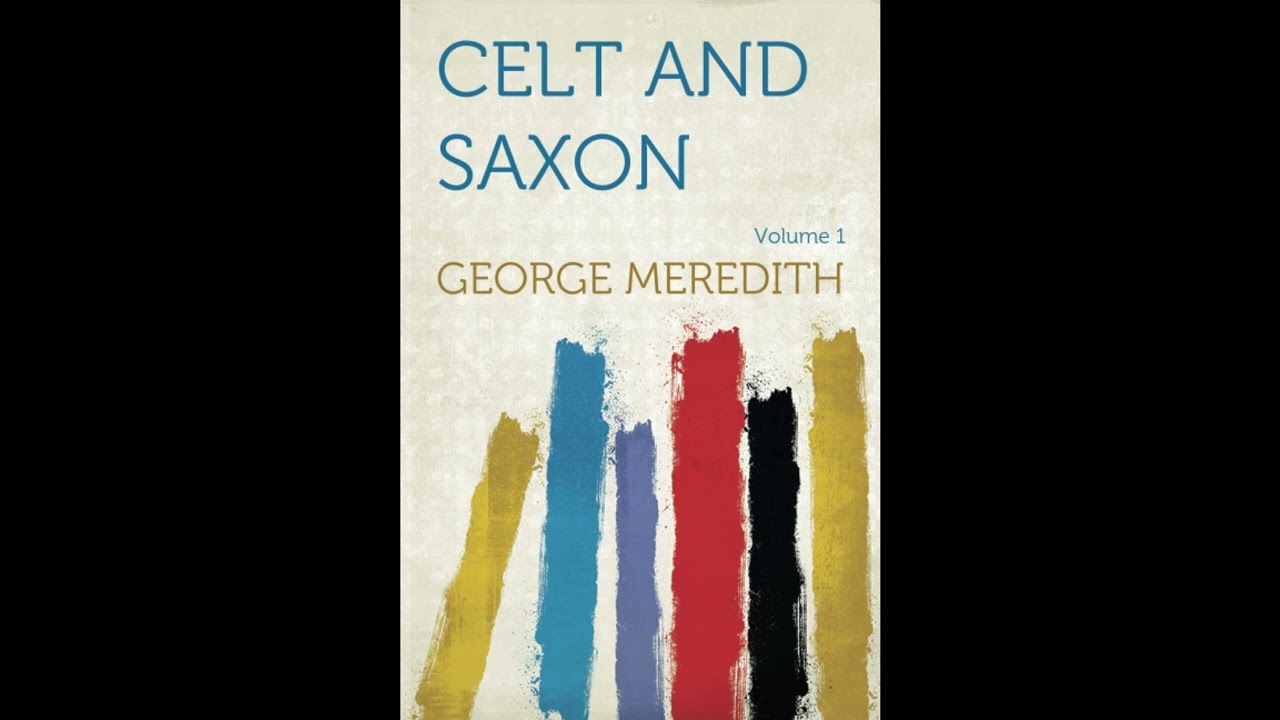
Celt and Saxon
Step into the layered world of George Meredith’s Celt and Saxon, a novel that probes the intricate dance between love and national identity, published posthumously but brimming with the author’s characteristic wit and profound insight. This particular narrative offers a fascinating window into late Victorian sensibilities, dissecting the often-strained relationship between England and Ireland through the intimate lens of personal connection and societal expectation. Listeners today will recognize in its pages the enduring questions surrounding cultural difference, the complexities of forging understanding across divides, and the search for an authentic self amidst the pressures of tradition and heritage. It stands as a compelling, albeit incomplete, testament to Meredith’s intellectual ambition and his keen eye for the human heart. The story unfolds primarily in the English countryside, though its spiritual geography stretches across the Irish Sea. We are introduced to Patrick O'Donnell, a young Irishman of intelligence and fervent nationalist sympathies, whose background and convictions place him in a delicate position within English society. His path soon crosses with that of Miss Ellis, a representative of the English gentry, whose charm and grace draw him in, yet whose very Englishness embodies some of the cultural friction Patrick contends with. Their burgeoning connection forms the central axis of the tale, a romance complicated by deeply ingrained national prejudices and differing worldviews. Meredith masterfully sketches the social milieu, showcasing the subtle snobberies and unspoken assumptions that govern interactions between the English and the Irish at this particular historical juncture. As Patrick navigates the drawing-rooms and social circles of his English acquaintances, he grapples with his own identity – torn between loyalty to his Celtic roots and the allure of a promising future that might require a degree of assimilation. The narrative observes the intricate dance of courtship and the intellectual sparring that characterized Meredith’s literary method, presenting dilemmas that resonate far beyond the immediate romantic entanglements. It’s a story less about finding a definitive resolution and more about the challenging process of understanding and bridging the gaps that separate individuals and nations, an examination of how historical grievances and cultural pride shape even the most personal of relationships. George Meredith, born in Portsmouth, England, in 1828, carved out a distinguished place for himself in the Victorian literary landscape. His early life was marked by adversity; orphaned at a young age, he spent time in a Moravian school in Germany, an experience that broadened his perspective. He initially pursued a career in law before turning to journalism and eventually, the novel. His first marriage, to Mary Ellen Nicolls, daughter of the celebrated satirist Thomas Love Peacock, was famously unhappy and concluded with her leaving him for another man. This profound personal experience later informed some of his most piercing psychological works, including the acclaimed poetry sequence Modern Love. Meredith’s second marriage to Marie Vulliamy brought him greater stability and happiness. Throughout his life, he was a prolific writer, publishing a stream of novels and poems that established him as a significant figure. While perhaps not as widely read today as some of his Victorian contemporaries, his influence on subsequent generations of writers was substantial. He was known for his distinct style – often complex and aphoristic – and his unique blend of psychological realism with a satirical, almost intellectual, wit. His place in the literary canon is that of a bridge figure, a writer whose deep roots in Victorian social observation also hinted at the psychological interiority and formal experimentation that would characterize modernism. Among Meredith’s most celebrated works are The Ordeal of Richard Feverel, a poignant exploration of an upbringing shaped by an overbearing father’s system; The Egoist, a brilliant comedy of manners dissecting vanity and self-delusion; and Diana of the Crossways, which delves into the life of a spirited woman navigating societal constraints. Each of these novels exhibits his characteristic "comedy of ideas," where intellectual debate and social satire are woven into intricate human dramas. Though Celt and Saxon remained unfinished at his death in 1909, it nevertheless bears the hallmarks of his distinctive vision, offering a valuable insight into his ongoing artistic and intellectual concerns. Celt and Saxon enacts several profound themes. First, it directly confronts national identity and prejudice. Through Patrick O'Donnell, Meredith portrays the internal and external struggles of an Irishman grappling with English society. One scene might find Patrick defending the historical validity of Irish nationalism against the casual dismissals of an English acquaintance, highlighting the deeply rooted misunderstandings and resentments that simmer beneath polite social discourse. Second, the novel examines the arduous path of love across cultural divides. The unfolding relationship between Patrick and Miss Ellis demonstrates the personal cost of national friction, as their affection is tested by the weight of inherited biases and societal expectations, revealing how easily external conflicts can strain the most intimate connections. Third, Meredith’s characteristic social critique and comedy of ideas are evident throughout. He frequently exposes the superficiality and hypocrisy of the English upper classes through their interactions, using sharp dialogue and incisive observation to dissect their assumptions. For instance, a social gathering might feature characters debating Irish Home Rule, their pronouncements revealing more about their own class anxieties and lack of genuine understanding than about the political issue itself. Finally, the narrative implicitly addresses the nature of masculinity and honor as Patrick strives to reconcile his personal desires with his cultural loyalty and the demands of his self-respect, presenting a nuanced picture of a man attempting to define himself on his own terms. The period when Meredith was actively writing Celt and Saxon was the late nineteenth century, a time of significant political and social ferment within the British Isles. The Irish Home Rule movement was gaining considerable momentum, leading to intense debates and divisions within British politics. This era was characterized by a heightened awareness of distinct national identities – English, Scottish, Welsh, and especially Irish – and the often-contentious relationships among them under the umbrella of the British Empire. Culturally, Victorian society was grappling with questions of progress, class structure, and the legacy of empire, while simultaneously experiencing the first stirrings of literary modernism. Meredith’s novel emerged precisely from this context, responding to and reflecting the contemporary anxieties and discussions surrounding Anglo-Irish relations. It was a period when the very definition of “Britishness” was being interrogated, and the complexities of governing a diverse collection of nations were becoming increasingly apparent. Meredith, with his keen sociological eye, seized upon these tensions to craft a narrative that, even in its unfinished state, offers a vital commentary on the personal dimensions of political and cultural conflict, underscoring how grand historical movements play out in individual lives and loves. Listening to Celt and Saxon as an audiobook offers a unique opportunity to immerse oneself in Meredith's distinctive prose. The novel's length, providing several hours of contemplation, makes it an ideal companion for long commutes, leisurely strolls, or focused listening sessions. A skilled narrator can illuminate the nuances of Meredith’s often-complex sentences and intellectual dialogue, guiding the listener through the text's rich layers of meaning. Pay attention to the subtle shifts in tone, the pacing of the arguments, and the distinct voices given to characters like the passionate Patrick O'Donnell and the thoughtful Miss Ellis. The narrative’s atmosphere, from the refined English drawing-rooms to the echoes of Irish sentiment, truly comes alive through the spoken word, allowing the listener to appreciate the author’s intricate characterizations and his sophisticated critique of society.
Enjoyed Celt and Saxon? A few ways to support us
Audible & Amazon links are affiliate; we may earn a small commission at no extra cost.
About this production
Human narration by a volunteer reader from LibriVox.org, the public-domain audiobook project. LibriVox volunteers record literary works whose copyright has expired in the United States, releasing the resulting recordings into the public domain.
Celt and Saxon by George Meredith. The underlying text is in the U.S. public domain. We do not republish any modern copyrighted edition, translation, or commentary.
The 4K cinematic visuals accompanying this audiobook are generated by an AI image model from prompts derived from the source text. No copyrighted photos, paintings, or stock footage are used. AI generation is disclosed on every video on our YouTube channel as required by YouTube's altered/synthetic content policy.
English subtitles are transcribed from the LibriVox recording with OpenAI Whisper. Translations into the 11 other supported languages are produced by Meta's NLLB-200 neural translation model. No human translator's copyrighted translation is used.
Questions about sourcing or rights? See our DMCA & Sourcing policy or contact us.
Enjoyed this audiobook?
If you'd like to own a copy of Celt and Saxon or hear a professionally produced edition, the links below help support free audiobook production at no extra cost to you.
As an Amazon Associate we earn from qualifying purchases. Audible / print links are affiliate.