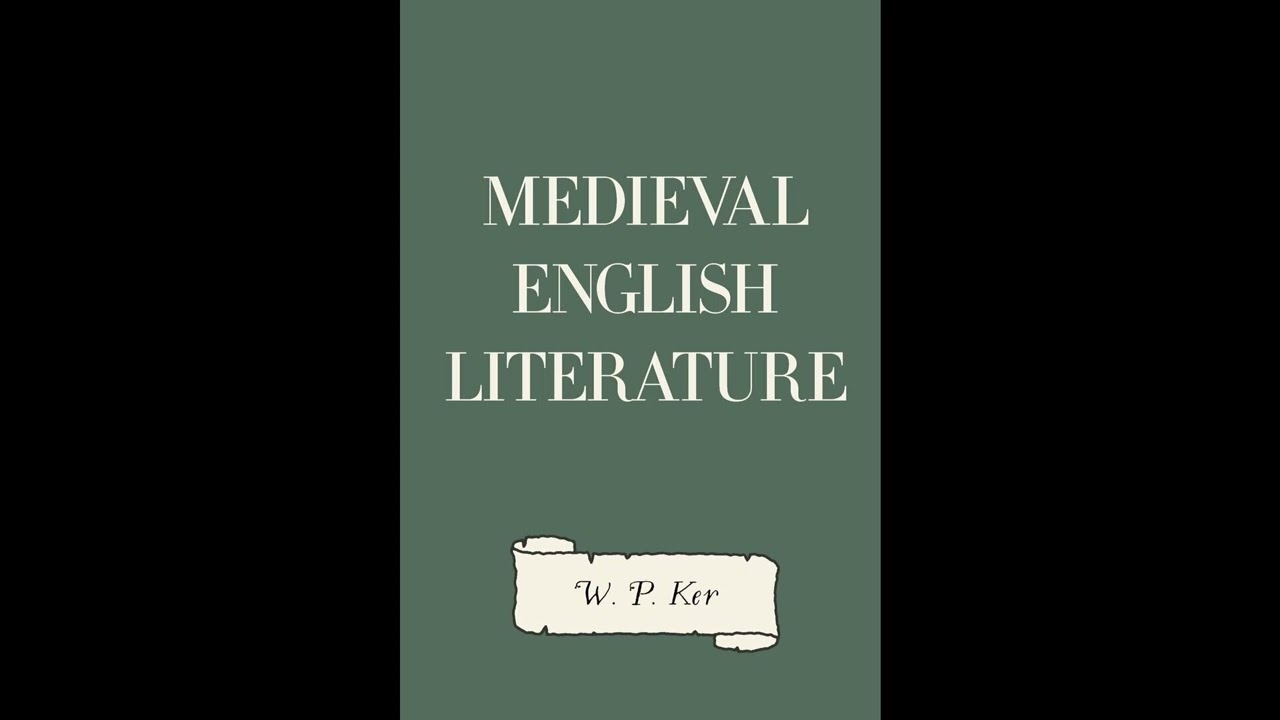
Medieval English Literature
Unlock a portal to the linguistic and imaginative foundations of the English-speaking world with W. P. Ker’s monumental work, Medieval English Literature. This isn’t merely a historical survey; it is a profound act of literary archaeology, meticulously uncovering the origins of our language, our stories, and our cultural identity. For anyone curious about where English literature truly began—before Shakespeare, before even Chaucer—Ker offers an unparalleled guided experience, illuminating the epic grandeur, lyrical beauty, and profound philosophical questions that shaped early English expression. To understand the roots of a literary tradition is to understand its enduring strength, and Ker’s scholarship provides that essential, illuminating context. Ker’s remarkable scholarship acts as a knowledgeable guide through the vast and often formidable landscape of medieval English letters. The scope of his work is breathtaking, beginning with the earliest surviving remnants of Old English poetry and tracing its evolution through centuries of linguistic and cultural transformation. He takes the reader from the stark, heroic world of Anglo-Saxon England, where tales of warriors, kings, and their struggles against fate were sung in alliterative verse, to the more courtly and complex narratives that emerged after the Norman Conquest. This sweeping narrative encompasses a period often misunderstood or dismissed as a dark age, instead revealing it as a crucible where the very elements of English storytelling were forged. The arc of Ker’s presentation progresses chronologically, yet with a keen eye for thematic connections that bridge linguistic divides. He meticulously introduces the seminal works and figures of Old English—the majestic Beowulf, the elegiac verses of The Wanderer and The Seafarer, and the religious poetry of Cynewulf. From there, he seamlessly transitions to the rich ferment of Middle English, where the influences of French romance and Latinate scholarship began to intertwine with the Germanic substrate. He examines the flourishing of chivalric romance, the emergence of dramatic forms, and the profound moral allegories that characterize works like Piers Plowman, culminating in a thoughtful assessment of Geoffrey Chaucer’s revolutionary contribution to English verse. The central intellectual mission of the work is to reveal the underlying continuities and the dynamic shifts that define this formative period, challenging the notion of a broken tradition and instead presenting a coherent, if complex, lineage. W. P. Ker, or William Paton Ker, was a towering figure in British literary scholarship during the late nineteenth and early twentieth centuries. Born in Glasgow, Scotland, in 1855, he dedicated his life to the study of early European literatures, leaving an indelible mark on how medieval texts are understood. He held professorships at University College London and later at Oxford, where his lectures were renowned for their clarity, erudition, and genuine enthusiasm for his subject matter. Ker's academic rigor combined with a profound appreciation for the artistic merit of the works he studied, making him a beloved and influential teacher. His influence extended to future generations of scholars and writers, including the likes of C. S. Lewis and J. R. R. Tolkien, both of whom admired his comprehensive grasp of Old Norse, Old English, and other early Germanic literatures. Beyond Medieval English Literature, Ker authored several other foundational critical works that cemented his reputation as a leading authority on early European narrative forms. His earlier book, Epic and Romance: Essays on Medieval Literature, published in 1897, stands as another cornerstone of medieval studies, demonstrating his comparative approach and his deep understanding of the structural elements that define these ancient genres. He also produced The Dark Ages, which further cemented his position as a scholar capable of synthesizing vast amounts of material into accessible yet authoritative studies. Ker was a meticulous philologist and literary historian, but he was also an engaging prose stylist, known for his ability to convey complex ideas with elegance and precision. He passed away in 1923, leaving behind a legacy that continues to shape our understanding of the literary past. Ker’s work elucidates several crucial themes that permeate medieval English literature and, by extension, subsequent literary tradition. One prominent idea he consistently emphasizes is the continuity and evolution of the English language and its poetic forms. He illustrates how the alliterative verse of Old English, with its strong stress patterns and kennings, gradually gave way to the rhyming couplets and more varied metrical schemes of Middle English, yet retained echoes of its Germanic past in vocabulary and sensibility. For example, he might analyze the subtle persistence of heroic values from Beowulf in the later chivalric romances, showing how courage and loyalty mutate but do not vanish. Another significant theme is the interplay between pagan and Christian worldviews. Ker demonstrates how pre-Christian Germanic myths and motifs often merged with or were reinterpreted through a Christian lens, as seen in texts like The Dream of the Rood, where heroic fortitude is applied to Christ's sacrifice, or in the ways saints' lives were sometimes imbued with the narrative structures of secular heroism. Furthermore, Ker highlights the importance of oral tradition in shaping early written literature. Many of the works he discusses, from epic poems to ballads, originated in oral performance before being committed to parchment. He reveals how this performative aspect influenced structure, repetition, and direct address to an audience. He also brings to light the recurring themes of exile, transience, and the elegiac mood, which are deeply embedded in Anglo-Saxon poetry and continue to resonate in later periods. Ker might point to the poignant laments of The Seafarer or The Ruin to demonstrate this pervasive sense of loss and the relentless passage of time, themes that appear in different guises throughout the medieval period, offering a somber counterpoint to the more celebratory romances. Through these thematic threads, Ker demonstrates that medieval literature, far from being monolithic, was a dynamic, evolving tradition grappling with universal human experiences. When W. P. Ker published Medieval English Literature in 1912, the academic landscape was ripe for such a comprehensive and synthesizing work. The late Victorian and Edwardian eras saw a surge of interest in national origins and cultural heritage, particularly in the wake of renewed philological studies that had begun in the nineteenth century. Scholars were increasingly moving beyond mere antiquarianism, seeking to understand medieval texts not just as curiosities, but as vital components of a continuous literary history. It was a period of consolidation in the humanities, where the burgeoning fields of English literature and history were establishing their methodologies and defining their canons. Ker’s work emerged precisely at a moment when the academic community was ready for a authoritative and accessible overview that could connect disparate pieces of medieval literature into a coherent narrative, making the often challenging subject matter comprehensible and appealing to a broader intellectual audience, while also setting high standards for scholarly rigor. Listening to Ker's Medieval English Literature as an audiobook offers a singular opportunity to engage directly with a foundational work of literary criticism. The spoken word brings Ker's meticulously crafted prose to life, allowing his insights to unfold with a natural rhythm. A skilled narrator ensures that the often complex names, archaic terms, and historical details are articulated with precision and clarity, guiding the listener effortlessly through the rich array of Old and Middle English texts. You can absorb the sweep of Ker’s arguments, the subtle distinctions he draws between periods and genres, and his profound appreciation for the sheer beauty of the language without the distraction of page turns or footnotes. The several hours of listening provide a deep, immersive scholarly experience, perfect for understanding the origins of English literature while walking, commuting, or simply relaxing at home. It’s an intellectual conversation with a master scholar, delivered directly to your ears.
Enjoyed Medieval English Literature? A few ways to support us
Audible & Amazon links are affiliate; we may earn a small commission at no extra cost.
About this production
Human narration by a volunteer reader from LibriVox.org, the public-domain audiobook project. LibriVox volunteers record literary works whose copyright has expired in the United States, releasing the resulting recordings into the public domain.
Medieval English Literature by W. P. Ker. The underlying text is in the U.S. public domain. We do not republish any modern copyrighted edition, translation, or commentary.
The 4K cinematic visuals accompanying this audiobook are generated by an AI image model from prompts derived from the source text. No copyrighted photos, paintings, or stock footage are used. AI generation is disclosed on every video on our YouTube channel as required by YouTube's altered/synthetic content policy.
English subtitles are transcribed from the LibriVox recording with OpenAI Whisper. Translations into the 11 other supported languages are produced by Meta's NLLB-200 neural translation model. No human translator's copyrighted translation is used.
Questions about sourcing or rights? See our DMCA & Sourcing policy or contact us.
Enjoyed this audiobook?
If you'd like to own a copy of Medieval English Literature or hear a professionally produced edition, the links below help support free audiobook production at no extra cost to you.
As an Amazon Associate we earn from qualifying purchases. Audible / print links are affiliate.