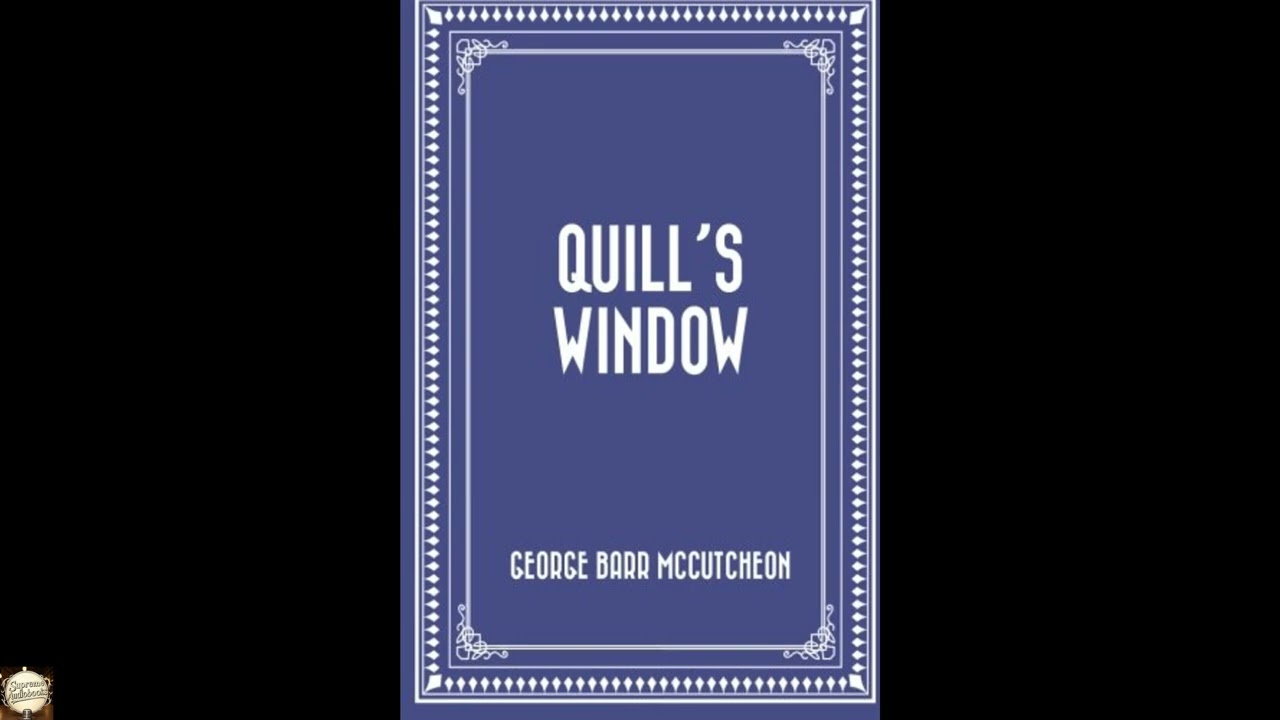
Quill's Window
George Barr McCutcheon’s Quill's Window invites listeners into a world where romance blossoms amidst secrets, where the quiet introspection of the artistic spirit clashes with the rigid expectations of society. This classic novel, penned at the dawn of the twentieth century, continues to resonate today, offering a comforting blend of escapism and keen observation. It is a story that speaks to the enduring human desire for authentic connection, for understanding beyond appearances, and for the courage to pursue one’s truth even when faced with formidable obstacles. As a representative of its era, the narrative holds a mirror to the societal values and anxieties of a bygone age, yet its core exploration of love, identity, and destiny remains profoundly relevant for anyone grappling with the complexities of the heart. The story unfolds in the idyllic, if somewhat cloistered, community of Atherton, a town steeped in tradition and the whispers of old money. Our protagonist, Elara Vance, a young woman of quiet artistic talent and spirited independence, arrives in Atherton seeking inspiration and solace after a personal setback. She rents a small cottage on the edge of the sprawling Blackwood estate, a place rumored to hold a recluse, Mr. Alistair Blackwood, a man of considerable wealth and an even greater air of mystery. Elara’s presence, particularly her habit of sketching at her window—her "quill's window"—soon draws the attention of the estate’s enigmatic owner. Their initial encounters are marked by a cautious curiosity, a dance of polite distance and unspoken intrigue, complicated by the prevailing social strictures of Atherton, which view Elara as an outsider and Alistair as an eccentric figure best left to his solitude. As Elara's artistic endeavors bring her closer to the heart of the estate, she begins to uncover fragments of a long-held secret connected to the Blackwood family and, specifically, to a peculiar, boarded-up window in the manor house itself. This mystery, intertwined with Alistair’s guarded demeanor and the town’s veiled allusions to a past tragedy, forms the central conflict. Elara finds herself drawn not only to the puzzle but increasingly to Alistair himself, a man whose layers of reserve slowly peel away to reveal a depth of character and a hidden vulnerability. The narrative follows their blossoming, unconventional romance as they navigate societal scrutiny, confront the shadows of the past, and ultimately strive to bridge the gap between their disparate worlds, all while the truth behind the mysterious window hangs tantalizingly in the balance, promising either revelation or ruin. George Barr McCutcheon, born in Indiana in 1866, became one of America's most widely read and successful authors of the early twentieth century. His career began in journalism, working for newspapers in Lafayette and Chicago, experiences that undoubtedly sharpened his observational skills and narrative economy. However, it was his 1901 novel, Graustark: The Story of a Love Behind a Throne, a romantic adventure set in a fictional European principality, that catapulted him to national fame. The novel's enormous popularity spawned a series, cementing McCutcheon’s reputation as a master of Ruritanian romance—a subgenre characterized by dashing heroes, imperiled heroines, and exotic, if fictional, settings. Beyond the Graustark series, McCutcheon penned dozens of novels, many of which, like Brewster's Millions (1902), were adapted into successful plays and films, further demonstrating his widespread appeal. His works often combined elements of high romance, lighthearted adventure, and social satire, reflecting the popular tastes of the Progressive Era. He was known for his prolific output and ability to craft engaging stories that offered readers a delightful escape from the everyday. McCutcheon’s literary place, while perhaps not in the vanguard of literary modernism, is significant as a chronicler of popular American sentiment and a purveyor of stories that defined mainstream entertainment for an entire generation before his death in New York City in 1928. Quill's Window artfully explores several themes that resonate with readers across generations. One prominent theme is the clash between artistic sensibility and societal convention. Elara Vance, the artist, is repeatedly challenged by the rigid expectations of Atherton’s social hierarchy, a clear demonstration of how individual expression can be constrained by communal norms. Her "quill's window" itself symbolizes this, representing both her creative outlook and the literal window through which she observes, and is observed by, a judgmental world. Another significant theme is the nature of appearance versus reality. Alistair Blackwood is initially perceived as a forbidding recluse, his reputation colored by rumors and his own deliberate isolation. However, through Elara's patient observation and growing affection, the novel reveals a man of hidden complexities and a deeply sympathetic past, illustrating how superficial judgments can mask profound truths. Furthermore, the novel touches upon the healing power of connection and understanding. Both Elara and Alistair carry past burdens that have isolated them. Their burgeoning relationship acts as a catalyst for personal growth, demonstrating how empathy and shared vulnerability can mend emotional wounds and forge authentic bonds. The narrative also subtly questions the weight of inheritance and tradition, especially through the Blackwood family’s legacy. The old manor house and its secrets represent the burdens of the past that must be confronted and understood for the future to truly unfold, rather than simply being passively accepted. These themes are woven into the very fabric of the story, giving it a depth that extends beyond its romantic core. When Quill's Window was first presented to the public, America was undergoing profound changes. The early 1900s marked the height of the Progressive Era, a period characterized by rapid industrialization, burgeoning cities, and significant social and political reform movements. While issues like women's suffrage, anti-trust legislation, and labor rights dominated public discourse, there was also a widespread desire for entertainment that offered respite and inspiration. Literature of the time reflected this dichotomy, with some authors embracing realism to dissect societal ills, and others, like McCutcheon, providing popular, often romantic, tales that celebrated individualism and presented idealized narratives of love and triumph. Quill's Window emerged in this context, offering a reassuring vision of romance and mystery at a time when traditional values were being challenged by modernity, providing a beloved form of escape and emotional engagement for its audience. Listening to Quill's Window as an audiobook offers a unique and intimate way to experience this classic narrative. The narrator's voice becomes a direct conduit to McCutcheon's prose, allowing the listener to fully absorb the story's carefully crafted atmosphere and the nuances of its early twentieth-century dialogue. With several hours of run time, it is an ideal companion for moments of quiet reflection, long commutes, or household tasks, allowing the listener to become fully immersed in Atherton’s world. Pay attention to the pacing, which often builds a gentle suspense as secrets are hinted at, and to the distinct voices given to Elara's determined optimism and Alistair's guarded nature. The spoken word brings a particular charm to the period descriptions and the romantic exchanges, making the listener feel as though they are not merely reading, but truly eavesdropping on a conversation from another era, bringing the past vividly to life.
Enjoyed Quill's Window? A few ways to support us
Audible & Amazon links are affiliate; we may earn a small commission at no extra cost.
About this production
Human narration by a volunteer reader from LibriVox.org, the public-domain audiobook project. LibriVox volunteers record literary works whose copyright has expired in the United States, releasing the resulting recordings into the public domain.
Quill's Window by George Barr McCutcheon. The underlying text is in the U.S. public domain. We do not republish any modern copyrighted edition, translation, or commentary.
The 4K cinematic visuals accompanying this audiobook are generated by an AI image model from prompts derived from the source text. No copyrighted photos, paintings, or stock footage are used. AI generation is disclosed on every video on our YouTube channel as required by YouTube's altered/synthetic content policy.
English subtitles are transcribed from the LibriVox recording with OpenAI Whisper. Translations into the 11 other supported languages are produced by Meta's NLLB-200 neural translation model. No human translator's copyrighted translation is used.
Questions about sourcing or rights? See our DMCA & Sourcing policy or contact us.
Enjoyed this audiobook?
If you'd like to own a copy of Quill's Window or hear a professionally produced edition, the links below help support free audiobook production at no extra cost to you.
As an Amazon Associate we earn from qualifying purchases. Audible / print links are affiliate.