Castle Rackrent
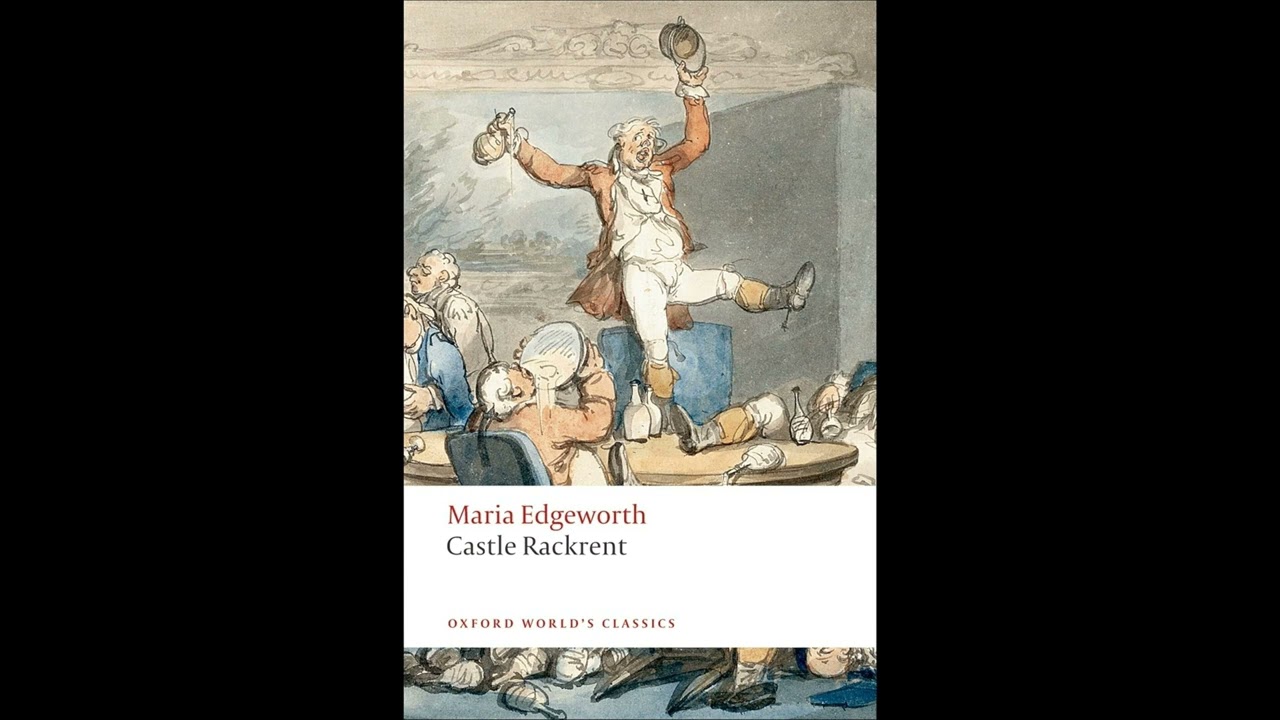
Step into the crumbling grandeur of Rackrent Hall, a place where loyalty borders on delusion and financial ruin is merely a recurring family tradition. Maria Edgeworth's Castle Rackrent, published in 1800, stands as a literary landmark, often hailed as the first true historical novel and a pioneering work in Irish literature. Told through the eyes of an old family retainer, Thady Quirk, this deceptively simple narrative reveals the decay of an entire social order with a wit that is both sharp and surprisingly affectionate. Why should a listener care about the misadventures of a bygone Anglo-Irish gentry today? Because its shrewd observations on class, colonial legacy, and the often-comic ways humans cling to inherited folly resonate deeply, offering a window into a foundational period of Irish history and a blueprint for narrative techniques that still feel fresh and innovative centuries later. The story unfolds on an Irish estate from the mid-18th century through the late 1790s, chronicling the slow, self-inflicted downfall of four successive generations of the Rackrent family. Our guide is the elderly Thady Quirk, who has served the family his entire life, his unwavering devotion colored by a keen, if often understated, awareness of their eccentricities and financial mismanagement. He begins with Sir Patrick O'Rackrent, nicknamed "Sir Kit" for his love of carousing, who sets the tone for future generations by establishing the family's spendthrift habits. Next comes Sir Murtagh, a litigious man who wastes fortunes on lawsuits and lives in squalor, squeezing his tenants dry while enriching his lawyers. The third heir, Sir Kit, marries a wealthy Englishwoman only to gamble away her fortune and eventually imprison her for years, believing she withholds more money. Finally, we meet Sir Condy Rackrent, the most sympathetic and perhaps most feckless of them all. He inherits an estate already deeply mortgaged and attempts various schemes to restore its fortunes, from dabbling in politics to indulging in grand, impractical hospitality. Thady's narrative lovingly details Sir Condy's good intentions and his disastrous execution, his generous spirit constantly undermined by his inability to manage money or effectively run his estate. Through all their follies—dueling, gambling, neglecting their properties, and alienating their tenants—Thady remains a steadfast, if increasingly weary, chronicler, his voice a blend of pride, resignation, and a touch of exasperated humor. The tale is a progression of diminishing returns, each Rackrent bringing the family closer to utter destitution, yet always maintaining a veneer of their inherited status, even as the walls of Castle Rackrent quite literally begin to crumble around them. Maria Edgeworth herself was a truly remarkable figure, born in Oxfordshire, England, in 1767, but forever associated with Ireland, the land she called home for much of her life. The daughter of Richard Lovell Edgeworth, an Anglo-Irish landowner, inventor, and educational reformer, Maria moved to the family estate in Edgeworthstown, County Longford, Ireland, when she was around fifteen. This relocation proved pivotal, immersing her in the specifics of Irish society, economy, and landlord-tenant relations. She not only assisted her father in managing the estate but also drew upon her observations to create a unique body of work focused on social realism and regional character. Her writing career, which began in earnest in the late 1790s, saw her produce not only novels but also children's stories and educational tracts, often collaborating closely with her father. Edgeworth's significance extends beyond Castle Rackrent. She authored other notable novels such as Belinda, which examines social conventions and marriage, and The Absentee, a searing critique of Irish landlords who neglected their estates while living in London. She was admired by literary giants of her time, including Sir Walter Scott, who credited her with inspiring his own historical fiction, and Jane Austen, who praised her keen understanding of human nature. Edgeworth is widely considered a pioneer of the regional novel and the novel of manners, injecting her stories with a reformer's spirit and a desire to depict Irish life truthfully, challenging stereotypes while also critiquing the flaws within her own social class. Her commitment to realism and her innovative use of narrative voice secured her a lasting place in the literary canon, influencing generations of authors who followed. The enduring appeal of Castle Rackrent lies in its masterful enactment of several powerful themes. Foremost is the decline of the Anglo-Irish gentry, a class that, through generations of extravagance, poor judgment, and a fundamental detachment from the land and its people, inexorably loses its grip on power and property. We see this vividly in Sir Kit's reckless duels and gambling that empty the family coffers, or Sir Murtagh's miserly legal battles that enrich only his lawyers while his tenants suffer. Another central theme is loyalty and its complexities, embodied by Thady Quirk himself. His unwavering devotion to the Rackrents, even as he details their ruinous habits, speaks to the deep-seated, sometimes self-sacrificing bonds of service, yet also hints at a broader critique of a social system that demands such fealty in the face of demonstrable incompetence. Furthermore, the novel brilliantly showcases the theme of unreliable narration and the power of perspective. Thady's voice is both intimate and biased, a filter through which the reader must interpret events. His explanations for the Rackrents' follies, often framed as excuses or simple facts, compel the listener to read between the lines, to discern the underlying social critique beneath his seemingly innocent reportage. This technique forces a critical engagement with the story, making the listener an active participant in understanding the true implications of the Rackrents' actions. Finally, the subtle undercurrent of Anglo-Irish relations and the colonial dynamic surfaces through the narrative. While Thady is loyal to his English-descended masters, his perspective, steeped in local idiom and custom, implicitly highlights the cultural chasm and eventual unsustainability of the Rackrent family's rule, even as they represent a segment of the Protestant Ascendancy. When Castle Rackrent was published in 1800, Ireland was a land on the cusp of significant change. The Act of Union, which formally joined the Kingdom of Ireland with the Kingdom of Great Britain, was enacted in that very year, effectively dissolving the Irish Parliament and making Ireland directly subject to Westminster. This period was characterized by political unrest, agrarian disturbances, and a growing consciousness of Irish national identity, often in tension with the ruling Anglo-Irish Protestant Ascendancy, the very class Edgeworth scrutinizes. The novel emerged from Edgeworth's lived experience in this charged atmosphere, offering an insider's view of the inherent flaws and ultimate fragility of this colonial landed class. Literarily, it marked a turning point, moving beyond the sentimental novels of the previous century towards a more realistic, socially conscious form of fiction, pioneering the use of regional dialect and detailed social observation that would become hallmarks of the novelistic tradition. Listening to Castle Rackrent as an audiobook brings Maria Edgeworth's groundbreaking work to life in a way that truly honors its original intent. The narrative relies heavily on the distinctive voice of Thady Quirk, his unique Irish phrasing, his specific rhythms of speech, and his often-dry, understated humor. A skilled narrator can perfectly capture this blend of loyalty, exasperation, and subtle social commentary, allowing the listener to truly inhabit Thady's perspective and appreciate the nuances of his unreliable account. The manageable run length of several hours makes it an ideal choice for focused listening, perhaps during a commute or while engaging in a quiet activity. Pay close attention to the narrator's pacing, which can emphasize Thady's conversational, rambling style, and the subtle variations in voice that distinguish the various Rackrents through his recollections. The atmosphere of slow, inevitable decay, tempered by Thady's enduring affection, is beautifully rendered through the spoken word, allowing the listener to fully absorb the novel's humor, pathos, and profound social insight.
Enjoyed Castle Rackrent? A few ways to support us
Audible & Amazon links are affiliate; we may earn a small commission at no extra cost.
About this production
Human narration by a volunteer reader from LibriVox.org, the public-domain audiobook project. LibriVox volunteers record literary works whose copyright has expired in the United States, releasing the resulting recordings into the public domain.
Castle Rackrent by Maria Edgeworth. The underlying text is in the U.S. public domain. We do not republish any modern copyrighted edition, translation, or commentary.
The 4K cinematic visuals accompanying this audiobook are generated by an AI image model from prompts derived from the source text. No copyrighted photos, paintings, or stock footage are used. AI generation is disclosed on every video on our YouTube channel as required by YouTube's altered/synthetic content policy.
English subtitles are transcribed from the LibriVox recording with OpenAI Whisper. Translations into the 11 other supported languages are produced by Meta's NLLB-200 neural translation model. No human translator's copyrighted translation is used.
Questions about sourcing or rights? See our DMCA & Sourcing policy or contact us.
Enjoyed this audiobook?
If you'd like to own a copy of Castle Rackrent or hear a professionally produced edition, the links below help support free audiobook production at no extra cost to you.
As an Amazon Associate we earn from qualifying purchases. Audible / print links are affiliate.