About George Barr McCutcheon
The literary landscape at the dawn of the twentieth century was significantly shaped by storytellers who captured the popular imagination with tales of adventure, romance, and humor. Among the most prolific and beloved of these was George Barr McCutcheon, born on July 26, 1866, in Tippecanoe County, Indiana, and passing away on October 23, 1928, in New York City, New York. His work defined a certain brand of escapist fiction that resonated deeply with readers of his time.
McCutcheon’s early life unfolded in Indiana, where he grew up alongside his brother, John T. McCutcheon, who would become a renowned political cartoonist. He attended Purdue University, though he did not complete his degree, and soon found his calling in journalism. He honed his craft as a reporter and city editor for various newspapers in Lafayette, Indiana, and later in Chicago, a period that undoubtedly sharpened his observational skills and narrative economy. This practical experience in constructing compelling daily stories provided a strong foundation for his later transition into novel writing.
His shift from newspaper offices to the world of fiction began just as the mass market for books was expanding, driven by popular magazines and an eager readership seeking entertainment. McCutcheon achieved immediate and widespread success with his first major novel, *Graustark: The Story of a Love Affair Between an American and a Princess*, published in 1901. This romantic adventure, set in a fictional Eastern European principality, became an instant bestseller and inaugurated a popular subgenre of “Ruritanian romance” that many authors would emulate, establishing McCutcheon as a major voice in American popular fiction.
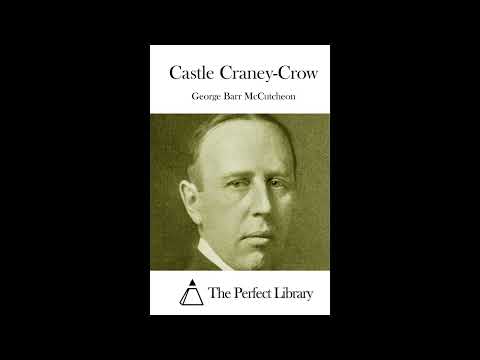
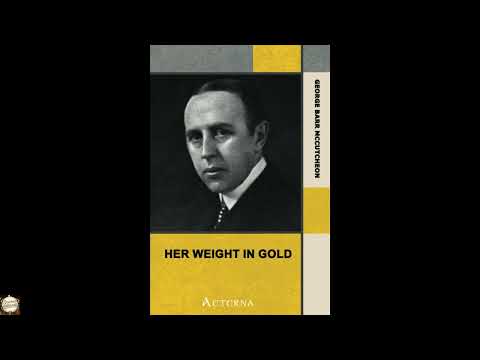
Building on this initial triumph, McCutcheon produced a steady stream of novels that consistently found a large audience. His second significant success, *Brewster's Millions* (1902), follows a man who must spend a million dollars in a year to inherit ten million, a concept so ingenious it inspired numerous stage and film adaptations. He revisited his famous fictional kingdom in *Castle Craney-Crow* (1902), where American tourists encounter mystery and romance in an ancient European stronghold. Later works broadened his scope, including *Her Weight in Gold* (1912), a humorous tale concerning a peculiar inheritance, and *A Fool and His Money* (1913), which follows a young man's financial follies. *Quill's Window* (1921), set in a small American town, showcased his ability to craft more character-driven narratives outside of his adventure stories.
A defining characteristic of McCutcheon's prose is its clear, direct quality, prioritizing plot and engaging character interactions. His narratives often feature an underlying sense of whimsy and a penchant for elaborate, often improbable, scenarios that nonetheless feel utterly compelling within their fictional worlds. Themes of mistaken identity, hidden fortunes, and the collision of American pragmatism with European aristocracy frequently appear, particularly in his Graustarkian tales where American protagonists navigate the intrigues of Old World royalty. For instance, the enduring appeal of an ordinary American falling in love with a princess, as seen throughout the Graustark series, speaks to a desire for democratic ideals to triumph in the face of rigid class structures. His humor, often gentle and situational, provided a light touch even amidst thrilling plots.
McCutcheon occupied a prominent position in American literary culture during the early 20th century, a period when entertainment value often dictated literary success. He was a prodigious bestseller, his books gracing many homes and libraries, and his popularity helped to solidify the tropes of romantic adventure that would persist in popular fiction for decades. While perhaps not always remembered for profound literary innovation, his ability to craft entertaining, well-paced stories ensured his widespread readership and influenced the trajectory of commercial fiction. His work remains a valuable window into the popular tastes and escapist desires of an earlier era.
His stories, now freely available, offer a charming glimpse into a bygone era of adventure and wit, ready to entertain new audiences through the accessible medium of audiobooks.
More on Wikipedia →