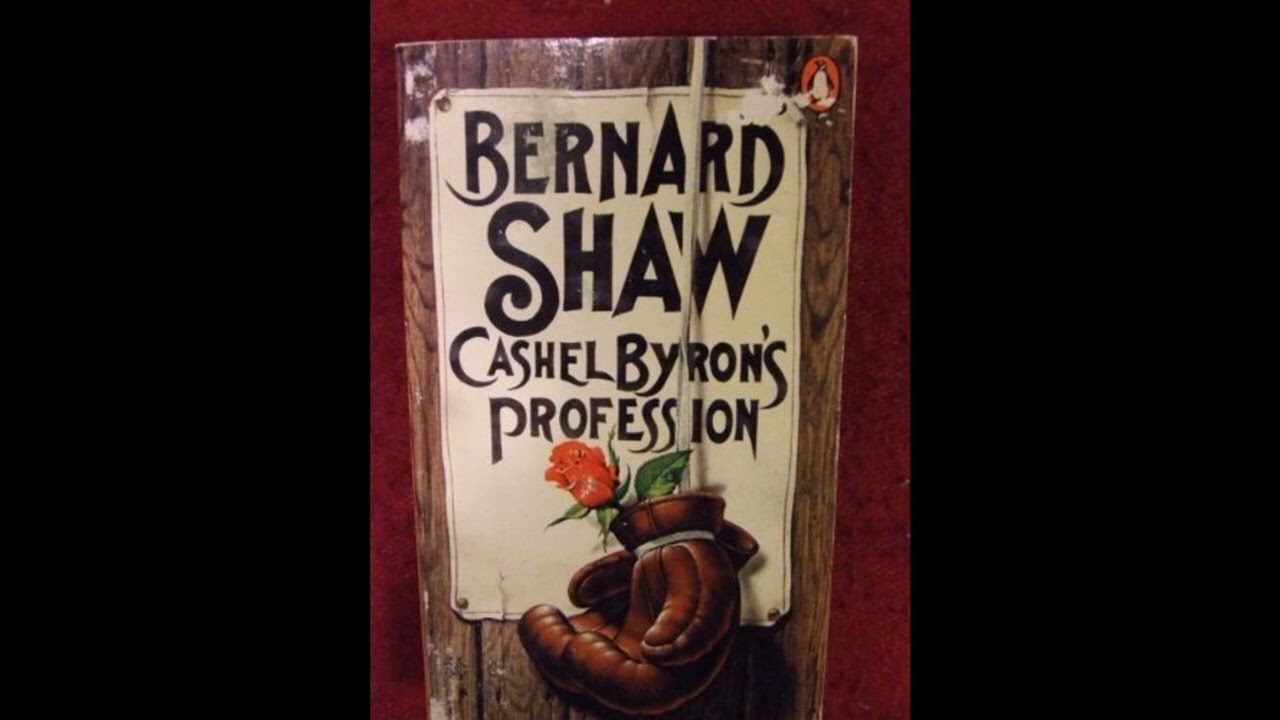
Cashel Byron's Profession: Definitive Text
George Bernard Shaw, celebrated primarily for his groundbreaking plays, surprisingly began his writing career as a novelist. Cashel Byron's Profession, a work that predates his theatrical fame, offers a singular opportunity to witness the nascent brilliance of a literary giant grappling with the conventions of Victorian society and fiction. Far from a mere curiosity, this definitive text presents a witty, incisive critique of class, sport, and romance that still resonates today. It is a story that asks profound questions about what constitutes a "respectable" profession and what happens when true passion collides with societal expectation, all wrapped in a charmingly unconventional love story. Listening to this early work allows us to trace the roots of Shaw's distinctive voice – his biting humor, his intellectual rigor, and his unwavering commitment to challenging the status quo – making it a crucial piece of the puzzle in understanding one of the twentieth century's most influential writers. The story centers on Lydia Carew, a woman of independent means and formidable intellect, who inherited a substantial fortune and lives life on her own terms. Unlike many heroines of her era, Lydia is not concerned with securing a husband for financial stability, but rather with intellectual pursuits and making her own way in the world. Her carefully constructed life takes an unexpected turn when she encounters Cashel Byron, a charismatic and physically impressive young man with an air of mystery about him. He possesses an undeniable magnetism and an unusual blend of refined manners and startling directness that captivates Lydia. Their connection deepens, yet Cashel harbors a significant secret: his true profession is that of a professional prize-fighter. In Victorian society, boxing, especially for money, was considered a brutal and disreputable occupation, certainly not one befitting a potential suitor for a woman of Lydia's social standing. The central conflict arises from this hidden truth. Cashel longs for Lydia's acceptance and a place within her world, but his passion for his profession and the very identity it has forged for him create an almost insurmountable barrier. The novel follows their burgeoning romance as Cashel struggles to conceal his activities, and Lydia grapples with her growing feelings for a man whose life exists utterly outside the bounds of her conventional upbringing, leading to a series of comedic and dramatic situations that threaten to expose his secret and sever their connection. Born in Dublin in 1856, George Bernard Shaw moved to London in 1876, a young man with a fierce intellect and an ambition to write. His early years were marked by considerable struggle, as he attempted to establish himself as a novelist and then as a music and theatre critic. Though he produced five novels during this period, including Cashel Byron's Profession first serialized in 1882 and published as a book in 1886, none achieved significant commercial success at the time. It was through his prolific and often provocative critical essays, and his involvement with the Fabian Society – a socialist intellectual movement – that Shaw began to make his name as a public figure. Shaw's true literary calling emerged when he turned to playwriting in the 1890s. His plays, such as Pygmalion (the basis for My Fair Lady), Man and Superman, Saint Joan, and Major Barbara, revolutionised English theatre, challenging Victorian conventions with their sharp wit, intellectual debate, and unsparing social commentary. He became known for his "problem plays" which confronted contemporary issues head-on, often turning traditional morality on its head. Shaw was awarded the Nobel Prize in Literature in 1925, cementing his place as one of the most significant and influential figures in modern drama, a legacy he cultivated until his death in 1950. Cashel Byron's Profession acts as an early showcase for several enduring Shavian themes. One prominent idea is the critique of social hypocrisy and the arbitrary nature of class distinctions. Shaw highlights the absurdity of a society that values inherited wealth or idleness over honest labor, even if that labor is physically demanding and involves a degree of public spectacle. Cashel's profession, though scorned, demands discipline, courage, and strategic thinking, arguably making him more "gentlemanly" in character than some of the indolent upper-class figures depicted. The novel also addresses the conflict between professional calling and personal identity. Cashel finds genuine fulfillment and mastery in boxing; it is not merely a job but integral to who he is. The tension arises from the societal pressure to abandon this passion for a more "respectable" life that would allow him to marry Lydia, forcing him to confront what he truly values. A second set of significant themes includes the portrayal of the "New Woman" and female independence. Lydia Carew is a groundbreaking character for her time: intelligent, educated, financially autonomous, and determined to choose her own path in life, rather than being defined by marriage or social convention. Her attraction to Cashel, despite his questionable background, represents a radical departure from expected romantic choices, asserting her right to follow her own heart and intellect. Finally, Shaw directly questions the nature of true gentility and worth. Through Cashel's character, the novel suggests that integrity, skill, and genuine character are far more indicative of a noble spirit than birthright or material possessions. Shaw uses the contrasting ideals of physical prowess and intellectual refinement to deconstruct prevailing notions of aristocracy and moral superiority. When Cashel Byron's Profession was published in the mid-1880s, Victorian England was a society in flux, yet still rigidly stratified by class and convention. The rise of industrialization had created new wealth but also exacerbated social inequalities, and a growing intellectual movement, including socialist thinkers like Shaw, began to question the existing order. Sports like boxing, while popular, were often associated with the working class and seen as crude entertainment, reinforcing a divide between "mind" and "body," high culture and low. Culturally, the latter half of the nineteenth century saw the slow but steady emergence of the "New Woman," a figure who challenged traditional gender roles and demanded greater intellectual and personal freedom. Lydia Carew embodies these nascent feminist ideals, pushing against the limitations placed upon women of her station. Shaw, influenced by Ibsen and other continental playwrights who were creating realistic, socially charged drama, was himself beginning to move away from the more fantastical or sentimental styles of earlier Victorian fiction towards a more direct engagement with contemporary issues. His novel, therefore, reflects and critiques the social anxieties and changing attitudes of its period, foreshadowing the incisive social commentary that would define his later, more famous plays. Listening to Cashel Byron's Profession as an audiobook offers a unique way to connect with Shaw's early voice. The several hours of narration provide ample time to immerse yourself in the witty dialogue and the specific cadence of the late Victorian era. A skilled narrator brings out the satirical undercurrents, the sharp observations, and the comedic timing that are so central to Shaw's style, even in this novelistic form. You can hear the intelligence in Lydia's precise articulation, the earnestness in Cashel's declarations, and the subtle social criticisms embedded in every exchange. The spoken word adds an immediate intimacy to the characters' struggles and triumphs, allowing you to appreciate the theatricality inherent in Shaw's prose long before he achieved renown on the stage. It's an opportunity to experience the very beginnings of a voice that would reshape modern literature.
Enjoyed Cashel Byron's Profession: Definitive Text? A few ways to support us
Audible & Amazon links are affiliate; we may earn a small commission at no extra cost.
About this production
Human narration by a volunteer reader from LibriVox.org, the public-domain audiobook project. LibriVox volunteers record literary works whose copyright has expired in the United States, releasing the resulting recordings into the public domain.
Cashel Byron's Profession: Definitive Text by George Bernard Shaw. The underlying text is in the U.S. public domain. We do not republish any modern copyrighted edition, translation, or commentary.
The 4K cinematic visuals accompanying this audiobook are generated by an AI image model from prompts derived from the source text. No copyrighted photos, paintings, or stock footage are used. AI generation is disclosed on every video on our YouTube channel as required by YouTube's altered/synthetic content policy.
English subtitles are transcribed from the LibriVox recording with OpenAI Whisper. Translations into the 11 other supported languages are produced by Meta's NLLB-200 neural translation model. No human translator's copyrighted translation is used.
Questions about sourcing or rights? See our DMCA & Sourcing policy or contact us.
Enjoyed this audiobook?
If you'd like to own a copy of Cashel Byron's Profession: Definitive Text or hear a professionally produced edition, the links below help support free audiobook production at no extra cost to you.
As an Amazon Associate we earn from qualifying purchases. Audible / print links are affiliate.