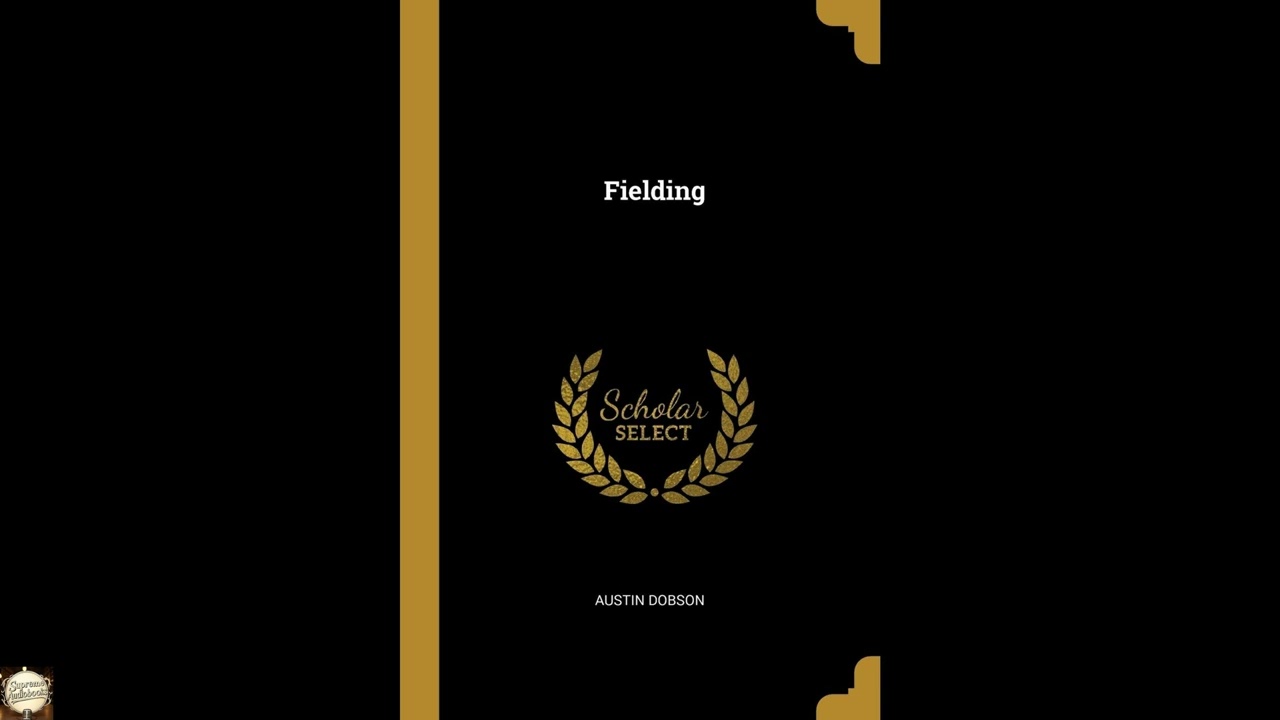
Fielding
Henry Fielding, the boisterous, brilliant architect of the English novel, still commands attention centuries after his quill first danced across the page. Yet, for all his enduring fame, the man himself and the circumstances that forged his revolutionary prose often remain cloaked in legend. Austin Dobson's "Fielding" offers more than just a dry recounting of facts; it’s an elegant, insightful examination of the life, times, and genius of the author of Tom Jones and Joseph Andrews. This isn't merely a historical document; it's an invitation to understand how a specific era shaped a literary titan, and how that titan, in turn, reshaped the very fabric of storytelling, inviting us to see the world through his uniquely witty, often satirical, and always humane lens. Austin Dobson commences his study by positioning Fielding within the bustling, often raucous, milieu of Augustan England – a world Dobson knew intimately as a scholar of the period. We meet Henry Fielding not just as a name on a title page, but as a complex individual, born into minor aristocracy in Somerset, educated at Eton, and initially pursuing a career on the London stage as a playwright. Dobson meticulously traces Fielding's early struggles, his ventures into dramatic satire that frequently brought him into conflict with authorities, leading eventually to the Licensing Act of 1737, which effectively shuttered his theatrical ambitions. This pivotal moment, Dobson suggests, was not an end but a dramatic redirection that would ultimately benefit English literature immeasurably. From this enforced pivot, Dobson guides us through Fielding’s subsequent career as a barrister, a London magistrate, and, crucially, as a novelist. The narrative skillfully interweaves biographical details—his marriages, his financial travails, his friendships, and his reformist zeal—with keen analyses of his successive literary achievements. Dobson highlights the genesis of Joseph Andrews, showing how it emerged as a playful, yet profound, parody of Richardson's Pamela, quickly establishing Fielding as a force in the nascent genre. We then follow the development of his vision through Jonathan Wild and, most prominently, Tom Jones, which Dobson presents as the grand culmination of Fielding's comedic genius and his comprehensive understanding of human nature. Dobson’s portrayal isn't a mere chronology; it’s an interpretive biography that considers the accusations leveled against Fielding, particularly regarding the perceived morality of his characters and plots, and offers a balanced defense, placing Fielding’s sometimes earthy realism firmly within the satirical traditions of Swift and Hogarth. Austin Dobson, the author of this discerning biography, was himself a distinguished man of letters during the late Victorian and early Edwardian periods. Born in Plymouth in 1840, Dobson spent the better part of his professional life in the British civil service, working for the Board of Trade. This seemingly prosaic career, however, belied a profound and passionate engagement with literature, particularly the 18th century, which became his lifelong scholarly focus. He was renowned for his exquisite command of poetic forms, often reviving French verse structures like the rondeau and triolet, and his volumes of poetry, such as Old-World Idylls and At the Sign of the Lyre, secured his reputation as a poet of elegance and wit. Beyond his verse, Dobson was an astute and prolific critic and essayist. His writings frequently illuminated the lives and works of forgotten or misunderstood figures from the Georgian era, demonstrating an unparalleled familiarity with the period's social customs, artistic trends, and literary output. He penned influential studies on figures like William Hogarth, Oliver Goldsmith, and Horace Walpole, always characterized by a meticulous attention to detail and a lucid, engaging prose style. Dobson was less concerned with grand theoretical statements than with presenting a clear, empathetic, and scrupulously researched portrait of his subjects, rendering them accessible and relevant to a modern audience. He passed away in 1921, leaving behind a body of work that continues to inform and delight. Dobson's critical assessment of Fielding's oeuvre reveals several enduring themes that resonate through the author's work. One prominent aspect is Fielding’s pivotal role in the development of the English novel itself. Dobson illustrates how Fielding moved beyond the sentimental, epistolary style prevalent at the time, particularly as perfected by Samuel Richardson. With Joseph Andrews, Fielding consciously crafted a new kind of narrative, introducing an omniscient narrator who comments on the action, a wider social panorama, and a sophisticated comedic structure, effectively laying groundwork for the genre's future direction. His departure wasn't just stylistic; it represented a new way of seeing and rendering reality in prose. Another central thread Dobson highlights is Fielding's profound use of satire and social commentary. Whether skewering political corruption in The Historical Register for the Year 1736 or exposing the moral bankruptcy masquerading as piety in Jonathan Wild, Fielding wielded wit as a powerful weapon against hypocrisy and injustice. Dobson points to scenes where the absurdity of human behavior is magnified, forcing the reader to confront uncomfortable truths about their own society. This keen observation of moral and social failings, presented with a unique blend of humor and earnestness, underscores Fielding's commitment to improving the world around him, even as he entertained it. Dobson also examines Fielding's deep understanding of human nature and morality. Characters like Tom Jones are not paragons of virtue, nor are they irredeemable villains; they are complex beings driven by a mix of impulses, passions, and sometimes misguided intentions. Fielding, as Dobson explains, invites us to find commonality in their flaws and strengths, portraying a world where virtue often resides not in outward display but in the genuine, if imperfect, goodness of the heart. Austin Dobson was writing "Fielding" during a period of significant cultural transformation in Britain – the twilight of the Victorian era and the dawn of the Edwardian age. This was a time when the discipline of literary criticism was professionalizing, moving beyond amateur review toward more rigorous, scholarly analysis. There was a burgeoning interest in understanding the historical development of English literature, prompting scholars to look back at earlier periods with fresh eyes and a desire to consolidate the national literary canon. Dobson’s work fits squarely into this intellectual current. His meticulous research and balanced perspective offered a counterpoint to earlier, more moralistic Victorian interpretations of Fielding, which sometimes struggled with the perceived earthiness or frankness of his novels. Dobson's generation was, in many ways, ready to appreciate the sophisticated artistry and social critique of the 18th century on its own terms, free from the strictures of Victorian sentimentality. His biography of Fielding, therefore, emerged not just from his individual passion for the period, but also from a wider cultural imperative to celebrate and comprehend the foundational figures who shaped the very landscape of English narrative prose. Listening to Austin Dobson’s "Fielding" provides an intimate and particularly rewarding experience. The graceful, measured prose, characteristic of a skilled Victorian man of letters, truly comes to life when spoken. A thoughtful narration will highlight Dobson’s subtle humor and the elegant rhythm of his sentences, drawing you into his scholarly world. For several hours, you can absorb the intricacies of Fielding's life and the rich context of 18th-century England, whether during a quiet afternoon at home, a long commute, or while engaged in other tasks. Pay attention to the clarity of the presentation, the careful distinctions Dobson makes in his analysis, and the way the narrator conveys the intellectual curiosity and affectionate regard Dobson held for his subject. It transforms a scholarly work into a compelling listening experience, allowing the listener to appreciate the nuanced artistry of both Fielding and his astute biographer.
Enjoyed Fielding? A few ways to support us
Audible & Amazon links are affiliate; we may earn a small commission at no extra cost.
About this production
Human narration by a volunteer reader from LibriVox.org, the public-domain audiobook project. LibriVox volunteers record literary works whose copyright has expired in the United States, releasing the resulting recordings into the public domain.
Fielding by Austin Dobson. The underlying text is in the U.S. public domain. We do not republish any modern copyrighted edition, translation, or commentary.
The 4K cinematic visuals accompanying this audiobook are generated by an AI image model from prompts derived from the source text. No copyrighted photos, paintings, or stock footage are used. AI generation is disclosed on every video on our YouTube channel as required by YouTube's altered/synthetic content policy.
English subtitles are transcribed from the LibriVox recording with OpenAI Whisper. Translations into the 11 other supported languages are produced by Meta's NLLB-200 neural translation model. No human translator's copyrighted translation is used.
Questions about sourcing or rights? See our DMCA & Sourcing policy or contact us.
Enjoyed this audiobook?
If you'd like to own a copy of Fielding or hear a professionally produced edition, the links below help support free audiobook production at no extra cost to you.
As an Amazon Associate we earn from qualifying purchases. Audible / print links are affiliate.