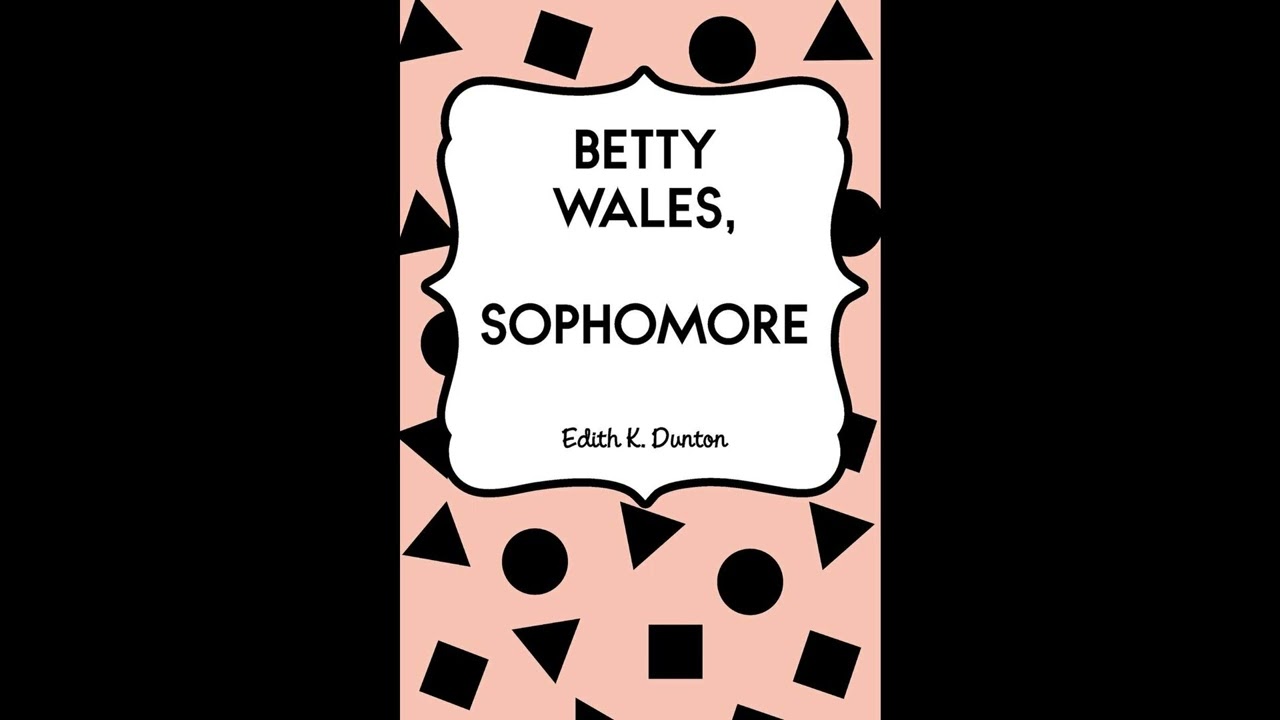
Betty Wales, Sophomore
Step back into an era when the halls of women's colleges buzzed with a particular kind of earnest ambition and spirited camaraderie. Edith K. Dunton's "Betty Wales, Sophomore," originally published in 1905, offers more than just a nostalgic glimpse into early 20th-century collegiate life; it presents a refreshingly honest and surprisingly relevant portrait of young women grappling with identity, friendship, and the pursuit of knowledge. While the specific customs and fashions of Farview College might feel a world away, the underlying struggles and triumphs of Betty Wales resonate powerfully with anyone who has ever faced the challenges of growth and self-discovery during a formative period, making this a story that speaks across generations to the enduring spirit of youth and aspiration. The story opens with Betty Wales returning to Farview College for her sophomore year, having successfully navigated the excitements and trials of her freshman debut. She is no longer the wide-eyed newcomer, but a more seasoned student eager to embrace the traditions and responsibilities that come with her new status. The familiar setting of Farview, a women's college committed to academic rigor and character development, provides a backdrop for a year of both expected joys and unforeseen difficulties. Betty's core group of friends — Eleanor, Isabel, and the ever-spirited "Babe" — are all back, their bonds deepened by shared experiences, yet now subtly tested by new academic pressures, social obligations, and emerging personal interests. As the academic year progresses, Betty finds herself at the center of various college events, from literary society meetings and athletic competitions to social dances and dorm room debates. Her leadership qualities begin to surface as she takes on greater roles within student organizations, bringing her into contact with a wider array of personalities, including some whose motivations are not entirely pure. The central conflict of the story revolves around Betty's growth into a more discerning and self-assured young woman, particularly as she confronts misunderstandings, navigates a complex social dynamic involving a new and somewhat enigmatic classmate, and strives to maintain her integrity amidst the heightened expectations and occasional rivalries of sophomore year. She learns that loyalty, integrity, and good judgment are not merely abstract ideals, but practical necessities for a harmonious college existence. The narrative gracefully follows Betty through these challenges, building towards a resolution that strengthens her character and solidifies her place within the Farview community, without revealing the specific twists that ultimately define her year. Edith K. Dunton, the author behind the beloved Betty Wales series, was an American writer and editor born in 1875. A graduate of Vassar College in 1897, Dunton brought an insider's perspective to her portrayals of women's higher education. Her own experiences at one of the prestigious Seven Sisters colleges undoubtedly informed the authentic atmosphere and detailed campus life depicted in her novels. After college, she worked as a journalist and editor for prominent publications of the era, including The Youth's Companion and The House Beautiful, demonstrating her versatility and keen understanding of the publishing world. The "Betty Wales" series, which began with Betty Wales, Freshman in 1904, became her most enduring literary contribution. These books were immensely popular among young women in the early 20th century, providing a window into the relatively new and exciting world of higher education for women. Dunton's writing style, characterized by its straightforward prose and focus on character development, positioned her as a significant voice in the emerging genre of girls' school stories. Her novels offered not only entertainment but also a vision of intelligent, capable young women pursuing academic and personal aspirations, distinguishing them from more purely sentimental or didactic children's literature of the period. Dunton passed away in 1944, leaving behind a legacy of stories that captured a pivotal moment in women's history. "Betty Wales, Sophomore" enacts several key themes that resonate both historically and in contemporary contexts. One prominent theme is the cultivation of strong female friendships and the importance of loyalty. Throughout the novel, Betty's relationships with Eleanor, Isabel, and Babe are continually tested. For instance, when a new student arrives whose charming demeanor hides a manipulative streak, Betty must discern who to trust and how to support her genuine friends, illustrating the critical role of discernment within a close-knit community. Another central theme is self-discovery and the process of maturing beyond youthful idealism. Betty grapples with academic setbacks, social faux pas, and difficult decisions, such as choosing between a popular social event and her commitment to a scholastic club, pushing her to define her values independently rather than simply following the crowd. The novel also highlights the value of education for women, not just as a means to acquire knowledge, but as a crucible for character building and leadership development. Farview College is portrayed as an environment where intellectual pursuits are intertwined with moral and social growth. A specific scene might show Betty diligently preparing for a challenging debate, realizing that her voice and carefully constructed arguments hold significant power, thereby underscoring the era's evolving understanding of women's intellectual capabilities and their potential contributions to society. Finally, the narrative touches upon social pressures and the subtle class distinctions that could exist even within the supposedly egalitarian walls of a college, showing how Betty navigates these unspoken hierarchies with grace and principle. This work emerged during a fascinating period of cultural and social transformation in the United States, the early 1900s. It was the Progressive Era, a time marked by significant social reform movements, including the burgeoning women's suffrage movement. The expansion of higher education for women was a relatively recent phenomenon, with institutions like Vassar, Wellesley, and Smith growing in prestige and enrollment. These colleges became bastions for the "New Woman" ideal – an educated, independent, and often career-minded woman who sought more than traditional domestic roles. "Betty Wales, Sophomore" directly reflects this cultural moment by portraying college life as a sphere where young women could develop their intellect, form lifelong bonds, and prepare for lives of purpose beyond the confines of home. The genre of girls' school stories, in which Dunton was a key contributor, flourished precisely because it offered aspirational narratives for a generation of young women looking for role models and blueprints for their own expanding possibilities. The novel serves as a literary snapshot of a society grappling with changing gender roles and the increasing recognition of women's capabilities outside the domestic sphere. Listening to "Betty Wales, Sophomore" as an audiobook offers a uniquely immersive way to connect with this historical period and its characters. A skilled narrator can bring the earnestness of Betty's inner thoughts, the spirited banter among her friends, and the formal yet heartfelt dialogue of the early 20th century to vivid life. The run length of several hours allows for a gradual unfolding of Betty's sophomore year, letting the listener become fully absorbed in the rhythms of college life – the quiet studiousness, the bursts of social energy, and the tender moments of self-reflection. Listen for the narrator's interpretation of the distinct personalities, from the confident student leader to the slightly mischievous classmate, and how their voices paint a full picture of the Farview community, capturing the atmosphere of ambition, friendship, and burgeoning maturity that defines this enduring tale.
Enjoyed Betty Wales, Sophomore? A few ways to support us
Audible & Amazon links are affiliate; we may earn a small commission at no extra cost.
About this production
Human narration by a volunteer reader from LibriVox.org, the public-domain audiobook project. LibriVox volunteers record literary works whose copyright has expired in the United States, releasing the resulting recordings into the public domain.
Betty Wales, Sophomore by Edith K. Dunton. The underlying text is in the U.S. public domain. We do not republish any modern copyrighted edition, translation, or commentary.
The 4K cinematic visuals accompanying this audiobook are generated by an AI image model from prompts derived from the source text. No copyrighted photos, paintings, or stock footage are used. AI generation is disclosed on every video on our YouTube channel as required by YouTube's altered/synthetic content policy.
English subtitles are transcribed from the LibriVox recording with OpenAI Whisper. Translations into the 11 other supported languages are produced by Meta's NLLB-200 neural translation model. No human translator's copyrighted translation is used.
Questions about sourcing or rights? See our DMCA & Sourcing policy or contact us.
Enjoyed this audiobook?
If you'd like to own a copy of Betty Wales, Sophomore or hear a professionally produced edition, the links below help support free audiobook production at no extra cost to you.
As an Amazon Associate we earn from qualifying purchases. Audible / print links are affiliate.