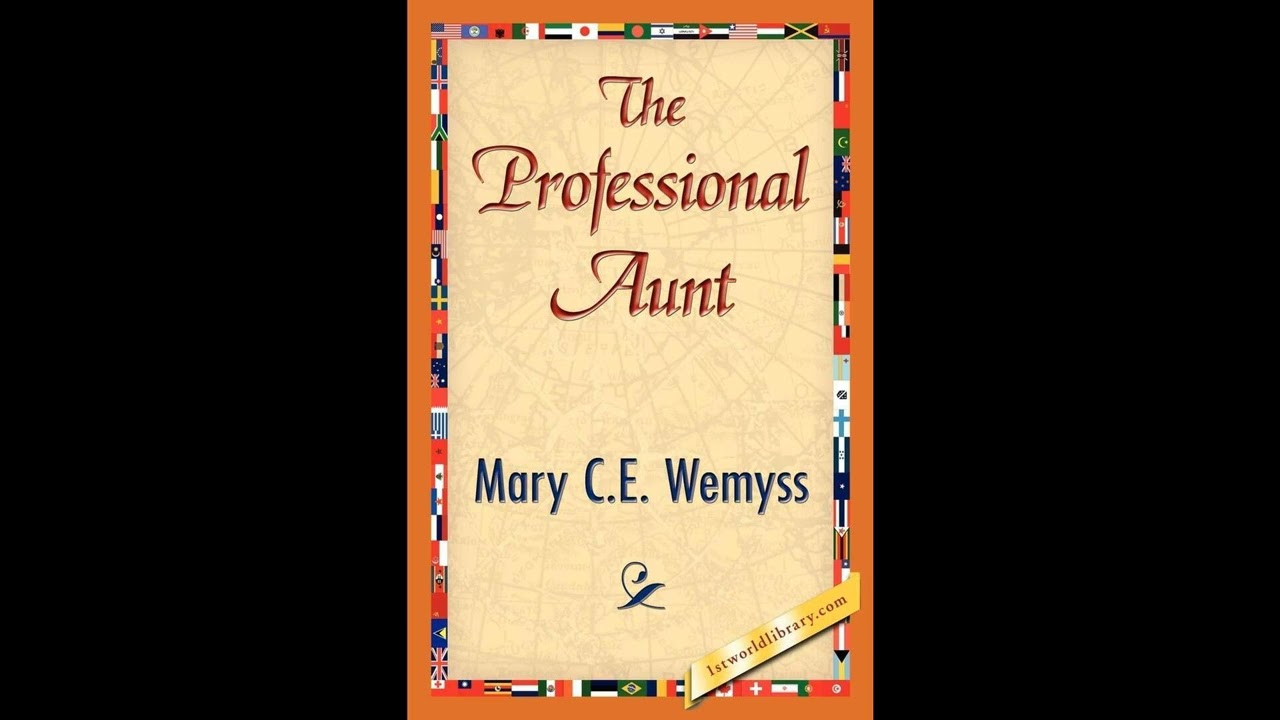
The Professional Aunt
For anyone who has ever felt overlooked, found their purpose in the lives of others, or navigated the often-humorous complexities of family dynamics, Mary C. E. Wemyss’s The Professional Aunt offers a profoundly resonant and wonderfully observed character study. First published in 1910, this novel shines a gentle yet incisive light on the quiet heroism and subtle sacrifices of women whose lives unfolded outside the traditional confines of marriage and direct motherhood, yet who became the indispensable anchors for generations of nieces and nephews. It asks us to consider the value of chosen roles, the meaning of selfless devotion, and the unexpected joys and burdens of being the steadfast, ever-present, unmarried aunt—a figure often central to family life but rarely granted her own story. Listening today, one hears an echo of contemporary discussions about female identity, work, and finding purpose beyond conventional expectations. The narrative centers on Aunt Anne, a woman of gentle disposition and keen perception, whose existence is largely defined by her relationship with her extended family. Living in a comfortable but unassuming home in the English countryside, Aunt Anne is not merely an occasional visitor; she is a crucial fixture, an emotional and sometimes practical resource for her many siblings, their spouses, and their burgeoning broods of children. From dispensing sage advice on matters of the heart to quietly funding a nephew’s education or nursing a sick niece, Anne approaches her self-appointed duties with a meticulousness and warmth that earns her the informal, yet deeply accurate, title of “The Professional Aunt.” The world Wemyss creates is one of polite society, country vicarages, boisterous family gatherings, and the subtle undercurrents of expectation and obligation that bind such a community. As the story unfolds, we see Anne navigate the often-conflicting demands of her various relations: the demanding sister, the sweet but somewhat feckless brother, the nieces and nephews who, in varying degrees, take her generosity for granted or treasure her quiet wisdom. The central conflict arises from Anne’s own unspoken desires for a measure of personal recognition, or perhaps a moment of peace and self-focus, against the backdrop of her ever-expanding, and seemingly never-ending, family commitments. We watch her contend with moments of being taken for granted, the occasional flicker of resentment, and the profound satisfaction that comes from genuinely nurturing those she loves. Mary Charlotte Erskine Wemyss, born in 1860, carved out a distinct and beloved place in early 20th-century British literature. The daughter of Sir George Charles Clerk, a Baronet, and wife to Captain Hugo Wemyss, a military officer, she belonged to a social stratum that afforded her a keen observational vantage point on the domestic and social intricacies of her time. Wemyss herself was a prolific mother, raising six children, an experience which undoubtedly informed her detailed and often humorous portrayals of family life, childhood, and the unseen labor of women in the home. Her novels, of which The Professional Aunt is a prime example, often depict comfortable, middle-to-upper-class English households with an affectionate, slightly wry tone. She had a gift for capturing the nuances of conversation, the foibles of human nature, and the intricate web of relationships within a family unit. Beyond The Professional Aunt, Wemyss penned a number of other popular books, including The Story of Susan (1903), The Impossible People (1915), and Granny for Granted (1920). While not typically associated with grand literary movements like Modernism or Victorian realism, her work holds significance as a wonderfully accessible chronicle of Edwardian domesticity. Her writing style is clear, engaging, and often quite funny, earning her comparisons to later authors like E. M. Delafield and Angela Thirkell, who also excelled at chronicling the comedic and poignant aspects of English country life and its inhabitants. Wemyss's place in the canon is that of a skilled storyteller who documented a particular moment in social history through the lens of individual lives, making the ordinary feel extraordinary and universally relatable. Several potent themes resonate throughout The Professional Aunt. One primary idea is the redefinition of feminine purpose and fulfillment. Aunt Anne, unmarried and without children of her own, nevertheless builds a profoundly meaningful life dedicated to nurturing others. We see this in scenes where she patiently listens to a niece’s romantic troubles, or meticulously organizes a family Christmas, her contributions proving just as vital, if not more so, than those of her married siblings. Another significant theme is the nature of selfless love and personal sacrifice. While Anne’s devotion is often reciprocated with affection, there are instances where her efforts are overlooked or taken for granted. For example, she might spend weeks planning a special outing for the children, only for one of them to forget her part in it, leaving Anne with a quiet, internal ache—a moment of profound empathy for anyone who has poured themselves into others. The novel also examines the tension between individual desires and societal expectations. Anne occasionally feels the quiet pang of a life unlived, a path not taken, though these moments are always tempered by her deep affection for her family. A quiet afternoon spent gardening, a rare opportunity for solitude, can be swiftly interrupted by an urgent summons from a relative, illustrating the constant pull of external demands. Finally, Wemyss subtly addresses the value of the "invisible labor" of women. Aunt Anne’s efforts—emotional support, organization, financial aid—are often behind the scenes, yet they are the glue that holds her extended family together. Her story brings these essential, often unacknowledged contributions into sharp relief, inviting the reader to appreciate the profound impact of such a seemingly ordinary existence. The Professional Aunt emerged during a fascinating hinge moment in British history: the Edwardian era. Following the long reign of Queen Victoria, this period (roughly 1901-1910) saw significant shifts in social norms and expectations, particularly for women. While the clamor for suffrage was growing louder and the concept of the "New Woman"—independent, educated, and career-minded—was gaining traction, traditional roles still held immense sway, especially in the more conservative reaches of society. Wemyss's novel perfectly captures this dichotomy. Her protagonist, Aunt Anne, embodies an older ideal of feminine self-sacrifice and domesticity, yet her "professional" approach to aunt-hood hints at a nascent desire for purpose and efficacy beyond simply being a wife or mother. The book speaks to a society grappling with changing definitions of family, duty, and individual agency, making sense of how women found meaning in a world that was both evolving and clinging to its past. It was a time when such a figure—the unmarried but indispensable aunt—was a familiar and deeply integrated part of the social fabric, and Wemyss gave her an eloquent voice. Listening to The Professional Aunt as an audiobook offers a particular kind of immersion into this bygone world. The story, unfolding over several hours, allows for an unhurried appreciation of Wemyss's gentle humor and astute character observations. A skilled narrator will bring Aunt Anne's quiet dignity, her moments of dry wit, and her deeply felt affections to life, distinguishing the voices of her various, often demanding, relatives with subtle shifts in tone and accent. Pay attention to the pacing, which mirrors the unhurried rhythms of Edwardian domestic life, allowing moments of introspection and scenes of lively dialogue to breathe. The auditory experience can amplify the story’s warmth and pathos, drawing you into the drawing-rooms and garden parties where Aunt Anne quietly, yet profoundly, shapes the lives around her. It's an opportunity to truly hear the heart of a home and the woman who held it all together.
Enjoyed The Professional Aunt? A few ways to support us
Audible & Amazon links are affiliate; we may earn a small commission at no extra cost.
About this production
Human narration by a volunteer reader from LibriVox.org, the public-domain audiobook project. LibriVox volunteers record literary works whose copyright has expired in the United States, releasing the resulting recordings into the public domain.
The Professional Aunt by Mary C E Wemyss. The underlying text is in the U.S. public domain. We do not republish any modern copyrighted edition, translation, or commentary.
The 4K cinematic visuals accompanying this audiobook are generated by an AI image model from prompts derived from the source text. No copyrighted photos, paintings, or stock footage are used. AI generation is disclosed on every video on our YouTube channel as required by YouTube's altered/synthetic content policy.
English subtitles are transcribed from the LibriVox recording with OpenAI Whisper. Translations into the 11 other supported languages are produced by Meta's NLLB-200 neural translation model. No human translator's copyrighted translation is used.
Questions about sourcing or rights? See our DMCA & Sourcing policy or contact us.
Enjoyed this audiobook?
If you'd like to own a copy of The Professional Aunt or hear a professionally produced edition, the links below help support free audiobook production at no extra cost to you.
As an Amazon Associate we earn from qualifying purchases. Audible / print links are affiliate.