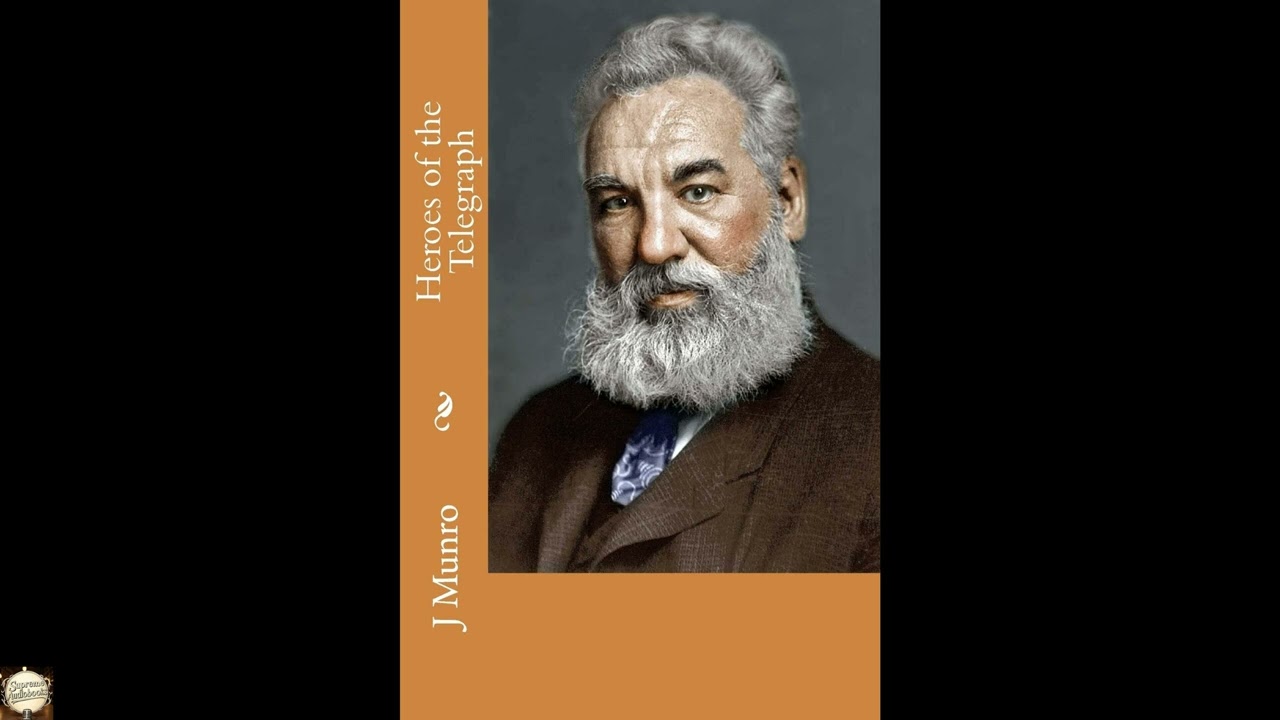
Heroes of the Telegraph
"Heroes of the Telegraph" by J. Munro might seem a relic from a bygone era, its title evoking dusty archives. Yet, this remarkable collection of narratives—presented here as a classic literary work—offers far more than a mere historical record. It is a profound meditation on human ingenuity, courage, and the relentless drive to connect the world, themes resonating powerfully in our hyper-connected age. Long before the internet, the telegraph represented the zenith of technological aspiration, a dream of universal linkage made real. Munro’s work captures the spirit of early innovators, transforming technical achievements into compelling human stories, underscoring their foundational role in shaping our modern world, and reminding us of their enduring relevance. Munro invites the listener into a world teetering on the cusp of an electrifying transformation, where news traveled only as fast as a horse or ship. The central drama unfolds through interconnected narratives, each focusing on key figures and crucial moments that propelled the telegraph from experimental curiosity to an indispensable global network. We meet early visionaries grappling with electricity's physics, often risking reputations to prove instantaneous message transmission. One tale recounts Samuel Morse's persistent efforts, whose initial struggles culminated in the successful demonstration of his patented system. The story arc follows a succession of pioneers, engineers, and entrepreneurs, each contributing a vital piece to the grand puzzle of global communication. The central conflict is humanity's battle against distance and time. We witness the drama of laying the first transatlantic cable, a monumental undertaking that tested engineering and human endurance. Against fierce ocean currents, mechanical failures, and financial ruin, figures like Cyrus West Field stand out. His repeated attempts, fraught with setbacks, illustrate the sheer audacity required to bridge continents with a single strand of wire. Munro portrays these individuals not just as inventors, but as characters facing a grand, collective challenge—to shrink the world and revolutionize communication, trade, and governance. Their struggles and triumphs weave together, building to a collective realization of a truly global communication system, forever altering human history. John Munro, a notable Scottish engineer and writer (1849-1919), was born in Glasgow. His early years coincided with the burgeoning era of industrial and technological advancement, fueling his lifelong fascination with engineering and its societal impact. Munro, trained as a civil engineer, became deeply involved in the fields he wrote about. He served as a professor of engineering at the Bristol Merchant Venturers' Technical College, lending his expertise to innovators. This background provided him a profound understanding of the technical intricacies and human stories behind his era's great inventions. Munro was more than a chronicler; he actively participated in the scientific discourse of the late nineteenth and early twentieth centuries. His publications extended beyond "Heroes of the Telegraph," popularizing scientific and engineering achievements. Titles like "The Story of Electricity" and "A Trip to Venus"—a pioneering work of science fiction—illustrate his versatility and knack for distilling complex subjects into engaging narratives. He belonged to a literary and scientific movement bridging academic research and public understanding, believing technology's marvels belonged to everyone. His place in the literary canon, particularly within popular science and historical biography, rests on his ability to make invention's details feel alive and accessible, anticipating modern popular science writing by decades. Within these narratives, several enduring themes emerge. One prominent theme is human ingenuity and the power of inventive spirit. Munro repeatedly demonstrates how individuals, driven by curiosity and progress, conceptualized and brought into being technologies that seemed impossible. For instance, the painstaking trial-and-error approach of individuals developing insulation for underwater cables, facing repeated failures but continually refining methods, serves as a powerful testament to human creativity under pressure. Their ability to overcome technical challenges highlights human progress. Another significant theme is the transformative power of communication. The book subtly illustrates how instantaneous communication irrevocably reshaped society. Consider the dramatic shift in news dissemination: reports that once took weeks could suddenly arrive in minutes, fundamentally altering commerce, diplomacy, and personal relationships. Munro paints vivid pictures of how a telegraph message could turn the tide of a battle, prevent a financial crisis, or reunite families, showing the profound societal ripple effects of technological advancement. These stories collectively underscore the universal human need to connect and the profound impact when the means to do so are dramatically improved, touching upon global unity and a shrinking world. "Heroes of the Telegraph" emerged at a pivotal moment in history, during the late nineteenth century's Second Industrial Revolution (roughly 1870-1914). This era saw rapid industrialization, widespread adoption of electricity, steel, and petroleum, alongside a profound shift in global connectivity. Empires expanded, trade routes consolidated, and the need for faster communication to manage vast territories and commercial networks became paramount. The telegraph, by Munro's time, had proven its worth, but its stories of inception and development were still fresh. Munro’s work celebrated these achievements and offered an instructive look at scientific endeavor, published for a public eager to understand the forces reshaping their lives and the entire planet. Optimism surrounding scientific progress was high, and books championing human ingenuity resonated deeply with the spirit of the age. Listening to "Heroes of the Telegraph" as an audiobook offers a unique gateway into this era of electrifying change. With a run length of several hours, the narration allows for a measured immersion into each individual's narrative, granting space for contemplation of their challenges and triumphs. A skilled narrator brings resonance to these historical accounts, lending distinct voices to the various scientists, engineers, and financiers who built the modern communication age. The pacing often mirrors the deliberate, sometimes agonizing progress of invention itself, building suspense around technical breakthroughs and human perseverance. Listeners will find themselves drawn into the atmosphere of nineteenth-century innovation, hearing the crackle of early signals and the determined dialogue of those who dared to dream of a wired world, making the historical figures feel remarkably present and immediate.
Enjoyed Heroes of the Telegraph? A few ways to support us
Audible & Amazon links are affiliate; we may earn a small commission at no extra cost.
About this production
Human narration by a volunteer reader from LibriVox.org, the public-domain audiobook project. LibriVox volunteers record literary works whose copyright has expired in the United States, releasing the resulting recordings into the public domain.
Heroes of the Telegraph by J Munro. The underlying text is in the U.S. public domain. We do not republish any modern copyrighted edition, translation, or commentary.
The 4K cinematic visuals accompanying this audiobook are generated by an AI image model from prompts derived from the source text. No copyrighted photos, paintings, or stock footage are used. AI generation is disclosed on every video on our YouTube channel as required by YouTube's altered/synthetic content policy.
English subtitles are transcribed from the LibriVox recording with OpenAI Whisper. Translations into the 11 other supported languages are produced by Meta's NLLB-200 neural translation model. No human translator's copyrighted translation is used.
Questions about sourcing or rights? See our DMCA & Sourcing policy or contact us.
Enjoyed this audiobook?
If you'd like to own a copy of Heroes of the Telegraph or hear a professionally produced edition, the links below help support free audiobook production at no extra cost to you.
As an Amazon Associate we earn from qualifying purchases. Audible / print links are affiliate.