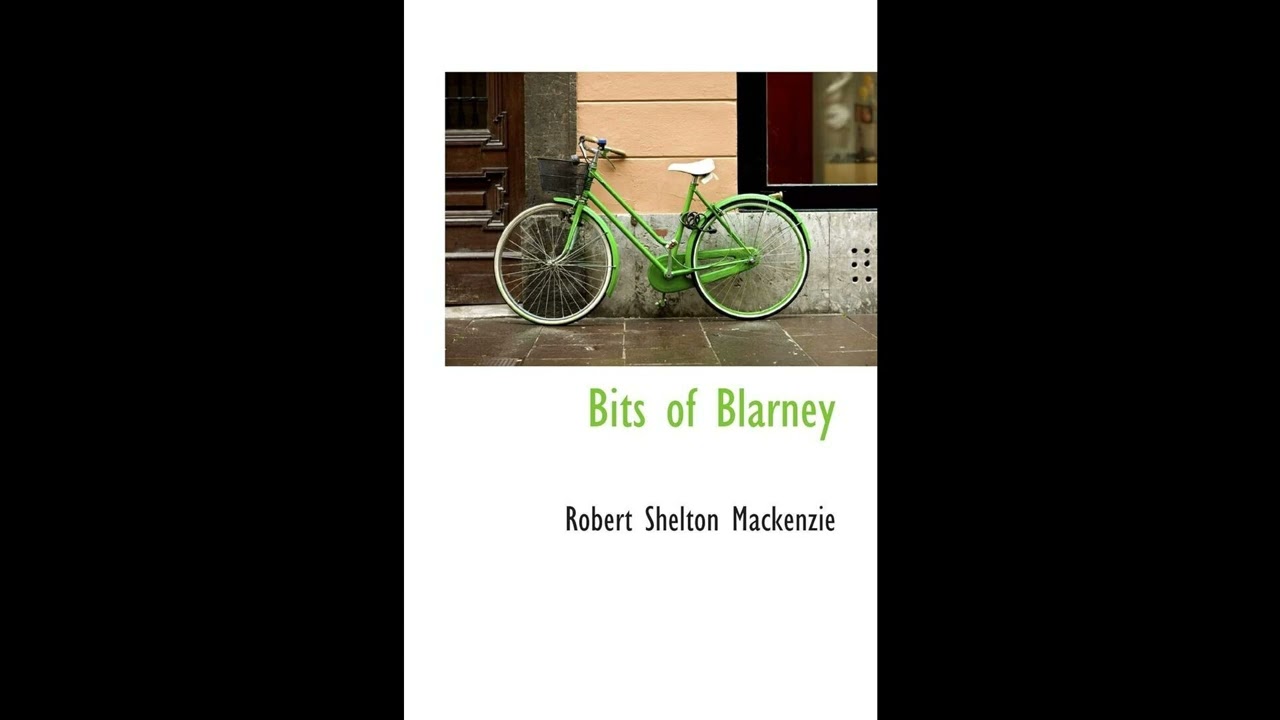
Bits of Blarney
Step into a world where wit is currency, where a turn of phrase can paint a vivid picture or deflate an ego, and where the echoes of ancient tales still resonate in the everyday. Robert Shelton Mackenzie’s Bits of Blarney is more than just a collection of stories; it is a warm, inviting hearth where the spirit of Irish storytelling is kept alive, crackling with humor, wisdom, and the irrepressible charm that has defined a nation’s narrative tradition for centuries. For a modern audience navigating a world of constant digital chatter, these accounts offer a refreshing antidote – a reminder of the enduring power of human connection forged through shared laughter, poignant reflection, and the sheer delight of a well-spun yarn. This is a book that champions the spoken word, the sly glance, the knowing nod, and the communal experience of listening, a truly perfect candidate for the audiobook format today. Within these pages, or rather, within these carefully curated spoken narratives, listeners will discover a panorama of Irish life, from bustling market squares to quiet village inns, from the grand estates of gentry to the humble cottages of farmers and fishermen. Mackenzie acts as our congenial guide, introducing us to a gallery of memorable characters: the quick-witted rogue whose silver tongue gets him out of any scrape, the earnest young lover whose romantic declarations are as poetic as they are clumsy, and the wise old woman whose pronouncements carry the weight of generations. Each vignette, whether a brief anecdote or a more developed tale, presents a snapshot of human nature, often with a mischievous twinkle in its eye. We might hear a story about a clever barrister outwitting a judge with a convoluted legal argument, or perhaps a spirited debate between two farmers about the best way to plant potatoes, escalating into a comical battle of wills. The central spirit here is the art of blarney itself—not merely flattery, but a sophisticated form of persuasive eloquence, a playful manipulation of words to charm, entertain, or even gently deceive. Mackenzie showcases this verbal agility through a series of encounters: an aspiring poet attempting to woo a skeptical editor with overly flowery prose, a peddler attempting to sell his wares with increasingly extravagant claims, or a group of villagers engaging in a spirited contest of riddles and jokes, each trying to outdo the other in cleverness. The common thread running through these seemingly disparate narratives is the profound appreciation for language and the inherent joy found in its skillful deployment. The arc of the collection isn't a single progressive plot, but rather a journey through the many facets of Irish wit and character, building an cumulative portrait of a culture vibrant with conversational energy. Robert Shelton Mackenzie, born in County Limerick, Ireland, in 1809, was a true man of letters whose life spanned the transition from the Georgian to the Victorian era. Educated in schools at Fermoy and Cork, he honed his journalistic acumen early, contributing to local papers before moving to London in 1834. There, his talent for writing and his keen understanding of people quickly made him a notable figure in literary circles. Mackenzie was a prolific writer, biographer, and editor, known for his ability to synthesize vast amounts of information and present it with engaging clarity. He notably authored The Life of Charles Dickens (1870), offering an intimate and insightful look at the famous novelist, demonstrating his skill not only in reporting facts but in capturing the essence of a personality. His journalistic career eventually led him across the Atlantic, where he settled in Philadelphia around 1852. For many years, he served as the literary editor of The Philadelphia Press, a position from which he influenced American letters significantly. Mackenzie's work was characterized by a broad intellectual curiosity, a sharp wit, and an unflagging commitment to the power of the written word. He was not merely a reporter of events, but an astute observer of human nature and social customs, qualities that shine brightly in his more anecdotal or biographical writings. His role as a conduit between British and American literary scenes, coupled with his deep roots in Irish culture, provided a unique vantage point from which he compiled and shared the kind of spirited narratives found in Bits of Blarney, eventually passing away in 1880. The themes woven throughout Bits of Blarney are as enduring as the tales themselves. Foremost among them is the celebration of Irish identity and the rich tradition of oral storytelling. Mackenzie captures the very essence of a culture where narratives are not just entertainment, but a vital means of preserving history, transmitting values, and defining community. For example, in a passage describing a fireside gathering, we hear how a grandmother recounts the legend of a local fairy mound, her voice taking on the cadence of generations past, linking the present listeners directly to ancient beliefs and the land itself. Another pervasive theme is the power of wit and humor as a social lubricant and a tool for resilience. One account details a village elder defusing a tense situation with a perfectly timed joke, showing how laughter can bridge divides and lighten burdens in challenging times, proving that a well-placed jape can be more potent than any argument. Mackenzie also effectively portrays the nuanced interplay between truth and embellishment. Blarney is, after all, about the artful shaping of reality. We see this enacted in tales where characters exaggerate their exploits or craft elaborate, fanciful justifications for their actions. One vivid scenario describes a fisherman recounting his catch, the fish growing progressively larger with each retelling, until it becomes a monstrous, mythical creature. This playful approach to veracity highlights not dishonesty, but rather the human desire to create compelling narratives and to find wonder in the mundane. Moreover, the collection subtly touches upon themes of community and belonging, illustrating how shared stories and collective memory strengthen bonds. A recurring motif involves various characters gathering at a pub or market, each contributing their own "bit of blarney," collectively weaving a communal narrative that solidifies their shared experience and identity. When Bits of Blarney likely emerged in the mid-to-late 19th century, the literary landscape was greatly concerned with both realism and the preservation of national identities. This was a period marked by significant Irish emigration, particularly in the aftermath of the Great Famine. As Irish people dispersed across the globe, there was a growing desire, both within Ireland and among the diaspora, to document and preserve their unique culture, folklore, and linguistic traditions. Mackenzie, with his own Irish roots and his prominent position in journalism, was perfectly situated to contribute to this cultural preservation. His work resonated with an audience eager for narratives that spoke to their heritage, offering a nostalgic look at a way of life that was rapidly changing, yet also celebrating the enduring spirit and wit that characterized the Irish people. The collection represents a response to the era's broader movement towards chronicling popular culture and local color, distinguishing itself with Mackenzie’s practiced hand and authentic voice. Listening to Bits of Blarney as an audiobook transforms it from a written curiosity into an immediate, intimate experience. The "several hours" run length is perfectly suited for savoring these individual pieces, allowing each anecdote or tale to unfold at its own pace. A skilled narrator brings Mackenzie's prose to life, imbuing each character with a distinct vocal personality—the mischievous twinkle in one voice, the earnestness in another, the wisdom of an elder, or the youthful exuberance of a lover. Listeners can expect to hear dialogue that dances and flows, with the rhythms of Irish speech patterns gently present, creating an immersive atmosphere. The pacing allows for reflective moments after a particularly clever turn of phrase or a poignant observation, making the stories feel as though they are being told directly to you, perhaps by a fireside friend. It’s an auditory embrace of a vibrant culture, delivered with all the charm and warmth the title promises.
Enjoyed Bits of Blarney? A few ways to support us
Audible & Amazon links are affiliate; we may earn a small commission at no extra cost.
About this production
Human narration by a volunteer reader from LibriVox.org, the public-domain audiobook project. LibriVox volunteers record literary works whose copyright has expired in the United States, releasing the resulting recordings into the public domain.
Bits of Blarney by Robert Shelton Mackenzie. The underlying text is in the U.S. public domain. We do not republish any modern copyrighted edition, translation, or commentary.
The 4K cinematic visuals accompanying this audiobook are generated by an AI image model from prompts derived from the source text. No copyrighted photos, paintings, or stock footage are used. AI generation is disclosed on every video on our YouTube channel as required by YouTube's altered/synthetic content policy.
English subtitles are transcribed from the LibriVox recording with OpenAI Whisper. Translations into the 11 other supported languages are produced by Meta's NLLB-200 neural translation model. No human translator's copyrighted translation is used.
Questions about sourcing or rights? See our DMCA & Sourcing policy or contact us.
Enjoyed this audiobook?
If you'd like to own a copy of Bits of Blarney or hear a professionally produced edition, the links below help support free audiobook production at no extra cost to you.
As an Amazon Associate we earn from qualifying purchases. Audible / print links are affiliate.