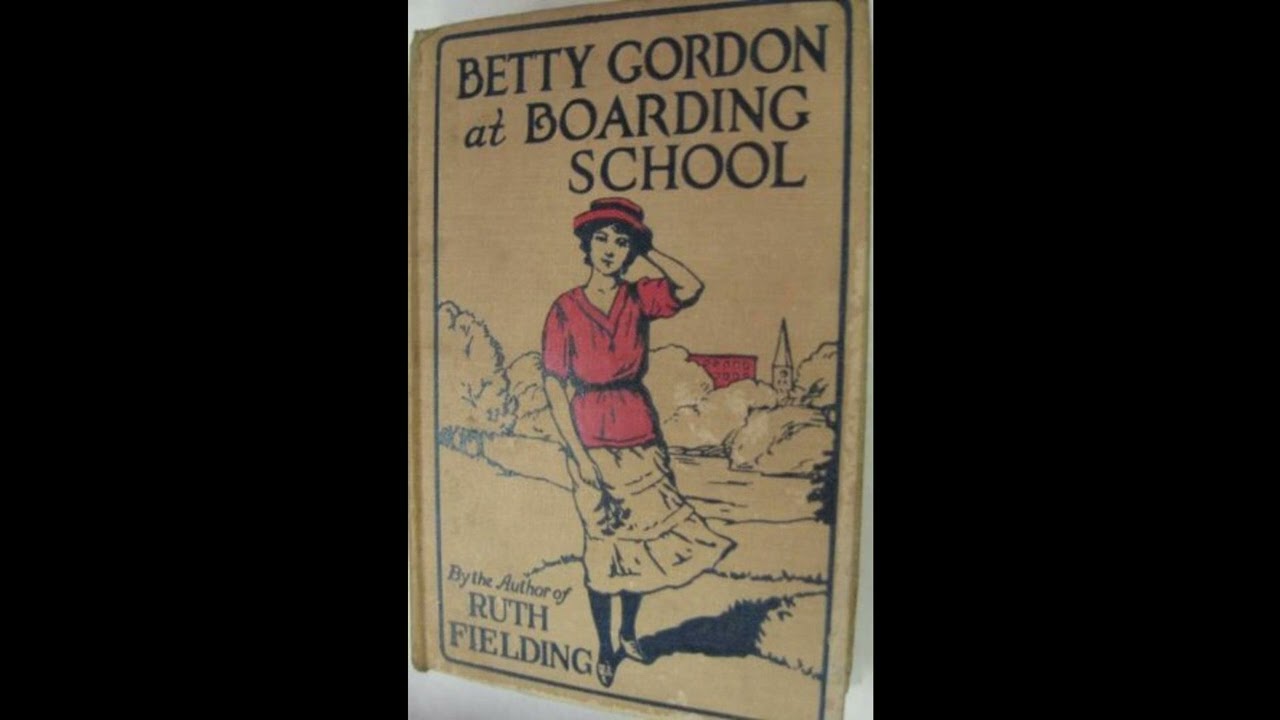
Betty Gordon at Boarding School, or, The Treasure of Indian Chasm
Step into a world where school bells ring with the promise of friendship and the very grounds hold secrets of ages past. "Betty Gordon at Boarding School, or, The Treasure of Indian Chasm" invites listeners to revisit a beloved era of juvenile fiction, where plucky heroines sought adventure beyond the classroom. This classic story offers more than just escapism; it provides a fascinating window into the early twentieth century's values of independence, resourcefulness, and the burgeoning spirit of young women. For anyone seeking a dose of wholesome suspense and historical charm, Betty Gordon's spirited quest remains as engaging today as it was for its original readers. Our story introduces Betty Gordon, a bright and adventurous girl, as she arrives at the venerable—and perhaps a little imposing—Riverbend Academy, a boarding school perched amidst rolling hills and ancient woods. For Betty, who may be experiencing such an environment for the first time, the school presents a new universe of rules, friendships, and hidden wonders. She quickly finds her footing, forming bonds with a lively group of classmates, each with her own distinct personality, and together they navigate the daily routines and social intricacies of boarding school life. Yet, beneath the veneer of academic pursuits and dormitory antics, a whisper of local lore begins to stir their imaginations. The true adventure unfurls with the discovery of an old legend concerning the "Treasure of Indian Chasm." This chasm, a mysterious geological formation on or near the school grounds, is rumored to hold a significant secret—a lost fortune or perhaps an artifact of historical value. Fuelled by curiosity and a thirst for excitement, Betty and her friends decide to investigate. What begins as a seemingly innocent lark—deciphering cryptic clues, exploring forgotten nooks, and tiptoeing around watchful adults—soon escalates into a genuine expedition fraught with unexpected challenges. They encounter rivals who also seek the treasure, face physical obstacles in the rugged landscape, and must employ all their wits to solve the riddles guarding the chasm's secrets. The girls learn that courage isn't just about facing visible dangers, but also about the quiet determination to see a mystery through, relying on each other's strengths when individual resolves might falter. The name "Alice B. Emerson" graces the cover of "Betty Gordon at Boarding School," a byline that many aficionados of early twentieth-century children's literature recognize as a house name—a pseudonym—rather than a single, distinct author. This practice was a hallmark of the Stratemeyer Syndicate, an immensely successful literary enterprise founded by Edward Stratemeyer in the late nineteenth century. Stratemeyer revolutionized the production of children's books by developing a system wherein he would conceive of a series concept, character outlines, and detailed plot synopses, then hire ghostwriters to pen the actual manuscripts. These writers, often working for a flat fee and relinquishing all rights, rarely received public credit, contributing instead to the Syndicate's vast output. The Stratemeyer Syndicate was an undeniable force in shaping American popular culture, responsible for some of the most enduring and beloved children's series of its time, including The Hardy Boys, Nancy Drew, The Bobbsey Twins, and Tom Swift. The Syndicate's method ensured a consistent stream of formulaic, wholesome, and exciting adventures, perfectly tailored to a burgeoning market of young readers. "Alice B. Emerson" represents this ingenious and prolific factory of storytelling, a collective voice that crafted tales of pluck and peril for generations, rather than a single biographical figure. This approach allowed for the rapid expansion of popular series like Betty Gordon, meeting the era's soaring demand for accessible, engaging juvenile fiction. "Betty Gordon at Boarding School" enacts several enduring themes that resonated deeply with its original audience and continue to hold significance. Friendship and loyalty stand as a cornerstone of the narrative, exemplified by Betty's growing bonds with her schoolmates. We witness these young women supporting each other through academic challenges, moments of homesickness, and most crucially, during the suspenseful treasure hunt. For instance, when one girl might be discouraged by a dead-end clue, another steps in with fresh enthusiasm, reminding us that collective spirit often overcomes individual setbacks. Moreover, the story champions independence and self-reliance, particularly for its female protagonist. Betty takes initiative, makes decisions, and often leads the charge in solving the mystery, illustrating a young woman's capacity for agency in an era when such roles for girls in fiction were gaining traction. Her resourcefulness, from deciphering an old map to navigating a tricky path, provides concrete examples of her growing competence. The book also highlights the theme of courage, both physical and moral. The girls must overcome their fears of the unknown when venturing into the foreboding Indian Chasm and stand firm against potential adversaries. This courage is not depicted as a lack of fear, but rather as the determination to act despite it—a valuable lesson. The narrative also captures the universal human fascination with mystery and adventure, illustrating how a simple legend can spark a grand expedition. The thrill of discovery, the intellectual exercise of puzzle-solving, and the sheer joy of an exciting quest are all palpable throughout Betty's escapades, making the book a celebration of youthful curiosity and daring. This particular story emerged during a period of significant cultural and literary change in the early twentieth century, roughly the 1920s and 1930s. Following the end of the First World War, American society experienced rapid modernization, with new technologies and shifting social norms. For young people, particularly girls, opportunities were expanding, even if traditional expectations still largely prevailed. Boarding schools themselves became popular settings for fiction, offering a controlled environment where young protagonists could experience a degree of independence from their families, forge new identities, and engage in adventures away from adult scrutiny. Simultaneously, the literary landscape was witnessing an explosion in juvenile fiction, driven by increasing literacy rates and a desire for wholesome yet exciting entertainment. The Stratemeyer Syndicate, through works like "Betty Gordon," directly capitalized on this demand, providing escapist tales that reflected a sense of optimism and possibility, even as they upheld certain moral codes. These books offered a safe space for young readers to experience thrills and challenges vicariously, shaping a generation's understanding of heroism and camaraderie. Listening to "Betty Gordon at Boarding School" as an audiobook brings a unique charm to this classic adventure. The several hours of narration unfold at a deliberate pace, allowing the listener to settle into the atmosphere of Riverbend Academy and the deepening mystery of Indian Chasm. A skilled narrator breathes life into Betty's spirited dialogue, her moments of spirited enthusiasm, and her thoughtful deductions, ensuring her character shines through. The distinct voices given to her diverse group of friends – perhaps the cautious one, the excitable one, the practical one – enhance the dynamic interplay of their personalities. The narration's pacing naturally builds suspense during the more adventurous segments, such as the initial discovery of clues or the tense explorations of the chasm, contrasting with the more lighthearted moments of school life. Through voice and tone, the listener can truly experience the cozy camaraderie of the dormitory, the academic hustle of the classroom, and the exhilarating anticipation of unraveling an old secret, transforming a written story into an immersive auditory experience.
Enjoyed Betty Gordon at Boarding School, or, The Treasure of Indian Chasm? A few ways to support us
Audible & Amazon links are affiliate; we may earn a small commission at no extra cost.
About this production
Human narration by a volunteer reader from LibriVox.org, the public-domain audiobook project. LibriVox volunteers record literary works whose copyright has expired in the United States, releasing the resulting recordings into the public domain.
Betty Gordon at Boarding School, or, The Treasure of Indian Chasm by Alice B. Emerson. The underlying text is in the U.S. public domain. We do not republish any modern copyrighted edition, translation, or commentary.
The 4K cinematic visuals accompanying this audiobook are generated by an AI image model from prompts derived from the source text. No copyrighted photos, paintings, or stock footage are used. AI generation is disclosed on every video on our YouTube channel as required by YouTube's altered/synthetic content policy.
English subtitles are transcribed from the LibriVox recording with OpenAI Whisper. Translations into the 11 other supported languages are produced by Meta's NLLB-200 neural translation model. No human translator's copyrighted translation is used.
Questions about sourcing or rights? See our DMCA & Sourcing policy or contact us.
Enjoyed this audiobook?
If you'd like to own a copy of Betty Gordon at Boarding School, or, The Treasure of Indian Chasm or hear a professionally produced edition, the links below help support free audiobook production at no extra cost to you.
As an Amazon Associate we earn from qualifying purchases. Audible / print links are affiliate.
More by Alice B. Emerson
More Audiobooks
Ruth Fielding and the Gypsies; Or, The Missing Pearl Necklace
Ruth Fielding at Lighthouse Point; or, Nita, the Girl Castaway
Little Saint Elizabeth: And other stories
Four Girls at Chautauqua (1876) by:Isabella Macdonald Alden (Pansy) (Classics)