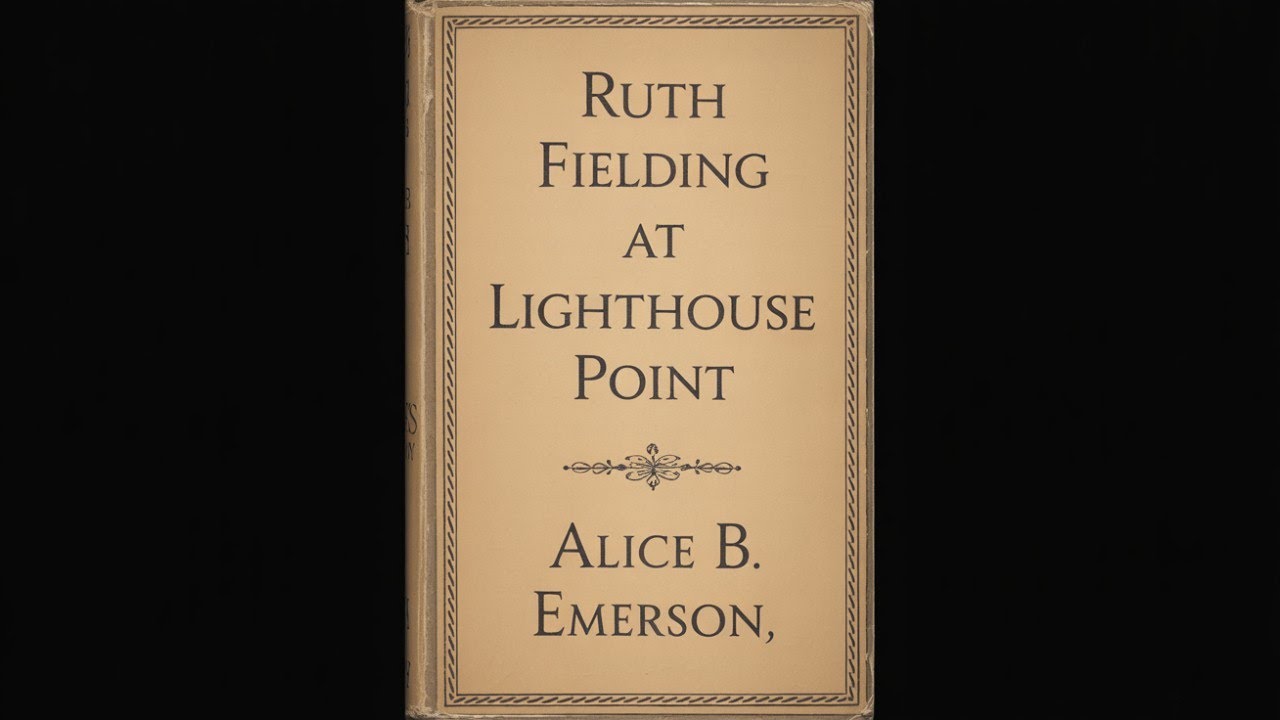
Ruth Fielding at Lighthouse Point; or, Nita, the Girl Castaway
Step into a world where summer adventure meets a deepening mystery, where friendship proves a guiding light through shadowy secrets, and where a young woman's courage uncovers the truth behind an enigmatic past. Ruth Fielding at Lighthouse Point; or, Nita, the Girl Castaway offers listeners a chance to revisit the golden age of juvenile fiction, a period when tales of pluck and ingenuity offered both escape and inspiration to generations of readers. This installment in the beloved Ruth Fielding series captures the spirit of self-reliance and the thrill of discovery, making it a compelling listen even today. It reminds us that true grit knows no age and that a helping hand can change a life, all wrapped in a narrative that moves with the dependable pace of classic storytelling. Ruth Fielding, our spirited and ever-resourceful protagonist, finds herself on an idyllic summer vacation at Lighthouse Point, a picturesque locale promising sun-drenched days and sea breezes. Accompanied by her loyal friends, Helen and Tom, Ruth anticipates a period of relaxation and innocent fun. Yet, their peaceful holiday takes an unexpected turn when they stumble upon a young girl, Nita, who appears to be living a solitary existence near the lighthouse. Nita is an enigma, a girl with no apparent family or connections, who harbors a hidden past and a secret that she guardedly protects. Her unexpected appearance casts a shadow of intrigue over the tranquil seaside setting, pulling Ruth and her companions into a compelling puzzle. As Ruth befriends Nita, she uncovers fragments of a life marked by hardship and isolation. Nita's story hints at a dramatic incident at sea, a struggle for survival, and a subsequent period of being cut off from the wider world. Driven by her compassionate nature and a keen sense of justice, Ruth makes it her mission to unravel Nita's mystery. This quest leads her to investigate suspicious characters who seem to lurk in the background, to piece together clues from Nita's fragmented recollections, and to confront the dangers that threaten to keep Nita's true identity concealed. The narrative follows Ruth's persistent efforts to bring clarity to Nita's situation, forcing her to rely on her quick thinking and the unwavering support of her friends against those who would prefer Nita's secrets remain buried. The name Alice B. Emerson stands as a pseudonym, a common practice within the early twentieth-century publishing world, particularly for series fiction aimed at young readers. This was an era dominated by syndicates, most notably the Stratemeyer Syndicate, which developed story concepts and then hired uncredited writers to flesh out the narratives under various house names. These authors, often prolific and skilled, created entire universes of characters that resonated deeply with young audiences. While the true identity behind Alice B. Emerson has been debated among literary historians—with W. Bert Foster and Josephine Lawrence often cited as potential candidates—the enduring legacy belongs to the characters and stories that flourished under this banner. The Stratemeyer method allowed for a consistent output of books that captured the imagination of a burgeoning youth market. Authors working within this framework were experts at crafting engaging plots, presenting relatable characters, and instilling clear moral lessons without being overly didactic. The Ruth Fielding series, which commenced in 1913, quickly established itself as a staple of girls' fiction, appearing alongside other popular heroines like Nancy Drew and the Bobbsey Twins. The longevity and widespread appeal of these series attest to the effectiveness of the syndicate model in delivering stories that consistently met reader expectations for adventure, friendship, and wholesome entertainment. Ruth Fielding at Lighthouse Point exemplifies several themes that made these series so beloved. Friendship forms the bedrock of the narrative, demonstrated through Ruth's steadfast loyalty to Nita and the unwavering support she receives from Helen and Tom. For instance, when Ruth faces obstacles in her investigation, it is the collaborative spirit and shared resolve among the friends that keeps their pursuit of truth moving forward. Another prominent theme is resilience. Nita's very presence, having survived a harrowing ordeal and adapted to a lonely existence, speaks volumes about the human capacity to endure. Ruth, too, shows a quiet but firm resilience when confronted with skepticism or resistance, never abandoning her commitment to help Nita despite the difficulties she encounters. The narrative also underscores the power of determination, as Ruth repeatedly demonstrates an unflagging resolve to solve the mystery surrounding Nita, painstakingly gathering information and confronting uncomfortable truths. Finally, the story subtly touches upon social awareness, shining a light on the plight of those who are vulnerable or marginalized, prompting both Ruth and the reader to consider the importance of compassion and intervention for others in need. This novel emerged during a pivotal moment in American culture, the early 1910s, a period of significant social and technological change. The years leading up to World War I saw an increasing urbanization of the country, the rise of new inventions, and evolving roles for women in society. While traditional gender expectations still held sway, there was a growing appetite for stories featuring independent and capable young women who took initiative and engaged with the world beyond the domestic sphere. Juvenile literature, particularly series fiction, provided a safe space for these narratives of adventurous girls who solved mysteries, traveled to exotic locales, or demonstrated agency in their communities. These books offered young readers an escape into worlds where courage and ingenuity were rewarded, subtly shaping their understanding of morality, perseverance, and civic duty within a rapidly changing nation. The demand for such stories meant a constant output from publishing houses, fostering the syndicate model that gave rise to countless fictional heroes and heroines. Listening to Ruth Fielding at Lighthouse Point as an audiobook offers a unique way to connect with this classic tale. The narrator's voice becomes a direct conduit to the past, bringing Alice B. Emerson's descriptive prose to life with a clarity and rhythm that might be missed in silent reading. Listen for the subtle inflections in character dialogue, which can reveal personalities and period nuances in a way that printed text often cannot. The pacing of the narration will allow the mystery to unfurl naturally, building suspense with each discovery and confrontation. The story's "several hours" run length makes it an ideal companion for road trips, household chores, or simply unwinding, allowing the listener to become fully immersed in the sounds and atmosphere of Lighthouse Point—the crash of waves, the creaking of old buildings, and the whispered secrets that drive the plot forward. It is an opportunity to experience a piece of literary history through the intimate medium of sound.
Enjoyed Ruth Fielding at Lighthouse Point; or, Nita, the Girl Castaway? A few ways to support us
Audible & Amazon links are affiliate; we may earn a small commission at no extra cost.
About this production
Human narration by a volunteer reader from LibriVox.org, the public-domain audiobook project. LibriVox volunteers record literary works whose copyright has expired in the United States, releasing the resulting recordings into the public domain.
Ruth Fielding at Lighthouse Point; or, Nita, the Girl Castaway by Alice B. Emerson. The underlying text is in the U.S. public domain. We do not republish any modern copyrighted edition, translation, or commentary.
The 4K cinematic visuals accompanying this audiobook are generated by an AI image model from prompts derived from the source text. No copyrighted photos, paintings, or stock footage are used. AI generation is disclosed on every video on our YouTube channel as required by YouTube's altered/synthetic content policy.
English subtitles are transcribed from the LibriVox recording with OpenAI Whisper. Translations into the 11 other supported languages are produced by Meta's NLLB-200 neural translation model. No human translator's copyrighted translation is used.
Questions about sourcing or rights? See our DMCA & Sourcing policy or contact us.
Enjoyed this audiobook?
If you'd like to own a copy of Ruth Fielding at Lighthouse Point; or, Nita, the Girl Castaway or hear a professionally produced edition, the links below help support free audiobook production at no extra cost to you.
As an Amazon Associate we earn from qualifying purchases. Audible / print links are affiliate.