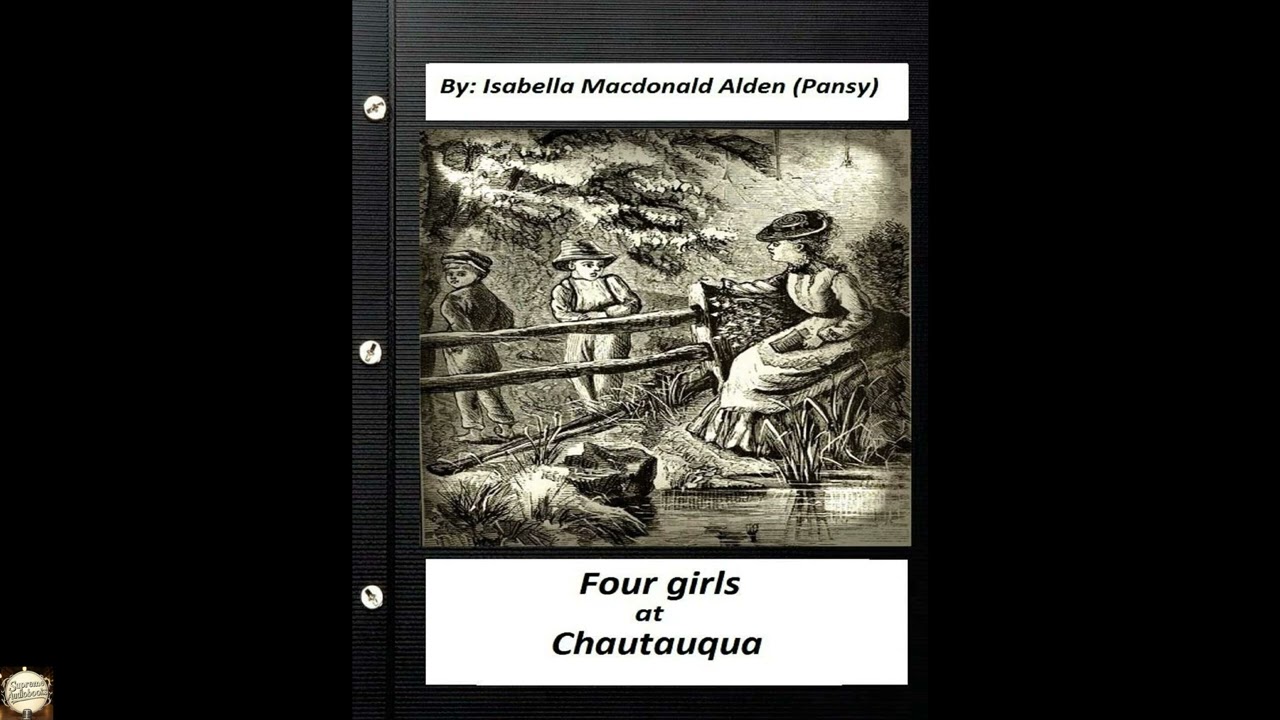
Four Girls at Chautauqua (1876) by:Isabella Macdonald Alden (Pansy) (Classics)
Step back into the summer of 1876, a pivotal year for America, and discover a literary gem that not only captures the spirit of its age but also offers enduring insights into friendship, ambition, and the search for purpose. Isabella Macdonald Alden, writing under her widely recognized pen name Pansy, created in Four Girls at Chautauqua a remarkable chronicle of young women seeking knowledge and self-understanding within one of America's most unique cultural institutions. This isn't just a nostalgic glance at the past; it’s a detailed, thoughtful examination of personal growth, the power of community, and the timeless questions young adults face as they step into their own identities, making its quiet wisdom as relevant for today's listeners as it was for its original audience. The story unfolds amidst the idyllic, yet intellectually charged, setting of the Chautauqua Assembly on the shores of Chautauqua Lake, New York. Imagine a summer camp unlike any other—a place where the natural beauty of the lakeside resort mingled with a rigorous schedule of lectures, concerts, Bible studies, and cultural programs, all designed for adult education and enrichment. It is here that we meet our quartet of protagonists, each arriving with her own set of hopes, challenges, and preconceptions. There's Leonora, whose studious nature yearns for intellectual stimulation, yet she often struggles with the practical application of her knowledge and maintaining a humble spirit. Ruth, more socially inclined, finds herself navigating the complexities of new friendships and the expectations of her family, all while trying to determine her own path forward. Marion brings a creative spark, perhaps feeling stifled by conventional expectations, and she seeks inspiration and a place where her artistic inclinations can flourish. Finally, Elsie, perhaps the most pragmatic of the group, confronts a particular personal dilemma that tests her resolve and calls into question her future plans, forcing her to look beyond immediate desires for long-term fulfillment. As the summer days progress, these four distinct personalities are brought together and tested by the unique Chautauqua experience. They attend lectures on diverse subjects, participate in discussions, and share their daily lives in the close quarters of the assembly grounds. Their interactions are not always harmonious; differing opinions, misunderstandings, and moments of youthful insecurity arise, challenging their nascent friendships. Through shared experiences, late-night talks, and the guidance of various mentors they encounter at Chautauqua, the girls begin to shed their initial provincialisms and confront deeper questions about their values, their responsibilities, and the kind of women they aspire to become. The narrative carefully charts their individual transformations, showing how the combined influences of education, environment, and companionship shape their characters, guiding them towards greater maturity and a clearer sense of purpose without revealing the specific outcomes of their individual quests. Isabella Macdonald Alden, known universally by her pen name Pansy, was an astonishingly prolific and influential American author. Born in 1841, she became a cornerstone of late 19th-century American Protestant literature, particularly beloved by young readers and their parents. Her life was steeped in the religious and educational movements of her time. In 1866, she married Reverend Gustavus R. Alden, and her writing career blossomed shortly thereafter, often intertwining with her roles as a Sunday school teacher and editor. Pansy wrote over 100 books, many of which became bestsellers in their era, including enduring titles like Ester Ried and Helen Lester. She also edited Pansy magazine, a popular publication for children and families, further solidifying her reach and influence. Alden's work is characterized by its moral earnestness, clear narrative voice, and an unwavering commitment to Christian values, temperance, and the development of strong character. She skillfully wove these principles into engaging stories that resonated deeply with a generation seeking guidance in an era of rapid social change. While not always recognized in mainstream literary curricula today, her place in the canon of American domestic fiction and Christian literature is undeniable; she shaped the moral imagination of countless young people and provided a blueprint for how faith and daily life could intersect meaningfully. Her stories, though didactic, avoided being heavy-handed through their focus on relatable characters and everyday struggles. One prominent theme within Four Girls at Chautauqua is the profound impact of education and self-improvement, particularly for young women. The entire Chautauqua setting is a testament to this ideal, offering lectures on science, history, literature, and theology. We see this enacted as Leonora, initially overwhelmed by the sheer volume of information, learns to approach her studies with greater focus and humility, realizing that true learning involves not just accumulation of facts but thoughtful assimilation and practical application. Another crucial theme is friendship and community, portrayed through the evolving relationships among the four girls. Their initial interactions might be marked by slight competition or misunderstanding, but as they share their vulnerabilities and support each other through personal challenges, they forge bonds that underscore the power of mutual respect and shared experience. For example, a scene where Ruth and Marion collaborate on a small project for the assembly illustrates how their differing strengths complement one another, deepening their connection. Furthermore, the book thoughtfully examines the theme of purpose and vocation, especially relevant for young women in the late 19th century who were often limited in their societal roles. Each girl grapples with questions about her future, whether it involves marriage, a career, or service. Elsie’s contemplation of her family's expectations versus her own emerging desires illustrates this struggle to find a path that aligns with personal conviction and societal responsibility. Finally, spiritual and moral development underpins much of the narrative. Pansy, as a devout author, integrates moments of reflection and moral dilemma. Characters are often faced with choices that test their integrity, and the lessons learned through Bible studies and inspiring sermons at Chautauqua guide their ethical considerations. A moment where Leonora must choose between pride and honest confession after a mistake serves as a concrete example of this internal moral compass being tested and refined. When Four Girls at Chautauqua was published in 1876, America was celebrating its Centennial, a moment of national reflection and optimism tempered by the lingering social wounds of the Civil War and the burgeoning complexities of industrialization. The Chautauqua Movement itself, founded just two years prior in 1874 by Methodist minister John Heyl Vincent and businessman Lewis Miller, emerged from a desire to provide accessible education and cultural enrichment beyond the traditional university system, initially for Sunday school teachers. It quickly grew into a broader institution for adult education, becoming a unique American phenomenon that blended recreation with intellectual and spiritual growth. The book reflects this cultural moment perfectly, showcasing a society eager for self-improvement and moral uplift. For women, the late 19th century was a period of expanding, albeit still constrained, opportunities, and institutions like Chautauqua offered vital spaces for intellectual engagement and personal agency. Alden's novel, therefore, not only entertained but also served as a guide for young women navigating a changing world. Listening to Four Girls at Chautauqua as an audiobook transforms this historical novel into an intimate experience, bringing the summer of 1876 vividly to life. A skilled narrator can distinguish the distinct voices of Leonora's earnest questioning, Ruth's social observations, Marion's creative musings, and Elsie's practical concerns, allowing their personalities to truly shine. The run length, measured in several hours, makes it an ideal companion for a series of leisurely walks, daily commutes, or an extended afternoon of relaxed listening, allowing the listener to truly sink into the rhythms of the story without rushing. Pay attention to the narrator's pacing, which should reflect the thoughtful, reflective nature of the characters' internal struggles and the measured pace of life at the Chautauqua Assembly. The narration will skillfully capture the atmosphere of intellectual curiosity, the rustle of leaves by the lake, the earnestness of public lectures, and the quiet intimacy of girls sharing their dreams, making the period setting feel remarkably present.
Enjoyed Four Girls at Chautauqua (1876) by:Isabella Macdonald Alden (Pansy) (Classics)? A few ways to support us
Audible & Amazon links are affiliate; we may earn a small commission at no extra cost.
About this production
Human narration by a volunteer reader from LibriVox.org, the public-domain audiobook project. LibriVox volunteers record literary works whose copyright has expired in the United States, releasing the resulting recordings into the public domain.
Four Girls at Chautauqua (1876) by:Isabella Macdonald Alden (Pansy) (Classics) by Isabella Macdonald Alden. The underlying text is in the U.S. public domain. We do not republish any modern copyrighted edition, translation, or commentary.
The 4K cinematic visuals accompanying this audiobook are generated by an AI image model from prompts derived from the source text. No copyrighted photos, paintings, or stock footage are used. AI generation is disclosed on every video on our YouTube channel as required by YouTube's altered/synthetic content policy.
English subtitles are transcribed from the LibriVox recording with OpenAI Whisper. Translations into the 11 other supported languages are produced by Meta's NLLB-200 neural translation model. No human translator's copyrighted translation is used.
Questions about sourcing or rights? See our DMCA & Sourcing policy or contact us.
Enjoyed this audiobook?
If you'd like to own a copy of Four Girls at Chautauqua (1876) by:Isabella Macdonald Alden (Pansy) (Classics) or hear a professionally produced edition, the links below help support free audiobook production at no extra cost to you.
As an Amazon Associate we earn from qualifying purchases. Audible / print links are affiliate.