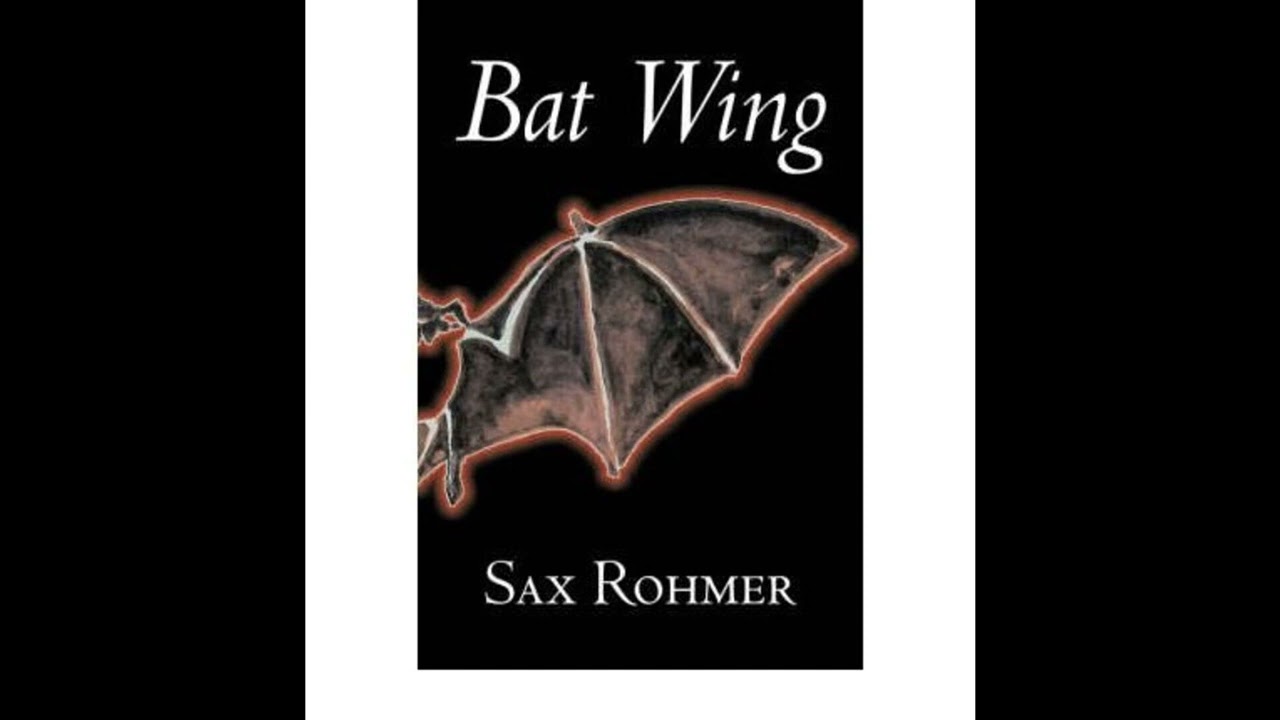
Bat WingRohmer, Sax,
Step into a world where ancient evils stalk modern streets and the shadows hold secrets far older than civilization itself. Sax Rohmer's Bat Wing plunges listeners into a breathless mystery that melds exotic menace with the unsettling anxieties of post-World War I England. This isn't merely a tale of a detective chasing clues; it is a confrontation with the primordial, a chilling descent into the heart of darkness that has followed a soldier home from distant lands. For anyone who relishes the thrill of the unknown, the clash between rationality and the seemingly supernatural, and the intricate dance of good versus an insidious evil, this atmospheric thriller offers a suspenseful escape and a fascinating window into the popular fiction that shaped a generation. It asks us to consider what terrors might lurk just beneath the surface of the mundane, brought to life by a writer who truly understood how to conjure dread. The story opens as Paul Harley, a former British intelligence officer, returns to a seemingly quiet England, carrying the scars and memories of his service in Africa. He expects peace, but instead finds himself inexorably drawn into a labyrinth of bizarre occurrences and sinister omens. What begins with an unsettling incident involving a seemingly unearthly shriek and a peculiar symbol — a bat with outstretched wings — quickly escalates into something far more dangerous. Harley, a man of keen intellect and military training, struggles to reconcile the rational world he knows with the increasingly strange events that defy explanation. He finds himself caught in a web of ritual murder, ancient curses, and a palpable sense of encroaching malevolence that threatens to consume not just him, but the very fabric of society. As Harley investigates, the trail leads him through the hidden corners of London, from unassuming suburban homes to dimly lit antique shops, each location harboring a piece of a larger, terrifying puzzle. He encounters a clandestine cult, adherents to a terrifying African deity, and the shadowy presence of a figure known only as Bat Wing – an enigmatic, ruthless individual whose motives are as obscure as his methods are horrifying. The stakes grow higher with each passing chapter, as innocent lives are threatened and Harley realizes that the forces he opposes are not merely criminal, but represent an elemental evil with roots stretching back centuries. He must use all his wits, courage, and perhaps even a dash of intuition to unmask this formidable adversary and prevent a widespread catastrophe. The narrative maintains a relentless pace, pulling the listener deeper into the mystery, as Harley races against time to decipher the meaning of the bat wing symbol and the true identity of the mastermind behind the growing terror. Sax Rohmer, born Arthur Henry Sarsfield Ward in Birmingham, England, in 1883, crafted a literary career that made him synonymous with the exotic thriller. Starting out as a clerk and then a journalist, Ward began writing fiction in the early 20th century, adopting the pen name Sax Rohmer. His most enduring creation, Dr. Fu Manchu, an insidious Chinese mastermind, first appeared in The Mystery of Dr. Fu-Manchu in 1913, launching a highly successful and influential series. Rohmer was incredibly prolific, producing numerous novels and short stories across various genres, including detective fiction, supernatural horror, and oriental thrillers. His work, while sometimes criticized in later years for its perpetuation of "Yellow Peril" stereotypes, undeniably left a significant mark on popular culture, influencing generations of writers in the spy thriller and pulp fiction genres. He was a master of suspense, creating larger-than-life villains and heroes who operated in a world perpetually on the brink of global conspiracy and ancient terror. Beyond Fu Manchu, Rohmer also authored series featuring detective Gaston Max and occult investigator Paul Harley (who stars in Bat Wing). His imaginative plots, often featuring secret societies, arcane rituals, and the clash between Western rationalism and Eastern mysticism, captivated millions. He spent time living in various locations, including New York and London, always drawing inspiration from current events and his vivid imagination. Rohmer passed away in 1959 in London, leaving behind a vast body of work that continues to be read for its sheer entertainment value and as a historical example of early 20th-century genre fiction. His contributions helped define the popular thriller, emphasizing fast-paced action, global stakes, and a sense of pervasive, often supernatural, dread. Thematically, Bat Wing engages with several compelling ideas. One prominent theme is the return of the repressed or the unsettling notion that the consequences of colonial expansion can come home to roost. Paul Harley's experiences in Africa directly precipitate the horrors that unfold in England, suggesting that the exotic "other" cannot simply be contained or forgotten. The narrative vividly illustrates how ancient customs and beliefs, once dismissed as primitive, possess a terrifying power when confronted with modern sensibilities. Another key theme is the tension between rationality and the occult. Harley, a man of logic, is repeatedly challenged by events that defy scientific explanation, forcing him to question the limits of his understanding. Rohmer masterfully builds this tension through scenes that blur the line between cunning human villainy and genuine supernatural intervention, such as the mysterious disappearing and reappearing figures or the seemingly impossible means by which the cult operates. The book also touches on the pervasive fear of the unknown and the danger of hidden agendas. The shadowy cult and the elusive Bat Wing represent forces operating outside societal norms, preying on vulnerability and belief, highlighting a generalized anxiety about unseen threats undermining civilization from within. Bat Wing emerged in 1921, a period deeply scarred by the cataclysm of World War I. The war had shattered many old certainties, leading to a widespread sense of disillusionment and a yearning for new forms of escape and entertainment. There was a concurrent fascination with spiritualism and the occult, partly as a response to the massive loss of life and a questioning of traditional institutions. This era also marked the flourishing of pulp magazines and popular fiction, catering to a burgeoning readership eager for thrilling, accessible stories. Rohmer’s blend of adventure, mystery, and exotic horror fit perfectly into this cultural landscape. Furthermore, the British Empire, though vast, was facing increasing challenges, and popular fiction often reflected a lingering fascination, mixed with anxiety, about the "mysteries" of distant lands and the potential threats they might pose to the metropole. Bat Wing captures these societal undercurrents, weaving them into a narrative that resonated deeply with the collective consciousness of its time, offering both thrills and a symbolic grappling with the anxieties of a world in transition. Listening to Bat Wing as an audiobook offers a uniquely immersive experience, perfectly suited to Rohmer's atmospheric prose. The several hours of narration allow the listener to sink into the story's carefully constructed world of suspense and dread at a measured pace. A skilled narrator brings out the subtle shifts in tone, from the initial unease to the mounting terror, ensuring that the listener feels every escalating threat. The distinct voices given to Paul Harley, his allies, and especially the insidious members of the cult, heighten the dramatic impact of the dialogue and individual scenes. Listen for how the narration uses pauses and changes in tempo to build suspense during revelations or confrontations, drawing you deeper into the mystery. The auditory experience enhances the exotic descriptions and the pervasive sense of an ancient evil encroaching upon a modern city, making the mysterious shrieks, the rustling shadows, and the hushed conspiracies feel particularly vivid and immediate.
Enjoyed Bat WingRohmer, Sax,? A few ways to support us
Audible & Amazon links are affiliate; we may earn a small commission at no extra cost.
About this production
Human narration by a volunteer reader from LibriVox.org, the public-domain audiobook project. LibriVox volunteers record literary works whose copyright has expired in the United States, releasing the resulting recordings into the public domain.
Bat WingRohmer, Sax, by Sax Rohmer. The underlying text is in the U.S. public domain. We do not republish any modern copyrighted edition, translation, or commentary.
The 4K cinematic visuals accompanying this audiobook are generated by an AI image model from prompts derived from the source text. No copyrighted photos, paintings, or stock footage are used. AI generation is disclosed on every video on our YouTube channel as required by YouTube's altered/synthetic content policy.
English subtitles are transcribed from the LibriVox recording with OpenAI Whisper. Translations into the 11 other supported languages are produced by Meta's NLLB-200 neural translation model. No human translator's copyrighted translation is used.
Questions about sourcing or rights? See our DMCA & Sourcing policy or contact us.
Enjoyed this audiobook?
If you'd like to own a copy of Bat WingRohmer, Sax, or hear a professionally produced edition, the links below help support free audiobook production at no extra cost to you.
As an Amazon Associate we earn from qualifying purchases. Audible / print links are affiliate.