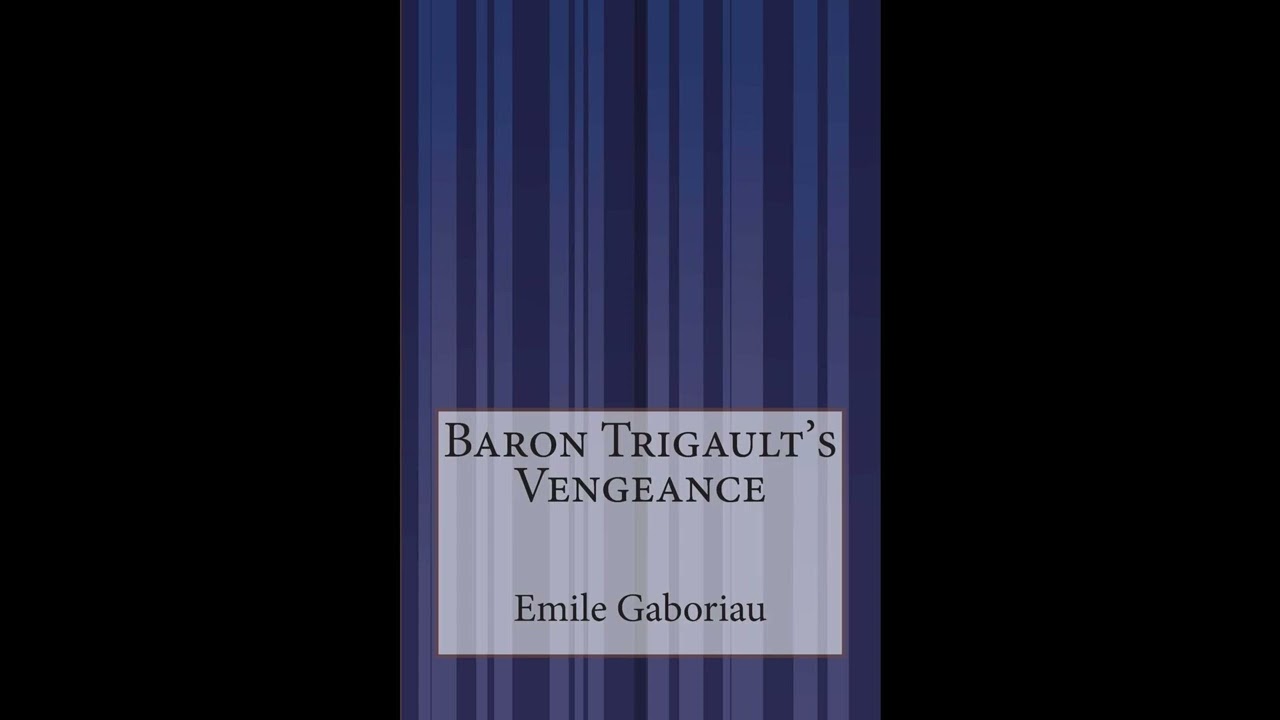
Baron Trigault's Vengeance
Emile Gaboriau's Baron Trigault's Vengeance drops listeners into the murky underworld of 19th-century Paris, a labyrinth of secrets, old grudges, and the relentless pursuit of justice. This classic work offers a foundational experience in the detective genre, allowing us to witness the very roots of the mystery novel as we know it today. Before Sherlock Holmes and Hercule Poirot captivated audiences, Gaboriau’s Monsieur Lecoq was already setting the standard for the brilliant, methodical investigator. Listening to this story now is not just a glimpse into literary history; it’s an invitation to a compelling psychological drama, demonstrating how the thirst for retribution can twist lives and how intricate plots can unfold with terrifying precision. It remains relevant as a testament to the enduring human fascination with crime, consequence, and the often-blurred lines between right and wrong. The story plunges headfirst into a world where past grievances cast long, menacing shadows over the present. We find ourselves in the bustling, often perilous streets of mid-19th century Paris, a city brimming with both opulence and squalor, where anonymity can be a cloak for the guilty and the innocent alike. Central to the unfolding drama is Baron Trigault himself, a figure whose very name whispers of deep-seated fury and meticulous planning. He is a man consumed by a desire for vengeance, a retribution he believes is owed to him for wrongs suffered long ago. His machinations set in motion a series of bewildering events, baffling the authorities and trapping an array of characters—some innocent, some complicit—in a complex web of deceit and danger. Opposing the Baron’s calculated malevolence is Monsieur Lecoq, a detective whose sharp intellect and innovative methods mark him as a new kind of crime-solver. Lecoq, with his keen powers of observation and a relentless dedication to logic, endeavors to unravel Trigault’s intricate scheme. The narrative meticulously details his process: interviewing witnesses, piecing together seemingly disparate clues, and using early forensic techniques to reconstruct the sequence of crimes. As Lecoq chips away at the layers of deception, he uncovers not just the mechanics of the Baron’s plot, but also the tangled histories and secret lives that led to the initial offenses, revealing how a single act of vengeance can ripple through an entire community. The story builds in suspense, presenting false leads and unexpected alliances, all while drawing the listener deeper into the psychological duel between the avenger and the investigator, culminating in a dramatic struggle to expose the truth before more lives are ruined. Emile Gaboriau, the author behind this intricate tale, carved out a significant, if often understated, niche in literary history. Born in Saujon, France, in 1832, Gaboriau’s career was relatively brief but profoundly influential before his death in 1873. He started as a journalist and secretary to the popular novelist Paul Féval, a period that undoubtedly sharpened his narrative skills and exposed him to the demands of serialized fiction. Gaboriau quickly transitioned to writing his own novels, specializing in the roman policier, or police novel. His most famous character, Monsieur Lecoq, first appeared in L'Affaire Lerouge (The Lerouge Case) and became an instant sensation, establishing many of the tropes now standard in detective fiction. Gaboriau’s influence extended far beyond French borders. His work, characterized by elaborate plots, careful deduction, and a focus on the procedural aspects of crime-solving, proved immensely popular with the public and garnered critical attention. Writers like Arthur Conan Doyle are said to have studied Gaboriau’s methods, adapting and refining elements of Lecoq’s character in the creation of Sherlock Holmes. While often categorized as a progenitor of genre fiction rather than a high literary figure, Gaboriau’s contribution to the development of the modern detective story is undeniable. He perfected the formula of the enigmatic detective, the baffling crime, and the methodical unraveling of clues, ensuring his enduring legacy within the canon of mystery literature. At its core, Baron Trigault's Vengeance grapples with the corrosive nature of vengeance and the complex relationship between justice and retribution. Baron Trigault’s calculated pursuit of those who wronged him raises profound questions about the moral limits of personal satisfaction. His intricate plan, rather than bringing peace, only perpetuates suffering and further complicates the lives of innocent and guilty parties alike. Gaboriau effectively shows how the singular focus on payback can blind an individual to its wider consequences. The narrative also examines the slippery nature of identity and deception. Characters frequently assume false names and fabricate elaborate backstories, requiring Lecoq to sift through layers of lies to uncover their true selves. For instance, Lecoq's examination of old correspondence or his careful scrutiny of disguises illustrates the constant struggle to discern authenticity in a world where appearances are rarely what they seem. A significant thematic undercurrent is the burgeoning science of detection and the dawn of modern police work. Monsieur Lecoq embodies a shift from reliance on brute force or intuitive hunches to a more systematic, evidence-based approach to solving crimes. We observe him meticulously reconstructing crime scenes, analyzing fingerprints (a nascent concept at the time), and applying psychological insight to understand motives. This forensic rigor, even in its early manifestations, is a stark contrast to the often haphazard policing methods of earlier eras, showcasing the novel’s progressive stance on how crime should be investigated and solved. Furthermore, the novel touches upon societal hypocrisy and the hidden lives of the Parisian elite and underworld, suggesting that moral failings are not confined to any single social stratum. This book emerged during a period of significant social and literary transformation in France. The latter half of the 19th century was an era of rapid industrialization and urbanization, particularly in Paris, which was undergoing extensive modernization under Baron Haussmann. This created a fertile ground for stories that reflected both the allure and the anxieties of a booming metropolis—the growing anonymity, the rise of organized crime, and the perceived breakdown of traditional social structures. Culturally, the serialization of novels in newspapers was a dominant force, driving an insatiable public hunger for suspenseful, episodic narratives that could be consumed piecemeal. Gaboriau masterfully capitalized on this publishing trend, crafting stories designed to keep readers hooked from one installment to the next, proving that entertainment could also be literature. His work provided an escape, yet simultaneously offered a reflection on the evolving challenges of a changing society. As an audiobook, Baron Trigault's Vengeance truly comes to life, providing an immersive experience that complements Gaboriau's gripping narrative style. The run length, several hours in duration, makes it an ideal companion for lengthy commutes, household tasks, or simply unwinding with a compelling story. A skilled narrator will master the distinct voices of the diverse cast, allowing listeners to effortlessly distinguish between the calculating Trigault, the incisive Lecoq, and the many entangled figures caught in their conflict. The pacing of the narration is crucial; it must mirror Gaboriau's deliberate reveal of clues and gradual build of tension, allowing the intricate plot to unfold without feeling rushed or plodding. Pay attention to how the narrator uses tone and inflection to convey the shadowy atmosphere of 19th-century Paris, the subtle shifts in character motivations, and the dramatic moments of revelation. This auditory rendition enhances the suspense and allows the listener to fully appreciate the complex layers of Gaboriau's classic work.
Enjoyed Baron Trigault's Vengeance? A few ways to support us
Audible & Amazon links are affiliate; we may earn a small commission at no extra cost.
About this production
Human narration by a volunteer reader from LibriVox.org, the public-domain audiobook project. LibriVox volunteers record literary works whose copyright has expired in the United States, releasing the resulting recordings into the public domain.
Baron Trigault's Vengeance by Emile Gaboriau. The underlying text is in the U.S. public domain. We do not republish any modern copyrighted edition, translation, or commentary.
The 4K cinematic visuals accompanying this audiobook are generated by an AI image model from prompts derived from the source text. No copyrighted photos, paintings, or stock footage are used. AI generation is disclosed on every video on our YouTube channel as required by YouTube's altered/synthetic content policy.
English subtitles are transcribed from the LibriVox recording with OpenAI Whisper. Translations into the 11 other supported languages are produced by Meta's NLLB-200 neural translation model. No human translator's copyrighted translation is used.
Questions about sourcing or rights? See our DMCA & Sourcing policy or contact us.
Enjoyed this audiobook?
If you'd like to own a copy of Baron Trigault's Vengeance or hear a professionally produced edition, the links below help support free audiobook production at no extra cost to you.
As an Amazon Associate we earn from qualifying purchases. Audible / print links are affiliate.