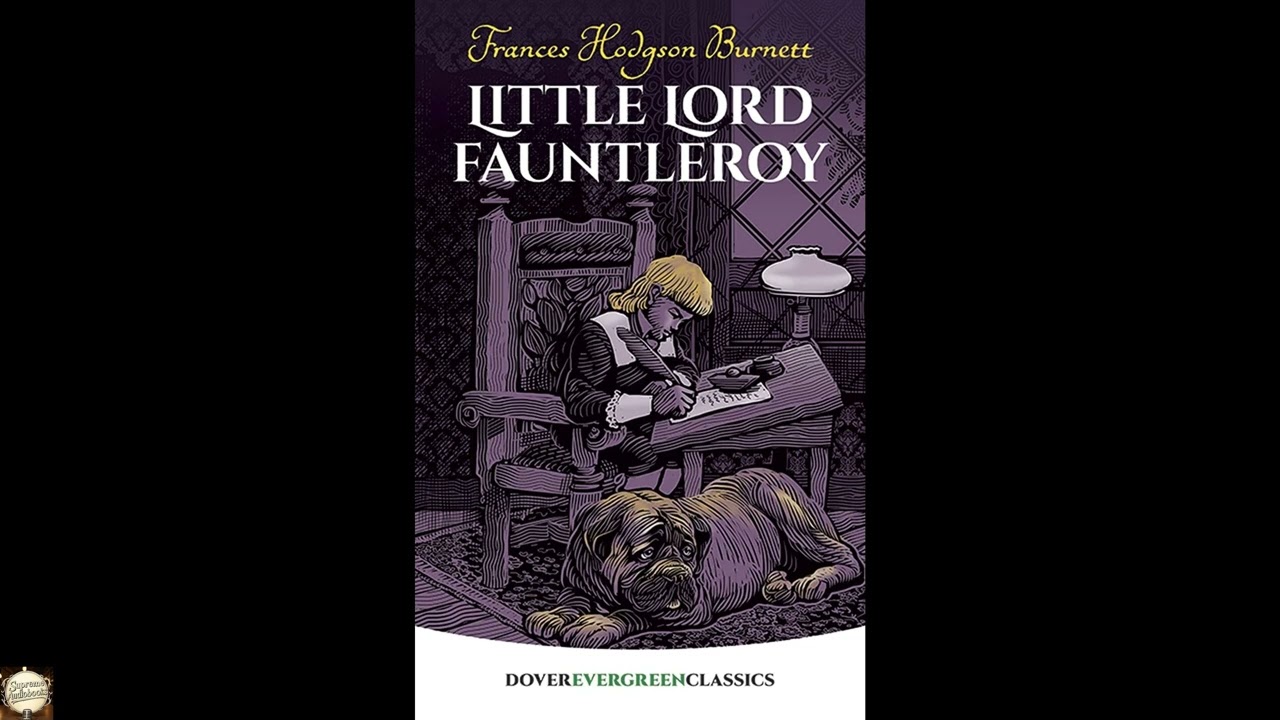
Little Lord Fauntleroy
"Little Lord Fauntleroy" has etched itself into the popular imagination, not just as a story, but as a cultural touchstone—a name instantly conjuring images of ringlets, velvet suits, and an innocent gaze. Frances Hodgson Burnett's novel, first published in 1886, offers far more than its iconic sartorial legacy. It’s a tender, insightful look at the transformative power of pure-hearted goodness in a world often hardened by cynicism and privilege. At its heart lies a simple yet profound question: can genuine kindness truly change even the most embittered soul? For listeners today, the narrative speaks to the enduring belief that compassion, generosity of spirit, and a clear moral compass hold immense power to bridge divides and soften the sharp edges of human experience, making its wisdom surprisingly relevant in any age. The story opens in late 19th-century New York City, where young Cedric Errol lives a joyful life with his beloved mother, "Dearest." Though their circumstances are modest, Cedric’s upbringing is rich with love and moral instruction. He makes friends easily, from the kind grocer Mr. Hobbs to the bootblack Dick Tipton. Cedric’s world is turned upside down when an English lawyer arrives with astonishing news: Cedric is the sole surviving heir to an immense English fortune and the title of Lord Fauntleroy. His grandfather, the immensely wealthy and famously curmudgeonly Earl of Dorincourt, wishes for Cedric to come to England to be raised as an aristocrat. Reluctantly, Cedric and Dearest—who will not be allowed to live at the ancestral estate due to the Earl’s animosity towards her American background—make the transatlantic move. The contrast between Cedric’s democratic American upbringing and the rigid world of the English aristocracy becomes immediately apparent. The Earl, a bitter, gout-ridden man, expects a spoiled child. Instead, he is confronted by Cedric's unshakeable optimism, genuine affection, and insightful observations about fairness. Cedric, unaware of his grandfather's fearsome reputation, sees only a lonely old man who needs cheering up, and he sets about the task with unflagging enthusiasm, slowly chipping away at the Earl's icy exterior. Frances Hodgson Burnett, a name synonymous with some of the most cherished works of children's literature, was born in Manchester, England, in 1849. Her early life was marked by considerable hardship; after her father's death, the family faced financial ruin, leading them to emigrate to the United States in 1865, settling in Knoxville, Tennessee. Burnett began writing at a remarkably young age, driven by a powerful desire to contribute to her family's income, quickly gaining a readership for her compelling narratives. "Little Lord Fauntleroy," published in 1886, was an immediate sensation, launching her into international fame. She continued to write prolifically throughout her life, with later works like "A Little Princess" (1905) and "The Secret Garden" (1911) cementing her legacy. Burnett’s writing often returned to themes of childhood resilience, the redemptive power of love and nature, and the transformative potential of kindness. She was a master storyteller who understood the inner lives of children and conveyed their experiences with profound empathy, placing her firmly within the tradition of authors who championed the moral and spiritual development of children in the late Victorian and early Edwardian eras. One central theme in "Little Lord Fauntleroy" is the profound contrast between American innocence and European aristocratic cynicism. Cedric embodies a distinctly American idealism: a belief in equality, individual merit, and genuine concern for others, learned from his democratic mother and friends like Mr. Hobbs. He sees the world through uncorrupted goodness, not seeing a fearsome Earl in his grandfather, but simply an elderly gentleman who needs cheering up. This unwavering perspective, untouched by rigid social hierarchies, directly confronts the Earl's jaded worldview, forcing him to re-evaluate his harsh judgments. Another compelling theme is the transformative power of love and kindness. The Earl of Dorincourt is introduced as a deeply unhappy, misanthropic man. Yet, Cedric's genuine, unconditional affection and simple belief in his grandfather's goodness gradually melt the old man's hardened heart. The Earl's growing attentiveness to Cedric's innocent observations about the poor tenants on his estate, and Cedric's pleas for compassion, open the Earl's eyes to injustices he had previously ignored, leading to tangible improvements. The novel powerfully suggests that even entrenched negativity can be dissolved by consistent, heartfelt human connection, demonstrating how a child's pure spirit can redeem a lost soul. "Little Lord Fauntleroy" emerged from a fascinating crossroads of social and cultural currents in the late 19th century. The 1880s saw a burgeoning American identity, post-Civil War, emphasizing democratic ideals and optimism. This contrasted sharply with Old World Europe, often seen as burdened by rigid class structures and inherited titles. Burnett’s novel played into this dynamic, presenting Cedric as an exemplar of American virtue who arrives to "Americanize" the stagnant English aristocracy, tapping into a contemporary fascination with Anglo-American relations. Additionally, this period saw the increasing prominence of children's literature as a distinct genre, moving beyond simple moralizing. Authors like Burnett crafted narratives with engaging characters and compelling plots. The novel's immense popularity also reflected a societal interest in debates surrounding social class, poverty, and the role of charity, making Cedric's influence on his grandfather's estate both a personal narrative and a commentary on wider social responsibility during an era of significant industrial and social change. Listening to "Little Lord Fauntleroy" as an audiobook offers a singular opportunity to immerse oneself in Burnett's evocative world. The narrator's voice becomes the conduit for Cedric’s guileless charm and the Earl's gruff pronouncements, bringing their dynamic to life with nuanced pacing and distinct characterizations. Over several hours, one can truly appreciate the gradual shift in atmosphere at Dorincourt Castle, from gloom to warmth, a change deftly conveyed through tone and dialogue. The experience allows the listener to savor Burnett’s carefully crafted language, from Cedric’s earnest questions to the witty banter, all through an accomplished voice performance. It's an ideal companion for quiet reflection, long drives, or simply escaping into a story where goodness prevails.
Enjoyed Little Lord Fauntleroy? A few ways to support us
Audible & Amazon links are affiliate; we may earn a small commission at no extra cost.
About this production
Human narration by a volunteer reader from LibriVox.org, the public-domain audiobook project. LibriVox volunteers record literary works whose copyright has expired in the United States, releasing the resulting recordings into the public domain.
Little Lord Fauntleroy by Frances Hodgson Burnett. The underlying text is in the U.S. public domain. We do not republish any modern copyrighted edition, translation, or commentary.
The 4K cinematic visuals accompanying this audiobook are generated by an AI image model from prompts derived from the source text. No copyrighted photos, paintings, or stock footage are used. AI generation is disclosed on every video on our YouTube channel as required by YouTube's altered/synthetic content policy.
English subtitles are transcribed from the LibriVox recording with OpenAI Whisper. Translations into the 11 other supported languages are produced by Meta's NLLB-200 neural translation model. No human translator's copyrighted translation is used.
Questions about sourcing or rights? See our DMCA & Sourcing policy or contact us.
Enjoyed this audiobook?
If you'd like to own a copy of Little Lord Fauntleroy or hear a professionally produced edition, the links below help support free audiobook production at no extra cost to you.
As an Amazon Associate we earn from qualifying purchases. Audible / print links are affiliate.



![Children's Classics in Dramatic Form, Book Two. [1909] by Augusta Stevenson — free full audiobook](https://img.youtube.com/vi/h4bTKUeuO7U/maxresdefault.jpg)