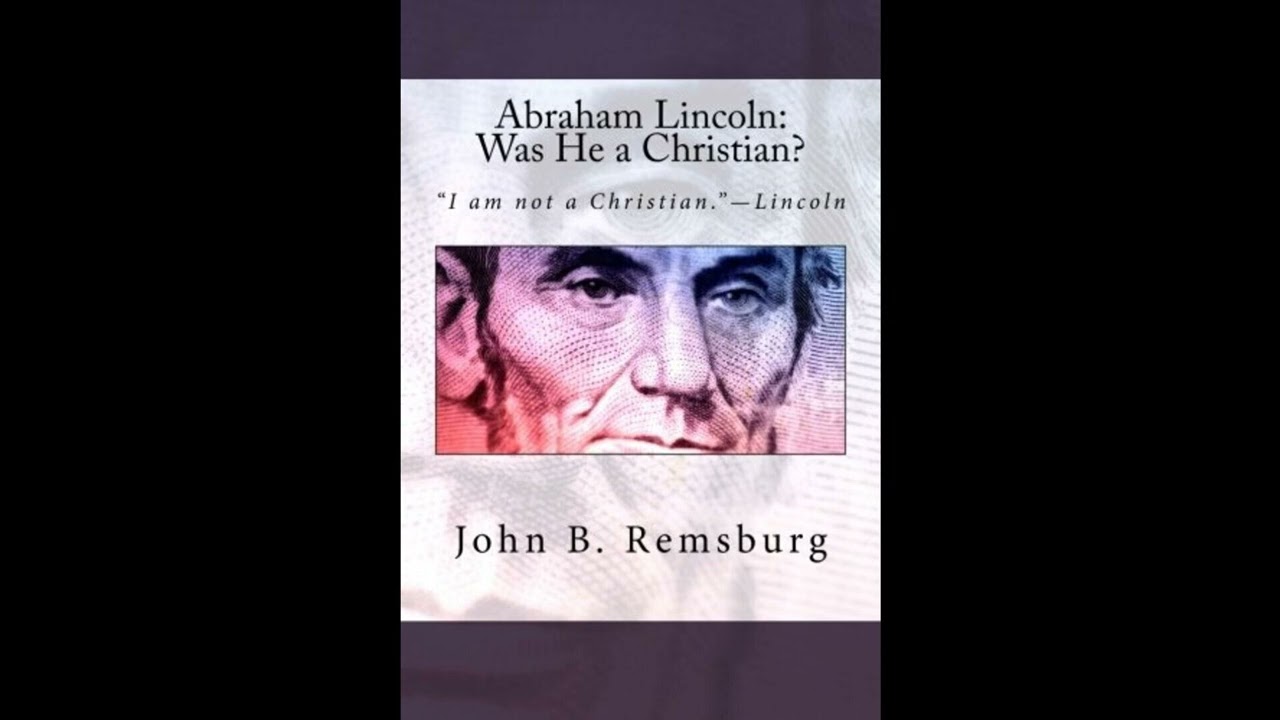
Abraham Lincoln: Was He a Christian?: "I am not a Christian."—Lincoln- Full Audiobook
Few figures in American history loom larger than Abraham Lincoln, and fewer still incite such enduring fascination about their inner life. The question of Lincoln’s personal religious beliefs has persisted for generations, sparking passionate debate among historians, theologians, and the public alike. This audiobook, Abraham Lincoln: Was He a Christian?, brings this profound inquiry into sharp focus, directly confronting the public statements and private contemplations of the 16th president. By presenting a meticulous examination of the available evidence, including his famous, stark declaration—"I am not a Christian"—this work invites listeners to reconsider a cornerstone of American identity, forcing us to ask: What did faith mean to a man who navigated the nation’s darkest hour, and how does our understanding of his beliefs shape our perception of his monumental legacy today? For anyone seeking to understand not just Lincoln the statesman, but Lincoln the complex individual, this investigation offers crucial insights that resonate deeply in a society still grappling with the intersection of leadership, conviction, and public expectation. The narrative of this historical study unfolds as an intellectual pursuit, a forensic examination of a towering historical figure’s spiritual landscape. Listeners are transported to the crucible of 19th-century America, a period marked by profound social upheaval, fervent religious movements, and the cataclysmic shadow of the Civil War. The central "character" is, of course, Abraham Lincoln himself—not as a living, breathing entity, but as a mosaic pieced together from letters, speeches, presidential proclamations, and the often-conflicting recollections of those who knew him intimately. The "setting" is less a physical location and more the vast, contested terrain of historical memory and interpretation, where every word Lincoln uttered or penned becomes an artifact under scrutiny. The central conflict animating this work is the persistent tension between Lincoln’s public reverence for divine Providence, often expressed in his most iconic addresses, and the persistent claims, both from his contemporaries and later historians, that his personal theology diverged significantly from orthodox Christianity. The story arc traces the compilation and analysis of this evidence: accounts from his law partner William Herndon, who famously asserted Lincoln’s infidelity; the observations of ministers and religious leaders who interacted with him; and Lincoln’s own evolution of language regarding God, fate, and human agency, particularly evident in his Second Inaugural Address. The book does not present a simple biography, but rather a structured argument, presenting historical data and various viewpoints as if in a courtroom, allowing the listener to weigh the testimonies and consider the implications of each piece of evidence, without preempting their own conclusions on the deeply personal matter of faith. While the specific author of this edition remains unknown, the work stands as a testament to a venerable tradition of historical inquiry—the meticulous, often passionate, examination of Abraham Lincoln’s spiritual life. Such an author, operating perhaps in the immediate aftermath of Lincoln’s assassination or decades later, would have been acutely aware of the nascent mythologizing surrounding the fallen president. The genre of probing a historical figure's faith without a known single author often indicates a compilation, an anthology of perspectives, or a historical study so focused on presenting primary sources and arguments that the individual identity of the compiler takes a backseat to the historical record itself. This approach mirrors the classical tradition of scholarship where the argument and the evidence hold primacy, inviting a collective intellectual ownership over the pursuit of truth. The enduring popularity of such a work suggests its place within a continuing academic and public discourse, indicating its alignment with the burgeoning historical scholarship of the late 19th and early 20th centuries, a period fascinated by the true character of national heroes. The drive to understand Lincoln beyond the marble statue was powerful, and scholarly endeavors like this one sought to peel back layers of veneration to reveal the complexities beneath. This work is less about a single author's journey and more about the collective intellectual pursuit of understanding a monumental figure, representing an ongoing tradition of scholarship that values evidence and rigorous examination over convenient narratives. It occupies a space where historical analysis meets public interest, striving to clarify, or at least illuminate, one of history's most debated personal dimensions. At its core, this work grapples with several profound themes. One prominent idea is the nature of public versus private conviction, particularly for a leader under immense pressure. Lincoln, in his famous speeches, often invoked "God," "Providence," and "the Almighty," terms carefully chosen to resonate with a diverse, religious nation while perhaps sidestepping specific denominational creeds. The book provides examples of this strategic ambiguity, analyzing how his use of religious language evolved, particularly between his early skepticism and the profound spiritual introspection evident during the Civil War. This exploration forces a contemplation of the authenticity of belief when expressed in a political context. Another significant theme is historical interpretation and the malleability of legacy. The book clearly demonstrates how different contemporaries—from devout ministers to skeptical lawyers—interpreted Lincoln’s words and actions through their own pre-existing frameworks. For instance, the passionate arguments from his law partner, William Herndon, often painted a picture of a rationalist rather than a conventional believer, while many within the clergy strove to posthumously claim him for Christianity. These conflicting accounts, each presented with conviction, serve as concrete examples of how personal bias and an agenda shape the narrative surrounding historical figures, reminding us that history is often a dialogue of interpretations, not a monolithic truth. The very existence of this book, and the debate it perpetuates, underscores how figures like Lincoln become battlegrounds for competing cultural and ideological claims long after their deaths. This investigation emerged from a tumultuous period in American history, specifically the decades following the Civil War and Lincoln’s assassination. The nation, fractured and grieving, sought to define its identity and understand the monumental sacrifices made. Lincoln became a central figure in this process, a symbol of national unity and moral fortitude. As such, how he was remembered, particularly concerning his religious beliefs, became crucial. In an era marked by widespread Protestant Christianity, asserting Lincoln’s faith served to enshrine him within a dominant moral framework, legitimizing his actions and the Union cause through divine sanction. However, the late 19th and early 20th centuries also saw the rise of modern historical inquiry, skepticism, and changing religious landscapes. Intellectuals and historians began to scrutinize foundational myths. This book, or similar works from the period, likely represents a tension between the need to preserve a comforting, sanctified image of Lincoln and the emerging historical impulse to uncover a more complex, perhaps less conventionally pious, truth. It reflects a moment when America was both cementing its foundational narratives and simultaneously beginning to critically examine them, questioning how much the myth of a leader served the needs of the nation versus presenting the unvarnished facts of his life. Listening to Abraham Lincoln: Was He a Christian? as an audiobook offers a unique and engaging encounter with this vital historical debate. The spoken word brings a different dimension to the careful presentation of evidence and argument. The run length, several hours, allows for a comprehensive, unhurried immersion into the various testimonies and interpretations, giving ample space for the listener to process intricate details and conflicting perspectives. You can expect a measured pacing that mirrors the thoughtful unfolding of a historical inquiry, where each piece of evidence—a quote from a speech, an anecdote from a friend, a theological interpretation—is given its due weight. The narrator's voice becomes a guide, bringing clarity and perhaps a necessary dispassion to a subject that often evokes strong emotions. This format facilitates contemplation, inviting you to ponder Lincoln’s profound words and the recollections of his contemporaries, allowing their voices and the atmosphere of their arguments to resonate long after the final word.
Enjoyed Abraham Lincoln: Was He a Christian?: "I am not a Christian."—Lincoln- Full Audiobook? A few ways to support us
Audible & Amazon links are affiliate; we may earn a small commission at no extra cost.
About this production
Human narration by a volunteer reader from LibriVox.org, the public-domain audiobook project. LibriVox volunteers record literary works whose copyright has expired in the United States, releasing the resulting recordings into the public domain.
Abraham Lincoln: Was He a Christian?: "I am not a Christian."—Lincoln- Full Audiobook. The underlying text is in the U.S. public domain. We do not republish any modern copyrighted edition, translation, or commentary.
The 4K cinematic visuals accompanying this audiobook are generated by an AI image model from prompts derived from the source text. No copyrighted photos, paintings, or stock footage are used. AI generation is disclosed on every video on our YouTube channel as required by YouTube's altered/synthetic content policy.
English subtitles are transcribed from the LibriVox recording with OpenAI Whisper. Translations into the 11 other supported languages are produced by Meta's NLLB-200 neural translation model. No human translator's copyrighted translation is used.
Questions about sourcing or rights? See our DMCA & Sourcing policy or contact us.
Enjoyed this audiobook?
If you'd like to own a copy of Abraham Lincoln: Was He a Christian?: "I am not a Christian."—Lincoln- Full Audiobook or hear a professionally produced edition, the links below help support free audiobook production at no extra cost to you.
As an Amazon Associate we earn from qualifying purchases. Audible / print links are affiliate.
More by Unknown
Secret Societies (A Discussion of Their Character and Claims)
The Life Of Thomas Paine, Vol. I. (of II) With A History of His Literary, Political
Cat Walk: An English Translation of Hermann Sudermanns Der Katzensteg