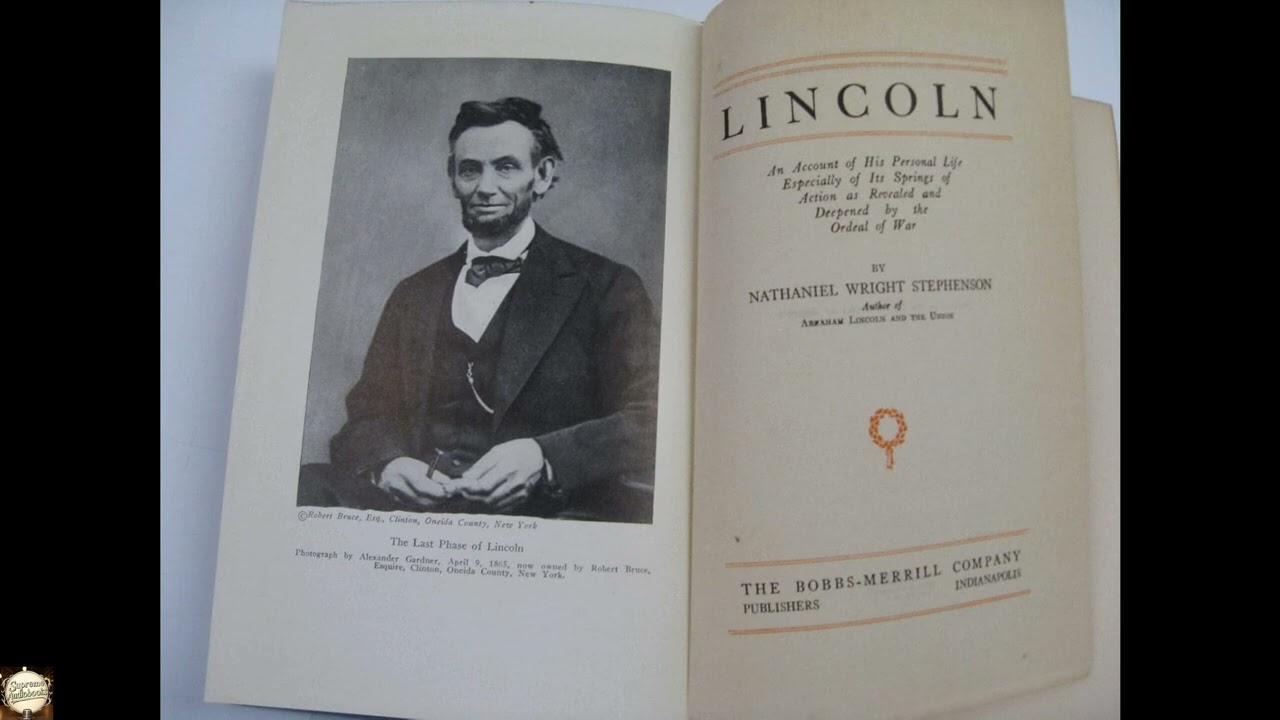
Lincoln: An Account of His Personal Life, Especially of Its Springs of Action as Re
What forces truly shape a leader? What hidden griefs, quiet moments of reflection, or early encounters forge the character that stands firm in a nation's gravest hour? Lincoln: An Account of His Personal Life, Especially of Its Springs of Action offers a profound and uniquely intimate perspective on one of America's most revered figures. This classic text moves beyond the well-trodden battlefields and legislative debates to shine a light on the private Abraham Lincoln—the man of sorrows, the devoted father, the wry storyteller, and the prairie lawyer whose conscience was meticulously honed by experience. It is a work that seeks to understand the very wellsprings of his legendary resolve and empathy, presenting a narrative that remains startlingly relevant as we continue to contemplate the nature of leadership and the human cost of momentous decisions. The narrative unfolds not as a chronicle of public events, but as a deep excavation into Lincoln’s inner world, tracing the trajectory of his existence from the sparse cabins of his youth to the solemn halls of the White House. The book meticulously chronicles the formative years, depicting a young Lincoln grappling with the rugged realities of frontier life, the loss of his mother and sister, and his self-directed pursuit of knowledge. It follows him into his early adulthood, through his sometimes turbulent courtship with Mary Todd and the joys and heartbreaks of raising their children, particularly the devastating loss of sons Eddie and Willie, tragedies that profoundly affected both him and his wife. The account details Lincoln’s legal career in Illinois, illustrating how his travels across circuits, his interactions with common people, and his meticulous reasoning in court cases sharpened his intellect and his sense of justice. It charts his gradual entry into politics, not as a swift ascent, but as a series of starts and stops, of defeats and eventual, hard-won victories. The central conflict of this biography lies not in the Civil War itself, but in Lincoln's personal wrestling with the moral implications of slavery, the preservation of the Union, and the immense burdens placed upon him. It shows how his personal trials—his melancholy temperament, his capacity for humor, his profound humanity—were not incidental to his public life, but fundamental to his leadership and decision-making during the gravest national crisis. The author of this particular account remains unknown, a common circumstance for a number of important early biographical works that sought to capture the essence of Abraham Lincoln shortly after his death. This text, classified under Classic Literature, belongs to an influential tradition of immediate post-mortem analysis and memoir, where observers, associates, or compilers pieced together intimate details and anecdotes to paint a picture of the recently departed president. In the decades following the Civil War, there was an intense national desire to understand Lincoln, to memorialize his character, and to solidify his place in the American pantheon. Many such accounts contributed to the public understanding and myth-making surrounding him, often drawing on oral histories, personal correspondence, and direct observations. This work stands as an early testament to that compelling need, predating the more formalized, extensively researched biographies that would emerge in later generations. It represents an essential step in the creation of the Lincoln legacy, offering insights that might otherwise have been lost to time. Its preservation as a "classic" speaks to its enduring value and the quality of its observations, despite the anonymity of its creator. It stands alongside other crucial, if sometimes uncredited, historical records that collectively shaped the collective memory of a nation struggling to define itself after an internecine conflict. A central theme woven throughout this personal account is the profound impact of perseverance in the face of adversity. Lincoln’s life was marked by a relentless series of personal losses and political setbacks, from the death of loved ones to multiple failed election bids. Yet, the narrative consistently shows him rising from each fall with renewed resolve, a quality starkly revealed in his continued dedication to his law practice and political ambitions despite early disappointments. Another prominent theme is the development of a moral compass through lived experience. The book portrays Lincoln's growing abhorrence of slavery not as an abstract political stance, but as a deeply personal conviction shaped by witnessing its realities firsthand, leading him to articulate his positions with a clarity and force that resonated with the nation. Furthermore, the account highlights the humanity of a leader, showcasing Lincoln’s legendary wit and his profound melancholia, often two sides of the same coin. Scenes depicting his storytelling to diffuse tension or his quiet moments of grief for his lost children offer a poignant reminder that even the most monumental figures grapple with universal emotions. Finally, the book illustrates the transformative power of empathy, demonstrating how Lincoln's capacity to understand and connect with ordinary Americans, borne from his own humble beginnings, allowed him to bridge divides and inspire hope even in the darkest hours. These interwoven themes provide a powerful lens through which to understand the man who guided a fractured nation. When this account likely emerged, America was in a period of intense reflection and reconstruction following the Civil War. The nation grappled with profound questions of identity, unity, and the legacy of slavery. Culturally and politically, there was an urgent need to interpret the war's meaning and to solidify the memory of its leaders, particularly Lincoln, who had become a symbol of national sacrifice and reconciliation. This desire fueled a surge in biographical writing, moving beyond simple factual chronicles to narratives that attempted to understand the psychological and moral dimensions of public figures. The literary world saw a burgeoning interest in American subjects, with a shift towards more realistic portrayals of life and character, even within the framework of national hero-worship. This work, with its focus on Lincoln's "springs of action," directly addresses this cultural demand, seeking to uncover the internal logic and personal history behind his monumental achievements, aiming to provide not just facts, but understanding. Listening to Lincoln: An Account of His Personal Life, Especially of Its Springs of Action as an audiobook transforms this intimate biography into an absorbing aural experience. The narration offers an opportunity to truly settle into the unfolding narrative of a life, allowing the listener to absorb the nuances of Lincoln’s character as it develops. The several hours of run time provide ample space for the story to breathe, encouraging contemplation on the gradual formation of a mind and spirit that would endure unimaginable pressures. Listen for the narrator’s measured pacing, which allows Lincoln’s dry humor and profound melancholy to emerge with equal weight, and for the subtle shifts in voice that bring to life the various individuals and anecdotes encountered along Lincoln’s path. The atmospheric descriptions of frontier life and the solemnity of presidential duty come alive through careful vocalization, drawing the listener directly into the mental landscape of 19th-century America and the quiet resilience of its most enduring leader.
Enjoyed Lincoln: An Account of His Personal Life, Especially of Its Springs of Action as Re? A few ways to support us
Audible & Amazon links are affiliate; we may earn a small commission at no extra cost.
About this production
Human narration by a volunteer reader from LibriVox.org, the public-domain audiobook project. LibriVox volunteers record literary works whose copyright has expired in the United States, releasing the resulting recordings into the public domain.
Lincoln: An Account of His Personal Life, Especially of Its Springs of Action as Re by Nathaniel Wright Stephenson. The underlying text is in the U.S. public domain. We do not republish any modern copyrighted edition, translation, or commentary.
The 4K cinematic visuals accompanying this audiobook are generated by an AI image model from prompts derived from the source text. No copyrighted photos, paintings, or stock footage are used. AI generation is disclosed on every video on our YouTube channel as required by YouTube's altered/synthetic content policy.
English subtitles are transcribed from the LibriVox recording with OpenAI Whisper. Translations into the 11 other supported languages are produced by Meta's NLLB-200 neural translation model. No human translator's copyrighted translation is used.
Questions about sourcing or rights? See our DMCA & Sourcing policy or contact us.
Enjoyed this audiobook?
If you'd like to own a copy of Lincoln: An Account of His Personal Life, Especially of Its Springs of Action as Re or hear a professionally produced edition, the links below help support free audiobook production at no extra cost to you.
As an Amazon Associate we earn from qualifying purchases. Audible / print links are affiliate.