Anti-Slavery Poems I. from Volume III., the Works of Whittier: Anti-Slavery Poems
Long before the thunder of cannons shook the nation, a different kind of artillery fired across the American landscape: the impassioned words of poets, journalists, and reformers. Among these voices, few rang out with more clarity, more moral conviction, or more tireless dedication than the one collected in Anti-Slavery Poems I. from Volume III., the Works of Whittier: Anti-Slavery Poems. This collection offers a potent, enduring testament to the power of verse as a weapon against injustice, a plea for human dignity, and a clarion call for freedom. To listen to these poems today is not merely to revisit a historical conflict; it is to engage with the very spirit of activism, to understand the profound personal and societal cost of oppression, and to witness how art can shape the conscience of a people and ignite transformative change. The urgency, the anger, and the unwavering hope within these lines resonate with an extraordinary power, inviting contemporary listeners to confront the echoes of past struggles in present-day calls for justice. This collection, rather than unfolding a single narrative, presents a mosaic of voices and scenes from the epic struggle against human bondage in nineteenth-century America. It begins often with fervent indictments of the institution of slavery itself, painting stark pictures of the cruelty and dehumanization inherent in the system. Listeners will encounter verses that lay bare the hypocrisy of a nation founded on liberty yet reliant on the labor of the enslaved. The poems shift focus between the plight of individuals—a mother separated from her child, a man fleeing brutal capture—and broader condemnations of complicit political and religious institutions. A central theme is the moral culpability of those who stood by, allowing the injustice to persist, and the spiritual bankruptcy that accompanied such inaction. As the collection progresses, it elevates and celebrates the courage of the abolitionists, those brave souls who risked reputation, livelihood, and even life to speak truth to power. There are spirited calls to action, verses designed to rally support for the cause, and moments of tender sympathy for the oppressed. The listener will experience the building tension of a nation grappling with its foundational contradiction, the desperate pleas for emancipation, and the unyielding belief in a future where all might breathe free. The poems carry an emotional weight that moves from righteous anger and deep sorrow to moments of fierce hope, illustrating the unflagging spirit required for sustained social protest and a commitment to radical change. The author of these powerful verses is John Greenleaf Whittier, a towering figure among the "Fireside Poets" of nineteenth-century America. Born in 1807 into a devout Quaker family in Haverhill, Massachusetts, Whittier’s humble rural upbringing profoundly shaped his egalitarian values and his deep-seated abhorrence of injustice. Though largely self-educated, he developed an early talent for writing, which quickly led him into journalism and, crucially, into the burgeoning abolitionist movement. His Quaker faith instilled in him a strong moral compass and a belief in the inherent worth of every individual, making the cause of anti-slavery not just a political stance but a spiritual imperative. Whittier became an uncompromising and tireless champion of the abolitionist cause. From the 1830s through the Civil War, he dedicated his pen and much of his life to ending slavery, serving as an editor for prominent anti-slavery newspapers like The Pennsylvania Freeman. He wrote hundreds of poems, essays, and editorials that unequivocally condemned slavery, often at great personal risk, as abolitionists faced widespread hostility and violence. He was a delegate to the 1833 convention that founded the American Anti-Slavery Society and maintained a lifelong friendship and collaboration with other leading figures like William Lloyd Garrison. After the Civil War, while he continued to write, his focus broadened to include more pastoral and regional New England themes, most notably in his beloved narrative poem, Snow-Bound. Yet, it is his unwavering stance against slavery, articulated in these forceful verses, that cemented his place as America’s "Poet of Freedom." At the heart of these anti-slavery poems lies the profound theme of moral imperative. Whittier confronts the institution of slavery as a fundamental affront to God and humanity. He uses vivid, often stark, imagery to depict the moral rot it inflicted, as in poems that condemn the "foul blot" upon the national escutcheon or lament the "groan of the slave" that rises to heaven. His verses are not abstract philosophical arguments but direct, impassioned appeals to conscience, frequently reminding listeners of the divine judgment awaiting those who perpetuate or tolerate such evil. For instance, many poems portray the image of chained figures, their humanity denied, serving as a constant visual motif of the injustice that cannot be ignored. Another powerful theme is the courage of resistance and the power of protest. Whittier celebrates the bravery of those who stood against the prevailing tide, both the enslaved individuals who sought freedom and the abolitionists who spoke out. He shows how simple acts of defiance, public speeches, and written words become instruments of immense power. He often frames the struggle as a spiritual battle, imbuing the abolitionists with a prophetic role, likening their work to that of ancient prophets railing against wickedness. This collection also embodies the theme of American hypocrisy, highlighting the stark contrast between the nation's stated ideals of liberty and equality and the brutal reality of chattel slavery, challenging his countrymen to live up to the promise of their founding documents. These poems were written and published during one of the most tumultuous periods in American history, the decades leading up to the Civil War. This was an era of escalating tension over slavery, a time when the issue polarized the nation, shaping political debates, social structures, and individual consciences. The abolitionist movement, which emerged with renewed vigor in the 1830s, sought to convince the public of the moral evil of slavery and advocated for its immediate end. Whittier's poetry served as a vital tool in this movement, reaching a broad audience through newspapers, pamphlets, and public readings, giving voice to the voiceless and stirring sentiment against the institution. His works provided not just intellectual arguments but emotional resonance, often transforming abstract political disagreements into deeply felt human tragedies. Culturally, this was a time when literature played a significant role in public discourse, and poets like Whittier were seen as moral guides and national conscience-keepers. His anti-slavery poems emerged from a crucible of fervent religious conviction, nascent social reform movements, and the growing national crisis, directly engaging with the pressing political questions of the day. They served as a literary counterpoint to legislation like the Fugitive Slave Act and the ongoing expansion of slavery into new territories, providing a relentless moral challenge to the status quo and helping to galvanize public opinion towards the eventual confrontation that defined the nation. To hear these poems spoken aloud as an audiobook is to gain an intimate connection with their original purpose and their profound impact. The rhythmic quality of Whittier's verse, his carefully chosen words, and his powerful emotional appeals come alive when narrated. A skilled reader can convey the righteous indignation, the profound sorrow, and the unwavering conviction that infuse every line. The several hours of listening offer a sustained engagement with this crucial historical moment, allowing the listener to absorb the full sweep of Whittier's abolitionist thought and feeling. One can fully appreciate the urgency in the pacing, the carefully crafted cadences of his arguments, and the sheer force of his moral vision, making this collection not just a historical document but a living, breathing testament to freedom.
Enjoyed Anti-Slavery Poems I. from Volume III., the Works of Whittier: Anti-Slavery Poems? A few ways to support us
Audible & Amazon links are affiliate; we may earn a small commission at no extra cost.
About this production
Human narration by a volunteer reader from LibriVox.org, the public-domain audiobook project. LibriVox volunteers record literary works whose copyright has expired in the United States, releasing the resulting recordings into the public domain.
Anti-Slavery Poems I. from Volume III., the Works of Whittier: Anti-Slavery Poems by John Greenleaf Whittier. The underlying text is in the U.S. public domain. We do not republish any modern copyrighted edition, translation, or commentary.
The 4K cinematic visuals accompanying this audiobook are generated by an AI image model from prompts derived from the source text. No copyrighted photos, paintings, or stock footage are used. AI generation is disclosed on every video on our YouTube channel as required by YouTube's altered/synthetic content policy.
English subtitles are transcribed from the LibriVox recording with OpenAI Whisper. Translations into the 11 other supported languages are produced by Meta's NLLB-200 neural translation model. No human translator's copyrighted translation is used.
Questions about sourcing or rights? See our DMCA & Sourcing policy or contact us.
Enjoyed this audiobook?
If you'd like to own a copy of Anti-Slavery Poems I. from Volume III., the Works of Whittier: Anti-Slavery Poems or hear a professionally produced edition, the links below help support free audiobook production at no extra cost to you.
As an Amazon Associate we earn from qualifying purchases. Audible / print links are affiliate.
More by John Greenleaf Whittier
More Audiobooks
Anti-Slavery Poems 2.. Part 2 From Volume III of The Works of John Greenleaf Whittie- Full Audiobook
Reminiscent Poems. Part 3 From Volume II of The Works of John Greenleaf Whittier
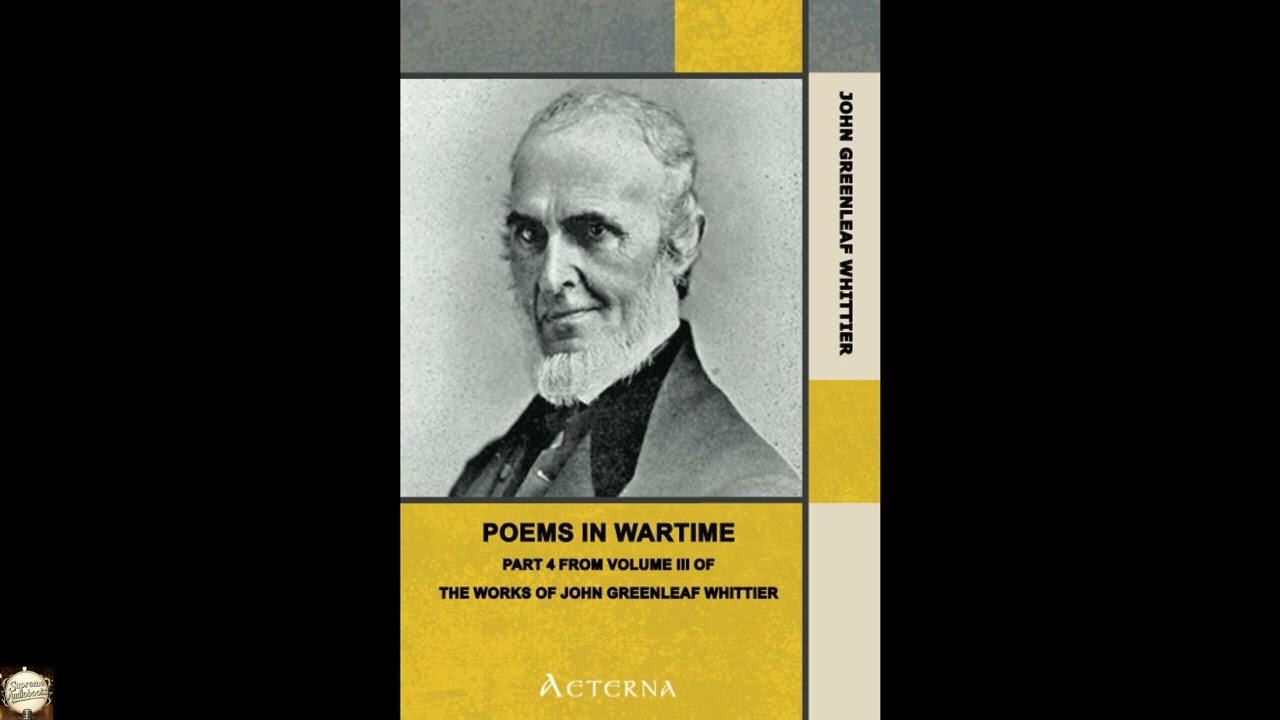
Poems in Wartime. Part 4 From Volume III of The Works of John Greenleaf Whittie
Snow Bound, and other poems : Part 4 From Volume II of The Works of John Greenleaf