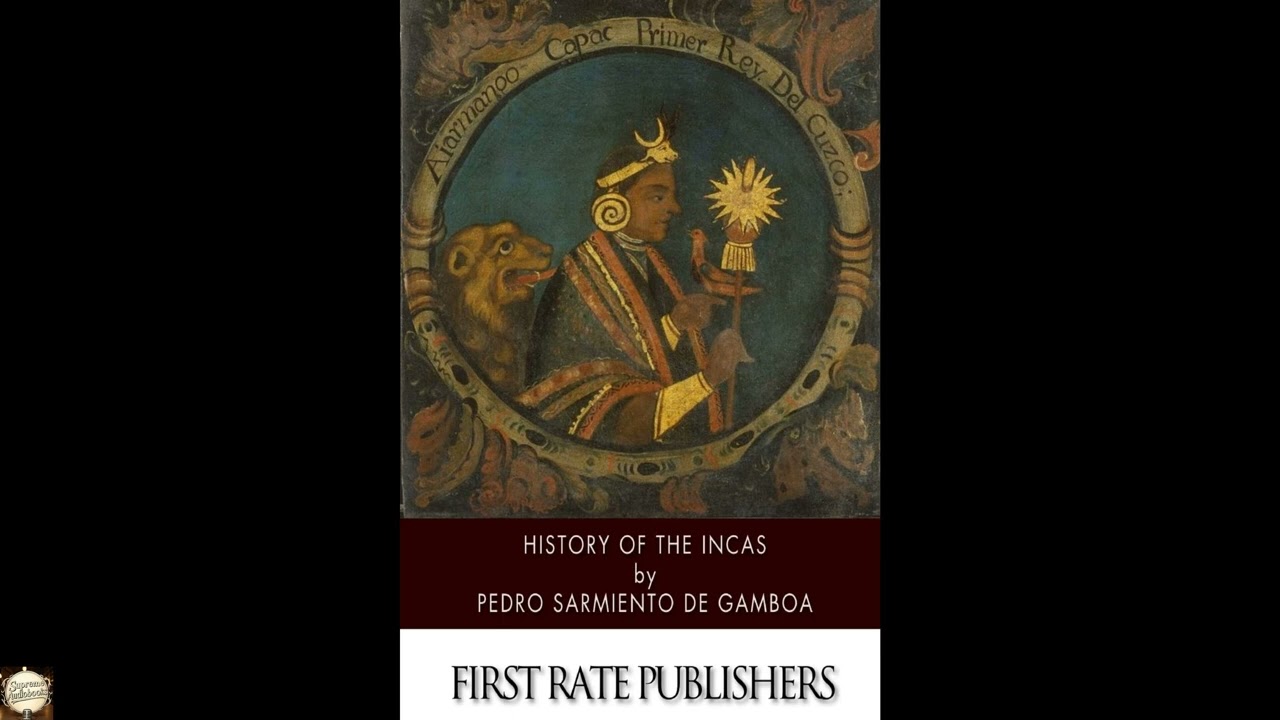
History of the Incas
Supremeaudiobooks.com presents a unique opportunity to immerse oneself in one of history’s most foundational and contested texts: Pedro Sarmiento de Gamboa’s History of the Incas. This isn't just a historical chronicle; it is a direct window into the immediate aftermath of the Spanish conquest, offering a raw, firsthand compilation of native testimonies about the vast Inca Empire before its dramatic collapse. To listen to Sarmiento’s account is to stand at a historical crossroads, hearing the voices of a vanquished civilization filtered through the pen of a conquistador, a document that profoundly shaped—and sometimes distorted—our understanding of a powerful Andean society. It serves as an essential, if complicated, foundation for anyone seeking to comprehend the pre-Columbian Americas and the seismic clash of cultures that forever altered the continent. Sarmiento's narrative begins in the high Andes, painting a picture of a world where sacred mountains touched the sky and ancient myths guided human destiny. He details the origin of the Inca people, tracing their mythical descent from the sun god Inti and the legendary Manco Capac, who emerged from Lake Titicaca or the Pacariqtambo cave to found the city of Cuzco. The story then progresses through the reigns of the early Sapa Incas—successive rulers who, through a blend of military prowess, shrewd diplomacy, and religious authority, gradually expanded their dominion from a small kingdom into a sprawling empire. We see the strategic brilliance of figures like Pachacuti Inca Yupanqui, whose transformative reign in the mid-15th century saw the empire, Tawantinsuyu, grow exponentially, encompassing diverse ethnic groups and geographic regions, connected by an unparalleled network of roads and administrative efficiency. The account meticulously details the complex societal structures, the agricultural innovations that fed millions, the intricate religious practices, and the rigorous systems of governance that held the vast empire together. From the detailed census records kept on quipus—knotted cords used for administrative and historical data—to the sophisticated engineering of terraced fields and monumental architecture, Sarmiento sketches a picture of a highly organized state. The narrative reaches its zenith with the prosperity and power of the Inca Empire, only to then describe its internal fractures. It charts the bitter dynastic struggle between half-brothers Huascar and Atahualpa, a devastating civil war that weakened the empire precisely as a new, unforeseen threat appeared on its horizons. The story builds toward the inevitable, chilling encounter between two utterly alien worlds, a moment that would seal the fate of a magnificent civilization. The author, Pedro Sarmiento de Gamboa, was a prominent figure in 16th-century Spanish colonial history, a man whose life mirrored the turbulent era of discovery and conquest. Born in Alcalá de Henares, Spain, around 1532, Sarmiento was an accomplished navigator, cosmographer, and soldier who spent a significant portion of his adult life in the Americas. His early career involved extensive voyages across the Pacific, including an expedition in 1567-1568 that became the first European sighting of the Solomon Islands. He later settled in Peru, becoming a key advisor to Viceroy Francisco de Toledo, the fifth viceroy of Peru, who was instrumental in consolidating Spanish rule and reforming colonial administration. Sarmiento's History of the Incas was commissioned directly by Viceroy Toledo, serving a specific political purpose. To gather material for the book, Sarmiento undertook a meticulous, months-long investigation in Cuzco, interviewing over a hundred surviving Inca nobles, quipu keepers, and wise men. These indigenous informants, many of whom had witnessed the empire's final years firsthand, recounted their traditions, genealogies, and historical narratives. Sarmiento meticulously recorded their testimonies, often through interpreters, then compiled and structured them into a comprehensive chronicle. This extraordinary dedication to collecting native accounts, even while pursuing a colonial agenda, solidified his reputation as a unique chronicler of his time. His later life saw him continuing his naval career, including leading a failed attempt to establish a colony in the Strait of Magellan, and even enduring capture by English privateers before his death around 1592, leaving behind a legacy as both an adventurer and a pivotal recorder of history. One of the central themes that runs through Sarmiento's work is the nature of imperial power and its legitimacy. The text constantly grapples with how the Inca state grew and maintained control, often through the forceful subjugation of neighboring peoples. For instance, Sarmiento frequently describes the Incas' policies of resettlement, where conquered populations were moved to new territories to break their resistance and integrate them into the larger empire, a practical demonstration of state control. Another prominent theme is the interplay between oral tradition and written history. Sarmiento’s reliance on the verbal accounts of native informants highlights the precariousness of historical preservation in the absence of a shared written language, and the challenge of translating complex oral histories, rich in myth and memory, into a linear, European-style historical narrative. The book further underscores the profound cultural clash that characterized the conquest. Sarmiento, through his selection and presentation of native testimonies, often emphasizes aspects of Inca rule that would justify Spanish intervention—depicting the Incas as tyrannical usurpers who conquered and oppressed earlier, "legitimate" rulers of the Andean region. This deliberate framing exemplifies the theme of history as a construct, demonstrating how narratives are shaped by the perspectives and political aims of those who record them. Yet, even within this biased framework, the sheer volume of detailed information on Inca social structure, religious beliefs, and daily life provides an invaluable glimpse into a vanished civilization, often revealing the inherent strengths and complexities of Inca society despite Sarmiento's attempts to underscore its perceived flaws. The emergence of History of the Incas must be understood within the fervent intellectual and political climate of 16th-century Spain and its burgeoning American empire. This was an era defined by aggressive European expansion, fueled by the search for wealth, prestige, and the spread of Christianity. Following the swift and brutal conquest of Peru in the 1530s, the Spanish crown faced the immense challenge of governing vast new territories and diverse indigenous populations. The initial years of conquest were marked by chaos, civil wars among the conquistadors, and severe exploitation of native peoples. Viceroy Francisco de Toledo arrived in Peru in 1569 with a clear mandate: to establish stable colonial governance, define the legal status of indigenous populations, and justify Spanish sovereignty. Sarmiento's History was a crucial component of Toledo's broader administrative and propaganda efforts. By presenting the Incas as illegitimate rulers who had themselves conquered and oppressed prior Andean kingdoms, Toledo aimed to legitimize Spanish rule as a liberation from Inca tyranny. The work was intended for King Philip II of Spain, accompanied by a sworn declaration from the Inca nobles themselves, purportedly affirming the history’s veracity. This context shows the book not merely as an academic exercise, but as a politically charged document crafted at a pivotal moment in the formation of the Spanish colonial state. Listening to History of the Incas as an audiobook offers a uniquely intimate and powerful way to connect with this foundational text. The spoken word can breathe life into the often dense historical prose, allowing the grandeur of the Inca Empire to unfold through the narrator's voice. The run length, several hours, makes it an ideal companion for extended periods of focused listening—whether during a long drive, while working on a project, or simply as an evening escape into a world long past. A skilled narrator can convey the solemnity of the historical accounts, the dramatic sweep of imperial expansion and decline, and the nuanced perspectives that Sarmiento attempted to capture from his indigenous informants. The careful pacing and clear articulation allow the listener to absorb the complex genealogies, the intricate political maneuvers, and the cultural details without feeling overwhelmed, transforming a challenging primary source into an accessible and compelling narrative experience.
Enjoyed History of the Incas? A few ways to support us
Audible & Amazon links are affiliate; we may earn a small commission at no extra cost.
About this production
Human narration by a volunteer reader from LibriVox.org, the public-domain audiobook project. LibriVox volunteers record literary works whose copyright has expired in the United States, releasing the resulting recordings into the public domain.
History of the Incas by Pedro Sarmiento de Gamboa. The underlying text is in the U.S. public domain. We do not republish any modern copyrighted edition, translation, or commentary.
The 4K cinematic visuals accompanying this audiobook are generated by an AI image model from prompts derived from the source text. No copyrighted photos, paintings, or stock footage are used. AI generation is disclosed on every video on our YouTube channel as required by YouTube's altered/synthetic content policy.
English subtitles are transcribed from the LibriVox recording with OpenAI Whisper. Translations into the 11 other supported languages are produced by Meta's NLLB-200 neural translation model. No human translator's copyrighted translation is used.
Questions about sourcing or rights? See our DMCA & Sourcing policy or contact us.
Enjoyed this audiobook?
If you'd like to own a copy of History of the Incas or hear a professionally produced edition, the links below help support free audiobook production at no extra cost to you.
As an Amazon Associate we earn from qualifying purchases. Audible / print links are affiliate.