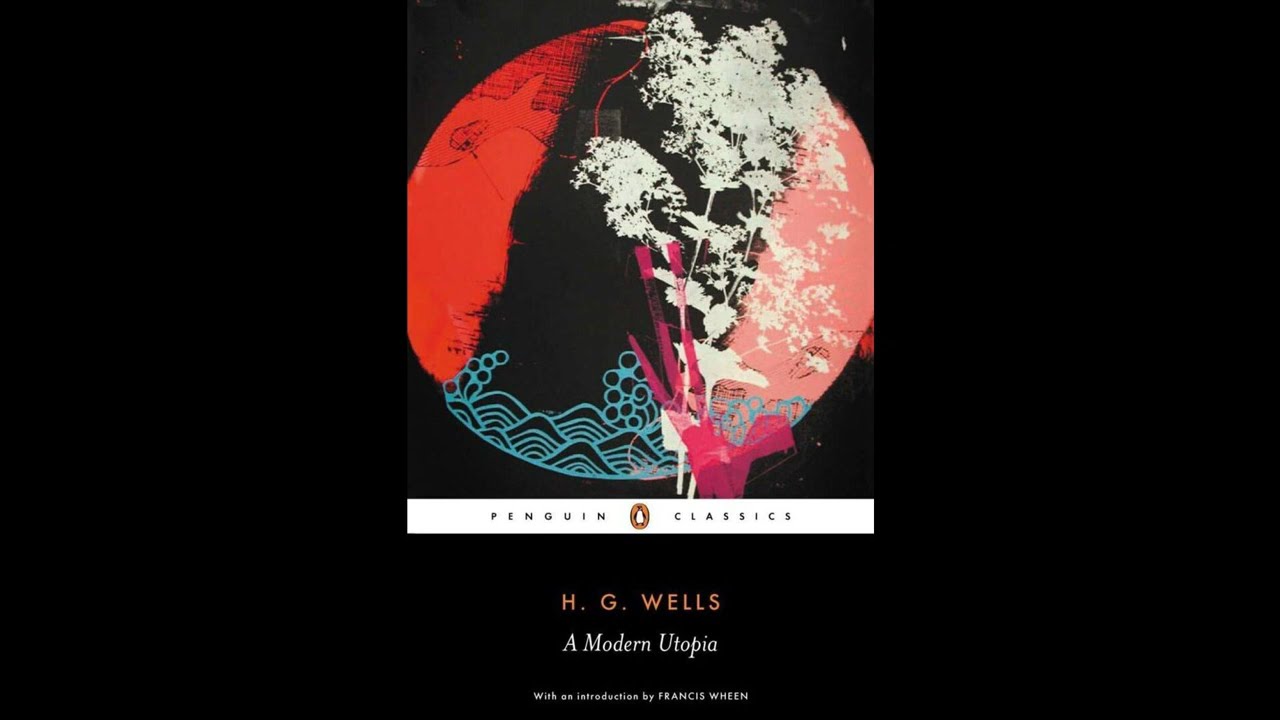
A Modern Utopia
Imagine a world designed for optimal human flourishing, where technology serves progress, and social structures elevate rather than diminish the individual. But what if such a world, even in its most thoughtful iteration, still grappled with the messy realities of human nature, individual freedom, and the endless pursuit of improvement? H. G. Wells' A Modern Utopia, published in 1905, invites listeners into precisely such a thought experiment. This isn't just a quaint vision of a perfect society; it is a dynamic, probing examination of what it truly means to build a better world, offering a mirror to our own contemporary struggles with governance, technology, and the persistent dream of a just society. Its arguments about global order, education, and individual responsibility resonate strongly in today's interconnected yet fractured world, making it a powerful and surprisingly relevant listen. The narrative unfolds through the experiences of two travelers, "The Owner of the Voice" (a thinly veiled stand-in for Wells himself) and his cynical companion, a botanist. Through some unexplained, yet conveniently effective, twist of cosmic fortune, they find themselves suddenly transported from early twentieth-century Earth to a parallel planet—a near duplicate of their own, but one where humanity has, centuries ago, chosen a different, more rational path. This parallel Earth is "Utopia," a fully realized global state, unified under a single government, speaking a universal language, and operating on principles of scientific reason and progressive social organization. As the two earth-bound men navigate this astonishing new world, they become observers and commentators. They witness the orderly cities, the efficient transport systems, and the pervasive culture of reason. They learn about the ruling class, known as the "Samurai," a voluntary order of dedicated public servants and intellectuals who embody the Utopian ideals of service and self-discipline. The central tension emerges from the contrast between the Utopian ideal and the travelers' very human reactions to it, particularly the Botanist’s skepticism and the Narrator's ongoing internal debate about the practicality and ethics of such a structured existence. The story becomes less about a static ideal and more about the constant negotiation between individual liberty and collective good, as the travelers encounter various facets of this advanced society, from its economic systems to its approach to family life and personal freedom, continually questioning and assessing what it truly means to live in a perfected state. H. G. Wells, born Herbert George Wells in 1866 in Bromley, Kent, England, began life far from the halls of literary prominence. His early years were marked by financial hardship, leading him to apprenticeships as a draper, an experience he loathed and which fueled his later critiques of class and capitalism. A turning point came with a scholarship to the Normal School of Science in London, where he studied biology under the renowned Thomas Henry Huxley, a fierce advocate for Darwinian evolution. This scientific training profoundly shaped his worldview and infused his fiction with a unique blend of imaginative speculation and rational inquiry. Wells burst onto the literary scene in the 1890s with a string of what he termed "scientific romances," books that would later be recognized as foundational texts of science fiction. The Time Machine (1895), The War of the Worlds (1898), The Invisible Man (1897), and The Island of Doctor Moreau (1896) cemented his reputation as a visionary storyteller. Beyond these thrilling tales, Wells became a prolific writer of social novels, histories, and tracts advocating for social reform, world government, and technological advancement. His work consistently anticipated future scientific developments and societal shifts, positioning him not just as an entertainer but as a serious social prophet and commentator whose influence continued until his death in 1946. One central theme of A Modern Utopia is the ongoing, dynamic nature of an ideal society, rather than a static perfection. Wells understands that even a "perfect" world must accommodate human fallibility and the need for progress. For instance, the Utopian society, despite its advanced principles, still requires a system to deal with criminals and "inadaptables," suggesting that no amount of social engineering can entirely eradicate human deviation. However, their methods are rehabilitative and humane, reflecting a core Utopian principle that even those who fall short deserve understanding and a chance for improvement. This realism distinguishes Wells' vision from earlier, often more rigid, utopian models. Another vital theme revolves around the balance between individual freedom and social order. Utopia functions through a highly structured society, yet individuals retain significant personal liberties. The "Samurai," while a strict and disciplined class, is open to anyone willing to adhere to its rigorous standards, emphasizing merit and dedication over birthright or wealth. Citizens are free to pursue their passions, but within a framework that encourages public service and discourages idleness. The book raises questions about how much personal choice can exist when society is designed for the collective good, especially when it comes to fundamental life decisions like marriage and procreation, which in Utopia, are viewed through a lens of societal well-being as well as personal desire. When Wells wrote A Modern Utopia in 1905, the world was on the cusp of significant change. The Victorian era had recently concluded, giving way to the Edwardian age, marked by increasing industrialization, scientific advancement, and growing social unrest. Ideas of progress, social reform, and scientific management were prominent, with thinkers proposing grand schemes for societal improvement. Socialist and Fabian movements, with which Wells himself was associated, advocated for planned economies and social justice. This was also a period of intense global competition and rising nationalism, yet simultaneously, there was a burgeoning interest in internationalism and universal peace, particularly after the Hague Conventions. A Modern Utopia emerged directly from this intellectual ferment, reflecting a desire to imagine how the incredible scientific and technological strides of the age could be harnessed for human betterment, rather than destruction. Wells sought to provide a plausible, albeit still speculative, alternative to the often chaotic and inequitable societies he observed, challenging his contemporaries to think beyond incremental change to wholesale, rational redesign. Listening to A Modern Utopia as an audiobook offers a particularly rich and immersive experience. Over several hours, a skilled narrator can bring to life the philosophical dialogues between the Narrator and the Botanist, distinguishing their voices and allowing the listener to better grasp the nuanced arguments presented. The descriptions of the Utopian landscapes, its efficient cities, and the bustling daily life there become vivid soundscapes. The measured pacing of audio allows listeners to fully absorb the complex ideas and detailed world-building without feeling rushed. It's an excellent choice for extended listening during commutes, while engaged in household tasks, or during reflective walks, giving ample space to consider Wells' visionary, yet grounded, concepts of an ideal future. The inherent conversational nature of the text, often presented as observations and discussions, truly flourishes when rendered by a compelling voice, transforming a thoughtful read into an engaging and deeply resonant experience.
Enjoyed A Modern Utopia? A few ways to support us
Audible & Amazon links are affiliate; we may earn a small commission at no extra cost.
About this production
Human narration by a volunteer reader from LibriVox.org, the public-domain audiobook project. LibriVox volunteers record literary works whose copyright has expired in the United States, releasing the resulting recordings into the public domain.
A Modern Utopia by H. G. Wells. The underlying text is in the U.S. public domain. We do not republish any modern copyrighted edition, translation, or commentary.
The 4K cinematic visuals accompanying this audiobook are generated by an AI image model from prompts derived from the source text. No copyrighted photos, paintings, or stock footage are used. AI generation is disclosed on every video on our YouTube channel as required by YouTube's altered/synthetic content policy.
English subtitles are transcribed from the LibriVox recording with OpenAI Whisper. Translations into the 11 other supported languages are produced by Meta's NLLB-200 neural translation model. No human translator's copyrighted translation is used.
Questions about sourcing or rights? See our DMCA & Sourcing policy or contact us.
Enjoyed this audiobook?
If you'd like to own a copy of A Modern Utopia or hear a professionally produced edition, the links below help support free audiobook production at no extra cost to you.
As an Amazon Associate we earn from qualifying purchases. Audible / print links are affiliate.