The Wheels of Chance: A Bicycling Idyll
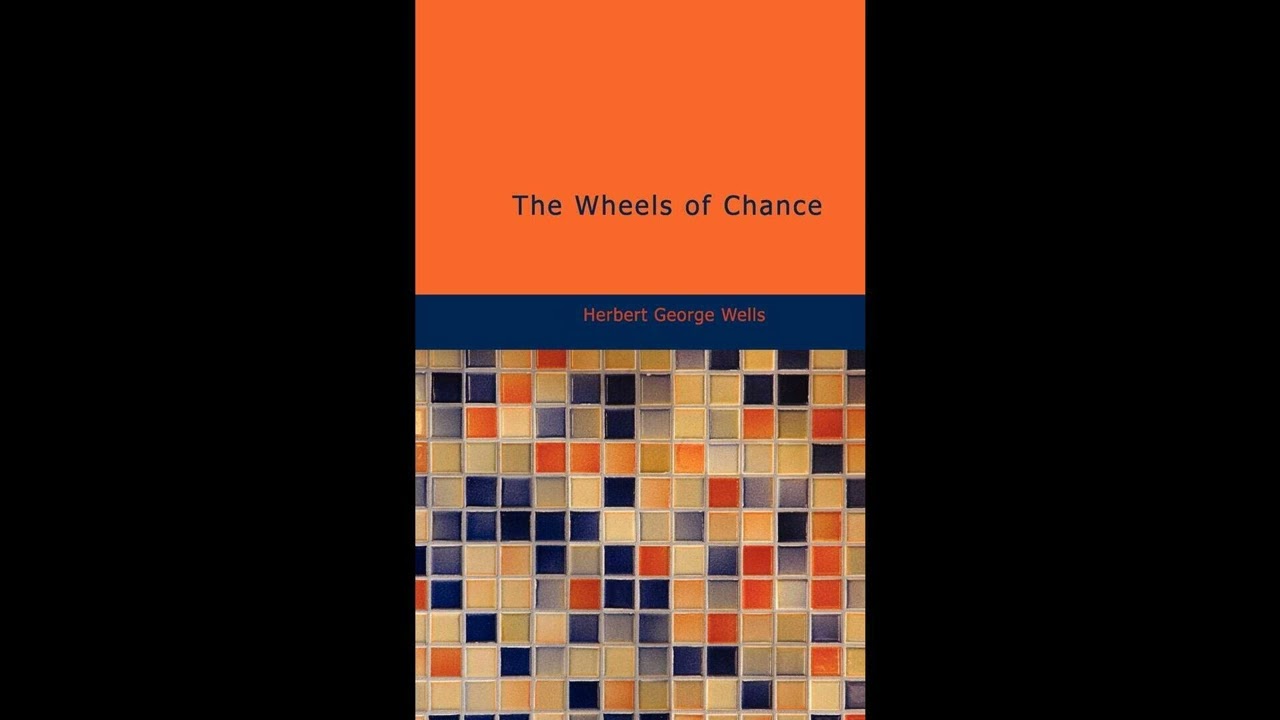
H.G. Wells, an author best known for peering into humanity's distant future or confronting alien invasions, offered a different kind of vision in The Wheels of Chance: A Bicycling Idyll. Published in 1896, this charming, humorous, and surprisingly insightful novel places its characters not among time machines or Martian tripods, but squarely on the roads of late Victorian England, propelled by the then-revolutionary bicycle. It is a story that blends lighthearted romantic comedy with keen social observation, presenting a wonderfully detailed snapshot of a bygone era yet resonating with enduring questions about freedom, social class, and the pursuit of happiness. Listeners today will discover a Wells less concerned with scientific marvels and more with the everyday miracles of human connection and personal transformation, all against the breezy, liberating backdrop of a cycling holiday. Our protagonist is Mr. Hoopdriver, a timid, somewhat uninspired shop assistant from Putney. His life, by all accounts, is one of quiet conformity and limited horizons, until he dares to break free, albeit briefly, for a bicycling holiday along the south coast of England. Hoopdriver envisions a modest escape, a chance to shed the drudgery of his daily routine and perhaps, if he's very lucky, encounter a bit of adventure. His hopes are quickly realized—and exceeded—when he encounters a mysterious young lady, Miss Jessie Milton, also traveling by bicycle. Jessie, however, is not on a holiday of leisure; she is fleeing. Having escaped an oppressive school and an imminent, unwanted arranged marriage to a much older man, she is desperately seeking freedom and independence. Clad in a daringly "rational dress"—a cycling costume considered highly unconventional for women of her time—Jessie embodies the spirit of a new era. A series of chance encounters and misunderstandings quickly intertwine Hoopdriver's fate with Jessie's, drawing him into her dramatic flight. He finds himself transformed from a hesitant observer into her unwitting protector and confidant, navigating the social complexities and physical challenges of the open road as they are pursued by Jessie’s guardians. As Hoopdriver and Jessie cycle through the picturesque English countryside, their unusual partnership evolves. Their interactions reveal the stark differences in their social backgrounds, their personalities, and their expectations of life, yet also highlight a growing mutual respect and affection. The novel follows their misadventures, the narrow escapes, and the humorous encounters with various eccentric characters they meet along the way, all while the specter of Jessie's impending forced marriage looms. Wells masterfully builds the tension of their flight without diminishing the novel’s underlying sense of optimism and charm, focusing on the burgeoning connection between two individuals searching for a truer path. Herbert George Wells, born in Bromley, Kent, England, in 1866, rose from humble beginnings to become one of the most influential writers of the late nineteenth and early twentieth centuries. His father was a shopkeeper and professional cricketer, and his early life was marked by financial instability and a series of apprenticeships that he found stifling. A pivotal accident in his youth, which left him bedridden, introduced him to the world of books, igniting his intellectual curiosity. Wells eventually secured a scholarship to the Normal School of Science in London, where he studied biology under the renowned scientist T.H. Huxley, a crucial influence on his later scientific romances. Though initially training as a teacher, Wells soon turned his prodigious talents to writing, quickly establishing himself as a prolific author across a remarkable range of genres. He is widely recognized as a "father of science fiction," a reputation cemented by groundbreaking novels like The Time Machine (1895), which introduced the concept of time travel; The War of the Worlds (1898), a terrifying alien invasion narrative; and The Invisible Man (1897), a chilling study of power and isolation. However, Wells’ literary output extended far beyond these iconic works. He wrote numerous social novels, historical accounts, and non-fiction essays, consistently demonstrating a keen interest in social reform, human progress, and the potential — and pitfalls — of scientific advancement. Wells passed away in London in 1946. Wells was not just a storyteller; he was a passionate futurist and a tireless social critic. He championed socialism, advocated for women's suffrage, and frequently used his fiction as a platform for political and social commentary, often imagining utopian or dystopian societies to critique contemporary issues. His writings predicted everything from tanks and atomic bombs to the internet and space travel, earning him a unique place in the literary canon as a visionary who blurred the lines between literature, science, and social prophecy. Even his less famous works, like The Wheels of Chance, bear the indelible mark of his observant eye and his commitment to examining the human condition amidst societal change. The Wheels of Chance is far more than a simple romantic comedy; it serves as a keen social commentary, offering insightful glimpses into the themes of social class and mobility. Mr. Hoopdriver, a lowly draper's assistant, embodies the limitations imposed by Victorian class structures. His timid nature and deferential manner are products of his station, yet his pursuit of Miss Milton, a woman of a higher social standing (albeit one in distress), represents a subtle defiance of these boundaries. Wells uses their interactions to highlight the absurdity and rigidity of a society where one's birth determined so much, while simultaneously suggesting the possibility of personal growth and connection across these divides. Another central theme is the concept of freedom and escape, powerfully symbolized by the bicycle itself. For Jessie Milton, the bicycle is quite literally her vehicle of liberation, enabling her physical escape from an unwanted marriage and symbolic escape from societal expectations for women. For Hoopdriver, it offers a temporary reprieve from his monotonous existence, a chance to redefine himself outside the confines of his shop. The open road becomes a metaphor for choice and autonomy, contrasting sharply with the restrictive environments both characters are fleeing. Wells demonstrates how technology, even one as seemingly mundane as the bicycle, can act as a catalyst for personal and societal change, fostering new forms of independence, particularly for women who were increasingly embracing cycling as a means of self-assertion in the late nineteenth century. Published in 1896, The Wheels of Chance arrived at a fascinating crossroads in British history—the tail end of the Victorian era. This period was characterized by strict social hierarchies, a burgeoning industrial economy, and profound societal shifts. While traditional values remained strong, new ideas and technologies were rapidly transforming daily life. The "bicycle craze" was one such phenomenon, sweeping across Britain and much of the Western world. Initially expensive and cumbersome, bicycles became more affordable and easier to ride, transforming personal mobility. The bicycle's rise had a particularly significant impact on women. It offered an unprecedented degree of personal freedom and mobility, allowing them to travel unchaperoned and participate in outdoor activities beyond the confines of their homes. This newfound independence contributed to the emergence of the "New Woman"—a figure who challenged traditional gender roles, sought education, career opportunities, and personal autonomy. Wells, ever attuned to the pulse of his society, recognized the bicycle not just as a mode of transport but as a powerful symbol of changing social norms and individual liberation, making it the perfect device to propel his story of escape and self-discovery in a rapidly modernizing world. Listening to The Wheels of Chance as an audiobook offers a singular opportunity to immerse oneself directly into the gentle humor and period charm of Wells’ narrative. The narrator’s voice becomes a direct conduit to the late Victorian setting, guiding listeners along the dusty English roads alongside Hoopdriver and Jessie. You can appreciate the nuanced characterizations, from Hoopdriver’s initial timidity to his evolving courage, and Jessie’s spirited determination, through carefully rendered dialogue and expressive pacing. The several hours of this production are perfectly suited for long walks, leisurely drives, or quiet evenings, allowing the detailed descriptions of the countryside and the engaging banter between characters to create a vivid, atmospheric experience. It’s a chance to hear Wells' descriptive prose come alive, painting pictures of seaside towns, rural inns, and the liberating sensation of cycling through a changing landscape, all filtered through a professional vocal performance.
Enjoyed The Wheels of Chance: A Bicycling Idyll? A few ways to support us
Audible & Amazon links are affiliate; we may earn a small commission at no extra cost.
About this production
Human narration by a volunteer reader from LibriVox.org, the public-domain audiobook project. LibriVox volunteers record literary works whose copyright has expired in the United States, releasing the resulting recordings into the public domain.
The Wheels of Chance: A Bicycling Idyll by H. G. Wells. The underlying text is in the U.S. public domain. We do not republish any modern copyrighted edition, translation, or commentary.
The 4K cinematic visuals accompanying this audiobook are generated by an AI image model from prompts derived from the source text. No copyrighted photos, paintings, or stock footage are used. AI generation is disclosed on every video on our YouTube channel as required by YouTube's altered/synthetic content policy.
English subtitles are transcribed from the LibriVox recording with OpenAI Whisper. Translations into the 11 other supported languages are produced by Meta's NLLB-200 neural translation model. No human translator's copyrighted translation is used.
Questions about sourcing or rights? See our DMCA & Sourcing policy or contact us.
Enjoyed this audiobook?
If you'd like to own a copy of The Wheels of Chance: A Bicycling Idyll or hear a professionally produced edition, the links below help support free audiobook production at no extra cost to you.
As an Amazon Associate we earn from qualifying purchases. Audible / print links are affiliate.