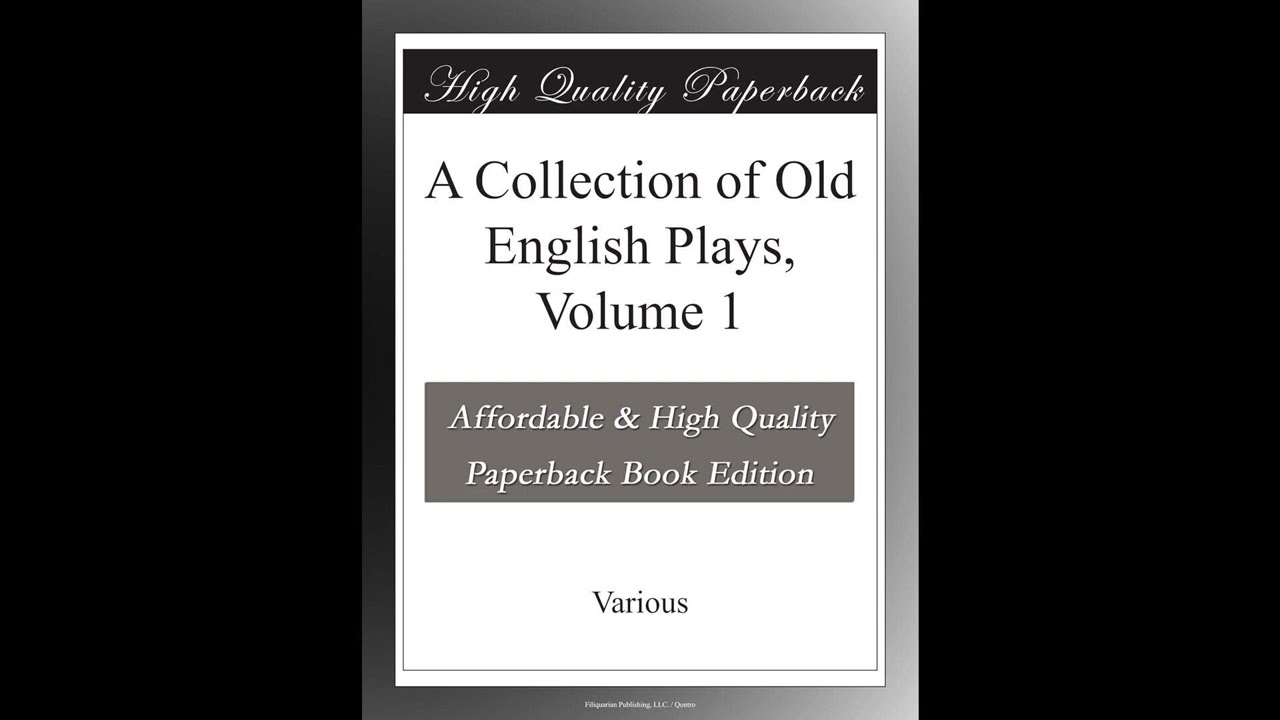
A Collection of Old English Plays, Volume 1
Stepping back to the very bedrock of English dramatic tradition, A Collection of Old English Plays, Volume 1 offers an extraordinary portal into the foundational narratives and theatrical experiments that shaped the theatrical landscape for centuries to come. This compilation is not merely an academic artifact; it presents the vivid, raw beginnings of storytelling on the British stage, revealing how early English communities grappled with questions of faith, morality, and the human condition long before the advent of the Renaissance. For anyone fascinated by the evolution of literature, the enduring power of dramatic expression, or simply seeking a unique lens through which to view the distant past, this collection provides an unparalleled opportunity to connect with the voices that first dared to transform everyday life and spiritual struggles into public spectacle. Given the anonymous origins typical of this historical period, the specific plots within this collection often draw from a shared cultural wellspring: biblical narratives, saints' lives, and moral allegories designed to instruct as much as to entertain. Listeners will find themselves immersed in settings that range from the Garden of Eden to the dusty roads of medieval England, from the courts of kings to the humble homes of common folk, all serving as stages for universal struggles. Central characters frequently include archetypal figures: the innocent soul confronted by temptation, the devout seeking salvation, the sinner facing divine judgment, or even personifications like Everyman, Good Deeds, or the cunning Vice. The narrative arc typically involves a journey of moral testing, a re-enactment of sacred history, or a dramatic exposition of sin and redemption, often culminating in a moment of profound spiritual consequence or a stark lesson in ethical behavior. These plays unfold with a directness and symbolic resonance that can feel both ancient and strikingly familiar. They might depict the creation of the world, the fall of man, the life of Christ, or the dramatic choices facing a single soul in the grip of earthly desires. The central conflict often pits spiritual virtue against worldly vice, challenging characters to choose between eternal salvation and temporal pleasure. Although the stories are rooted in a medieval worldview, their essential dramatic shape—the rise and fall, the recognition of error, the confrontation with destiny—remains instantly recognizable as the building blocks of drama itself. There are no sudden twists or unexpected revelations in the modern sense; instead, the power lies in the methodical unfolding of a divinely ordained plan or the predictable consequences of human frailty, presented with an earnestness that speaks across the centuries. The authorship of these early English plays remains largely uncredited to specific individuals, a common characteristic of literary output during the medieval period. Instead of a single literary figure, these works emerged from a collective creative impulse, often nurtured within ecclesiastical settings, craft guilds, or civic communities. Monks, priests, and later, the members of various trade guilds—such as the Corpus Christi plays performed by the weavers, drapers, or goldsmiths—were the primary custodians and innovators of these dramatic forms. These plays were not conceived as individual works of singular genius but rather as communal expressions, frequently transmitted through scribal copies and adapted over generations for local performances. This collaborative, evolving tradition underscores the public and instructional function of drama in pre-modern England, where storytelling was a shared enterprise aimed at reinforcing communal values and religious understanding. The creators, though their names are lost to time, collectively represent the earliest professional and amateur playwrights of England, laying the groundwork for the more individualized literary celebrity that would emerge in later centuries. The profound ethical and spiritual dimensions of these early plays are among their most enduring features. One prominent theme is undoubtedly Morality and Salvation, depicted through allegorical characters who represent virtues and vices. In a play like Everyman (a potential inclusion in such a collection, or its stylistic precursor), the protagonist’s solitary struggle against death and his desperate search for companions to accompany him on his final reckoning serves as a stark reminder of human accountability and the fleeting nature of earthly attachments. A second key theme is Divine Justice and Mercy, often illustrated through biblical cycles that dramatize God’s dealings with humanity, from creation to the Last Judgment. Scenes portraying the temptation of Adam and Eve, Cain’s fratricide, or the harrowing of hell convey both the strictness of divine law and the ultimate promise of redemption. A third important thread, often intertwined, is The Folly of Worldly Desire, where characters succumb to greed, pride, or lust, only to face their inevitable downfall. The comedic yet cautionary figure of the Vice, a frequent character in later interludes, personifies human weakness and often employs trickery to lead others astray, highlighting the constant moral choices facing individuals. Finally, the plays frequently touch upon Community and Social Order, as seen in their performance context. They reinforced shared beliefs and social structures, often satirizing deviations from the ideal, providing a dramatic forum for both religious instruction and social commentary. These dramatic forms emerged from a specific and fascinating historical context, profoundly shaped by the cultural, political, and religious landscape of medieval and early Tudor England. During this period, stretching roughly from the 12th through the 16th centuries, the Roman Catholic Church held immense sway over daily life and thought. Latin was the language of scholarship and liturgy, but the vernacular English was slowly gaining prominence, especially in popular literature and drama. These plays often began as small liturgical dramas performed within churches, gradually moving outside into churchyards and market squares as they grew in scope and popularity. The rise of craft guilds played a crucial role, as they took responsibility for producing specific "pageants" or scenes within the larger cycles of mystery plays, transforming religious storytelling into a communal civic event. Politically, England was transitioning from a feudal society towards a more centralized monarchy, experiencing periods of both stability and upheaval, such as the Wars of the Roses. These plays mirrored the societal hierarchy and religious fervor of the age, serving as powerful tools for instruction and communal cohesion at a time when literacy was not widespread, making the spoken word and visual spectacle paramount for disseminating knowledge and shared values. Their development reflects a dynamic interplay between religious doctrine, social custom, and the burgeoning desire for public entertainment. Listening to A Collection of Old English Plays, Volume 1 as an audiobook offers a singular opportunity to experience these foundational texts in their most authentic form: as spoken drama. The very nature of these plays, originally intended for live performance, means that the richness of their language and the immediacy of their emotional content truly comes alive when voiced. The narrator's skill in differentiating characters, conveying allegorical meanings through tone and inflection, and pacing the dialogue allows listeners to grasp the dramatic tension and often surprisingly earthy humor that permeate these ancient scripts. The run length, several hours in duration, encourages a deep immersion, allowing the listener to absorb the period’s linguistic style, the cadence of early English verse, and the profound moral questions these plays pose. Hearing the spoken word brings forth the original intent of these works, transforming what might otherwise be a challenging historical text into a compelling and accessible theatrical experience that connects directly with the spirit of the earliest English dramatists.
Enjoyed A Collection of Old English Plays, Volume 1? A few ways to support us
Audible & Amazon links are affiliate; we may earn a small commission at no extra cost.
About this production
Human narration by a volunteer reader from LibriVox.org, the public-domain audiobook project. LibriVox volunteers record literary works whose copyright has expired in the United States, releasing the resulting recordings into the public domain.
A Collection of Old English Plays, Volume 1. The underlying text is in the U.S. public domain. We do not republish any modern copyrighted edition, translation, or commentary.
The 4K cinematic visuals accompanying this audiobook are generated by an AI image model from prompts derived from the source text. No copyrighted photos, paintings, or stock footage are used. AI generation is disclosed on every video on our YouTube channel as required by YouTube's altered/synthetic content policy.
English subtitles are transcribed from the LibriVox recording with OpenAI Whisper. Translations into the 11 other supported languages are produced by Meta's NLLB-200 neural translation model. No human translator's copyrighted translation is used.
Questions about sourcing or rights? See our DMCA & Sourcing policy or contact us.
Enjoyed this audiobook?
If you'd like to own a copy of A Collection of Old English Plays, Volume 1 or hear a professionally produced edition, the links below help support free audiobook production at no extra cost to you.
As an Amazon Associate we earn from qualifying purchases. Audible / print links are affiliate.
More by Unknown
Gathering Jewels. The Secret of a Beautiful Life: In Memoriam of Mr. & Mrs. James Kn- Full Audiobook
Cyclopedia of Telephony & Telegraphy Vol. 1 A General Reference Work on Telephony
A Narrative of Captivity in Abyssinia (1868): With Some Account of the Late Emperor