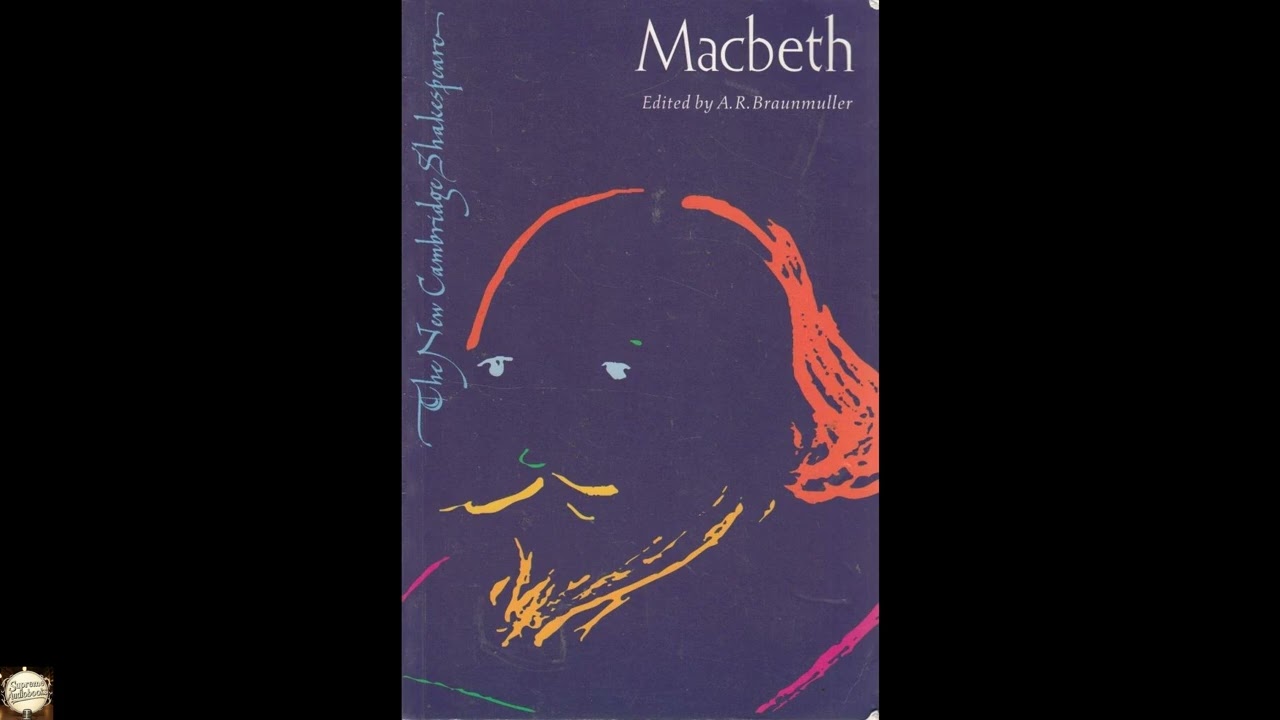
Macbeth (The New Cambridge Shakespeare)
From the desolate moors of Scotland to the blood-stained halls of Dunsinane, a chilling tale of vaulting ambition and its ruinous consequences unfurls in William Shakespeare’s Macbeth. This seminal tragedy, a cornerstone of Western literature, plunges listeners into the dark heart of human desire, asking profound questions about fate, free will, and the corrupting allure of power. Even centuries after its creation, the stark portrayal of a mind unraveling under the weight of its own terrible choices resonates with an urgent, disquieting power, offering an unflinching look at the inner workings of tyranny and the psychological cost of transgression. To witness Macbeth’s descent is to confront the shadows that lurk within us all, making this an essential and enduring experience for anyone who contemplates the nature of good and evil. The story opens on a stormy Scottish heath where three enigmatic witches confront Macbeth, a brave and successful general, and his fellow warrior, Banquo. They hail Macbeth as Thane of Cawdor and future King of Scotland, then prophesy that Banquo will father a line of kings, though he himself will never wear the crown. Shortly after, news arrives that Macbeth has indeed been named Thane of Cawdor, lending immediate, terrifying credibility to the supernatural pronouncements. This unexpected validation ignites a nascent ambition within Macbeth, an ambition swiftly fanned into a furious inferno by his wife, Lady Macbeth. She, more ruthless and single-minded than her husband, urges him to seize the throne by any means necessary, persuading him to murder the unsuspecting King Duncan during a visit to their castle. Once the deed is done, a horrified and increasingly paranoid Macbeth ascends to the throne. But the initial act of regicide is merely the first in a deepening spiral of violence and suspicion. Haunted by the witches' prophecy concerning Banquo's descendants, Macbeth orders the assassination of his former friend and Banquo's young son, Fleance, though Fleance manages to escape. The weight of his crimes begins to fracture Macbeth’s mind, leading to public outbursts and increasingly tyrannical behavior. His castle, once a symbol of noble welcome, becomes a place of fear and death, as more and more innocents are slaughtered to secure his precarious hold on power. The reign of terror continues, but the seeds of rebellion are sown as the Scottish lords grow increasingly uneasy under their new, bloodthirsty monarch. William Shakespeare, the celebrated playwright, poet, and actor, stands as arguably the most influential writer in the English language. He was born in Stratford-upon-Avon in April of 1564, the eldest son of John Shakespeare, a prosperous glover and alderman, and Mary Arden. His early education likely involved a grammar school curriculum focusing on Latin classics and rhetoric. In 1582, at the age of eighteen, Shakespeare married Anne Hathaway, eight years his senior, and they had three children: Susanna, and the twins Hamnet and Judith. Little is definitively known about his life between his marriage and his emergence as a playwright in London, a period often referred to as "the lost years." By the late 1580s or early 1590s, Shakespeare had made his way to London, where he established himself as an actor and playwright. He became a founding member of the Lord Chamberlain’s Men, a theatrical company that later gained royal patronage and was renamed the King’s Men under James I. This company built the Globe Theatre in 1599, where many of Shakespeare's most famous plays were first performed. Over the course of his prolific career, he penned thirty-nine plays, 154 sonnets, and several narrative poems, shaping the English language with an unparalleled vocabulary and imaginative power. His vast body of work spans genres from comedies like A Midsummer Night's Dream and As You Like It, to histories such as Henry IV and Richard III, and the great tragedies, including Hamlet, Othello, and King Lear. Shakespeare retired to Stratford-upon-Avon around 1613 and died there on April 23, 1616, leaving behind a literary legacy that continues to define theatrical and literary achievement. Macbeth foregrounds several profound themes that resonate deeply with the human condition. Foremost among these is the corrupting nature of unbridled ambition. From the moment the witches plant the seed of kingship in his mind, Macbeth’s desire for power spirals out of control, leading him to commit heinous acts he initially found repulsive. His contemplation of the murder, "If it were done when 'tis done, then 'twere well / It were done quickly," reveals his inner struggle, yet his ambition, inflamed by Lady Macbeth, ultimately overcomes his moral reservations. Another central theme is the devastating psychological toll of guilt. After killing Duncan, Macbeth is tormented by visions and insomnia, famously lamenting, "Sleep no more! Macbeth does murder sleep." His wife, initially more resolute, eventually succumbs to the same torment, haunted by the imagined stain of blood on her hands, whispering in her sleep, "Out, damned spot! Out, I say!" The play also powerfully questions the relationship between fate and free will. While the witches’ prophecies undoubtedly catalyze Macbeth’s actions, the text constantly asks whether he is merely an instrument of destiny or if his choices are genuinely his own. His active decision to commit the murder, despite initial hesitation, suggests agency, even as the "instruments of darkness" manipulate his desires. Furthermore, the theme of appearance versus reality pervades the play. The witches' opening paradox, "Fair is foul, and foul is fair," establishes a world where nothing is as it seems. Macbeth and Lady Macbeth present a loyal facade to King Duncan even as they plot his demise, and the deceptive nature of power itself becomes a central preoccupation, as Macbeth learns that a crown gained through treachery brings neither peace nor security. Macbeth was likely written around 1606, during the reign of King James I of England (who was also James VI of Scotland). This historical context is vital to understanding the play's unique characteristics. James I, a devout believer in the divine right of kings, had a keen scholarly interest in witchcraft and demonology, even publishing a treatise on the subject called Daemonologie. The inclusion of the three witches and their dark prophecies would have directly appealed to the king's intellectual curiosities and popular superstitions of the era. Furthermore, the play’s setting in Scotland and its exploration of regicide held particular relevance in the wake of the Gunpowder Plot of 1605, a failed attempt by Catholic conspirators to blow up Parliament and assassinate James I. The intense anxieties surrounding political treason, usurpation, and the destabilization of the monarchy were deeply felt, making Macbeth's subject matter profoundly topical and emotionally resonant for its initial audience. To experience Macbeth as an audiobook is to return the play to its most vibrant, intended form: the spoken word. Shakespeare’s plays were written to be performed and heard, not merely read silently on a page. The "several hours" runtime allows for a comprehensive and immersive listening experience, inviting you to fully inhabit the play's oppressive atmosphere and follow the rapid, feverish pace of Macbeth's unraveling mind. Professional narration brings crucial nuance to the intricate dialogue, distinguishing character voices and conveying the full emotional spectrum—from Lady Macbeth's icy determination to Macbeth's tormented soliloquies, where the very sound of his voice betrays his fractured psyche. The interplay of sound design and vocal performance can heighten the chilling presence of the witches, the clatter of swords, and the oppressive silence after a murder. Listening allows the rhythms of Shakespeare's verse to wash over you, unlocking the immediate power of his language and making the psychological horror of this enduring tragedy feel intensely present and disturbingly real.
Enjoyed Macbeth (The New Cambridge Shakespeare)? A few ways to support us
Audible & Amazon links are affiliate; we may earn a small commission at no extra cost.
About this production
Human narration by a volunteer reader from LibriVox.org, the public-domain audiobook project. LibriVox volunteers record literary works whose copyright has expired in the United States, releasing the resulting recordings into the public domain.
Macbeth (The New Cambridge Shakespeare) by William Shakespeare. The underlying text is in the U.S. public domain. We do not republish any modern copyrighted edition, translation, or commentary.
The 4K cinematic visuals accompanying this audiobook are generated by an AI image model from prompts derived from the source text. No copyrighted photos, paintings, or stock footage are used. AI generation is disclosed on every video on our YouTube channel as required by YouTube's altered/synthetic content policy.
English subtitles are transcribed from the LibriVox recording with OpenAI Whisper. Translations into the 11 other supported languages are produced by Meta's NLLB-200 neural translation model. No human translator's copyrighted translation is used.
Questions about sourcing or rights? See our DMCA & Sourcing policy or contact us.
Enjoyed this audiobook?
If you'd like to own a copy of Macbeth (The New Cambridge Shakespeare) or hear a professionally produced edition, the links below help support free audiobook production at no extra cost to you.
As an Amazon Associate we earn from qualifying purchases. Audible / print links are affiliate.