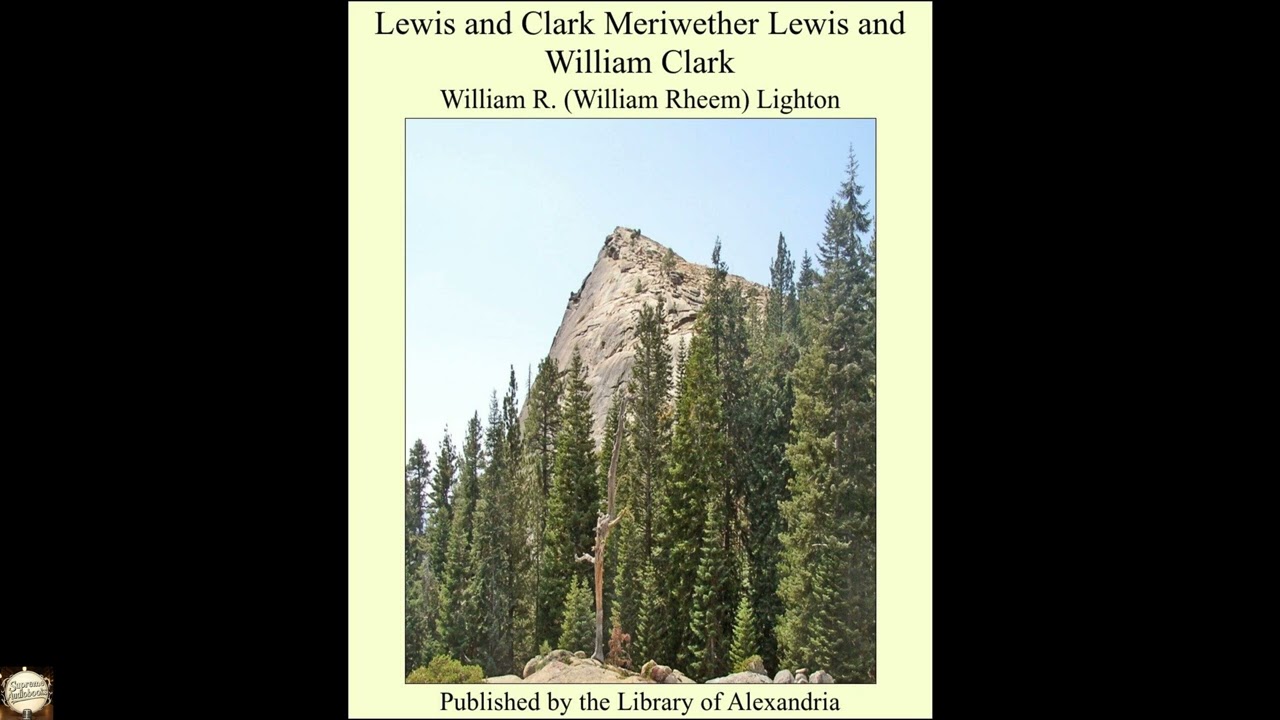
Lewis and Clark Meriwether Lewis and William Clark
Imagine the vast, unblemished heart of a continent, unknown to the burgeoning young United States, stretching westward from the Mississippi River toward the Pacific. This monumental expanse, newly acquired through the Louisiana Purchase, represented both an immense opportunity and a profound mystery. "Lewis and Clark" — the foundational account of the Corps of Discovery — plunges listeners directly into that raw, untamed landscape, presenting the firsthand observations of the men charged with charting its course. More than a simple travelogue, this text is a testament to human endurance, scientific curiosity, and the complex collision of cultures, offering a unique window into the birth of American expansionism and the ecological grandeur of a vanishing wilderness. Its themes of ambition, survival, and discovery resonate powerfully today, as we grapple with environmental stewardship and the legacy of our nation’s founding encounters. The narrative unfurls in the spring of 1804, as Captain Meriwether Lewis and Lieutenant William Clark gather their hand-picked Corps of Discovery near St. Louis, Missouri. Their mission, set forth by President Thomas Jefferson, was ambitious: locate a navigable water route to the Pacific Ocean, document the flora and fauna of the new territory, map its geography, and establish diplomatic relations with the indigenous nations they encountered. From the outset, the story immerses the listener in the daily rigors of river travel, pushing upstream against the powerful currents of the Missouri, enduring swarms of mosquitoes, violent storms, and the constant threat of unknown dangers. The characters who emerge are not only Lewis and Clark themselves—two men of contrasting but complementary skills—but also the diverse members of their corps, each playing a vital role in the collective struggle. As the expedition pushes deeper into the continental interior, the central conflict becomes clear: the formidable challenges posed by nature itself, and the delicate balance required to navigate interactions with dozens of Native American tribes. The narrative builds through descriptions of breathtaking landscapes, from the expansive prairies to the soaring peaks of the Rocky Mountains, each vista earned through relentless physical exertion. We witness the meticulous record-keeping, the daily grind of hunting for sustenance, the repairs to damaged canoes, and the strategic decisions made to ensure the corps' survival. The eventual assistance of figures like Sacagawea, the Shoshone woman whose linguistic skills and knowledge of the land proved invaluable, illustrates the intricate web of human connections that shaped their progress across a land still primarily known to its native inhabitants. The arc of the story follows their steady, often grueling, push towards the setting sun, a relentless drive into the great unknown that would forever alter the course of a continent, but not without immense personal cost and a myriad of dangers that constantly tested their resolve. This seminal account owes its existence to the meticulous diligence of its primary recorders: Meriwether Lewis and William Clark themselves. Born in 1774 in Virginia, Lewis served as President Jefferson's private secretary, a role that brought him into close contact with the scientific and political currents of the day. His rigorous intellect and observational skills were perfectly suited to the scientific mandate of the expedition. William Clark, born in 1770, also in Virginia, was a seasoned military man known for his exceptional skills in mapping and navigation, as well as his practical leadership. Together, they formed an ideal partnership, each responsible for keeping detailed daily entries in their journals, noting everything from meteorological conditions to geological formations, botanical specimens, zoological sightings, and ethnographic observations of the Native American tribes they encountered. After the expedition's conclusion in 1806, the journals remained largely unpublished for several years. Meriwether Lewis's tragic death in 1809 further complicated their compilation. It was left to William Clark and, significantly, Nicholas Biddle, a Philadelphia lawyer and writer, to oversee the first comprehensive publication of the journals in 1814. Biddle's editorial work organized the raw, often fragmented, daily entries into a cohesive narrative, shaping what would become the enduring classic we recognize today. While Biddle synthesized and rephrased much of the original material, he strove to maintain the spirit and detail of the captains' original observations, ensuring that the work retained its authenticity and historical weight, cementing its place as a cornerstone of American letters and historical documentation. The account powerfully enacts several enduring themes. One prominent idea is the quest for knowledge and scientific observation. Jefferson’s mandate explicitly called for detailed reports on geography, climate, and the natural resources of the new territory. The text is filled with vivid descriptions of previously undocumented species, like the grizzly bear and the prairie dog, and meticulous notes on their behavior and habitat. For example, Lewis’s extensive entries on the flora he collected and preserved, even pressing specimens between the pages of his journal, showcase a commitment to empirical understanding, transforming the expedition into a mobile scientific laboratory. A second vital theme is human resilience in the face of nature’s raw power. The Corps of Discovery frequently faced starvation, freezing temperatures, treacherous river rapids, and challenging mountain passes. The passages detailing their desperate hunt for food during the winter of 1804-1805 or their harrowing crossing of the Bitterroot Mountains, battling snow and sheer exhaustion, illustrate the sheer will required to survive in an unforgiving environment, highlighting the extraordinary determination of the human spirit. A third significant theme is intercultural communication and diplomacy. The expedition’s success hinged on their ability to establish peaceful relations with the numerous Native American tribes across whose lands they traveled. The text records countless councils held with various chiefs, the exchange of gifts, and the painstaking efforts to explain their peaceful intentions and the authority of the American "Great Father." The reliance on translators, most notably Sacagawea, underscores the critical role played by understanding and respect in navigating these complex interactions, often providing detailed insights into the customs and languages of tribes like the Shoshone and Mandan. Finally, the account serves as a testament to the spirit of expansion and nation-building that characterized the young American republic. The relentless push westward, the meticulous mapping of rivers and territorial boundaries, and the planting of the American flag symbolize the burgeoning nation's ambition to define and control its vast continental domain, laying the groundwork for future settlement and development. The making of "Lewis and Clark" is intrinsically tied to the historical currents of the early nineteenth century. Politically, the Louisiana Purchase of 1803 had doubled the size of the United States overnight, sparking immense curiosity and a strategic need to understand the newly acquired territory. President Jefferson, a polymath steeped in Enlightenment ideals of reason and scientific progress, envisioned an "empire of liberty" stretching across the continent. His instructions to Lewis reflected this blend of scientific inquiry, economic ambition (the hope of a Northwest Passage), and geopolitical strategy, as the nation sought to assert its presence against European powers still vying for influence in North America. Culturally, the era was marked by a growing sense of American identity distinct from its European roots, coupled with a fascination for the sublime beauty and inherent dangers of the natural world, a precursor to the Romantic movement that would soon sweep literature and art. When the first comprehensive edition of the journals finally appeared in 1814, America was just emerging from the War of 1812, a conflict that had further solidified its national identity and independence. The publication tapped into a hungry readership eager for tales of adventure, discovery, and the promise of the American frontier. It provided tangible evidence of the nation’s vast potential and helped shape the narrative of westward expansion for generations to come. The record offered not only thrilling stories but also valuable geographical and ethnographical information, making it a pivotal document in the understanding of American history and the shaping of its future. Listening to this account in audio form offers a uniquely immersive experience. The length, spanning several hours, makes it an ideal companion for long drives, quiet evenings, or moments of focused reflection. A skilled narrator can bring to life the measured, formal language of the original journals while also conveying the raw emotion of men facing extraordinary circumstances. Listen for the subtle shifts in pacing—the steady rhythm of river travel, suddenly punctuated by the drama of a buffalo hunt or a tense diplomatic encounter. The voice can conjure the vastness of the plains, the rush of the rivers, and the quiet solitude of campfires under immense, starry skies. Hearing the very words penned by Lewis and Clark and their men, often in their own vernacular, allows a rare, direct connection to the very moment of discovery, placing you alongside the expedition as they push into the grand, untamed American West.
Enjoyed Lewis and Clark Meriwether Lewis and William Clark? A few ways to support us
Audible & Amazon links are affiliate; we may earn a small commission at no extra cost.
About this production
Human narration by a volunteer reader from LibriVox.org, the public-domain audiobook project. LibriVox volunteers record literary works whose copyright has expired in the United States, releasing the resulting recordings into the public domain.
Lewis and Clark Meriwether Lewis and William Clark by Meriwether Lewis and William Clark. The underlying text is in the U.S. public domain. We do not republish any modern copyrighted edition, translation, or commentary.
The 4K cinematic visuals accompanying this audiobook are generated by an AI image model from prompts derived from the source text. No copyrighted photos, paintings, or stock footage are used. AI generation is disclosed on every video on our YouTube channel as required by YouTube's altered/synthetic content policy.
English subtitles are transcribed from the LibriVox recording with OpenAI Whisper. Translations into the 11 other supported languages are produced by Meta's NLLB-200 neural translation model. No human translator's copyrighted translation is used.
Questions about sourcing or rights? See our DMCA & Sourcing policy or contact us.
View 10 famous quotes from this book →
Enjoyed this audiobook?
If you'd like to own a copy of Lewis and Clark Meriwether Lewis and William Clark or hear a professionally produced edition, the links below help support free audiobook production at no extra cost to you.
As an Amazon Associate we earn from qualifying purchases. Audible / print links are affiliate.