A Book of Golden DeedsYonge, Charlotte M. (Charlotte Mary)
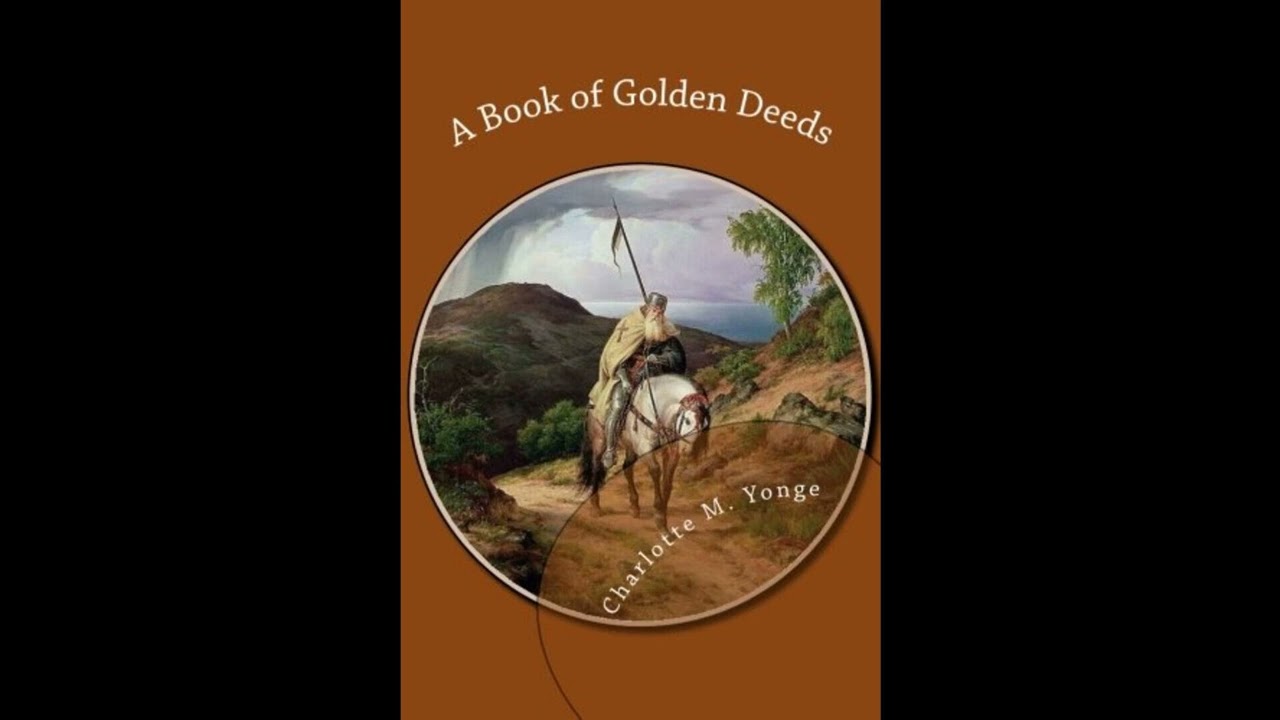
At a time when global challenges often seem to overshadow individual acts of kindness and courage, Charlotte M. Yonge's A Book of Golden Deeds stands as a powerful antidote to cynicism. Originally published in 1864, this remarkable collection gathers stories of heroism and self-sacrifice from across centuries and cultures, proving that the human spirit's capacity for altruism is a constant, unyielding force. It reminds us that ordinary individuals, faced with extraordinary circumstances, are capable of the most profound and inspiring acts, demonstrating that true greatness often lies in putting others first. This book isn't just a historical survey; it's a living testament to humanity's better angels, inviting listeners today to reflect on the enduring virtues that connect us all. This singular work functions not as a traditional novel with a single plot, but as a sweeping panorama of human virtue, each entry a miniature drama of life, death, and moral choice. The setting shifts ceaselessly, transporting the listener from the Spartan pass of Thermopylae to the fiery decks of a sinking ship, from the hushed chambers of a dying saint to the chaotic battlefields of medieval Europe, and from plague-ridden cities to remote, storm-lashed lighthouses. Each "character" is a real person – a king, a peasant, a soldier, a nun, a child – whose name may be known to history or lost to time, but whose actions left an indelible mark. These individuals, whether legendary figures like Socrates and Joan of Arc or unassuming villagers performing everyday miracles, are united by their demonstration of profound courage and compassion. The central narrative arc, therefore, is not of a single hero's quest, but of an unfolding demonstration of universal human potential. Each recounted deed presents a moment of intense crisis or profound moral choice: a life to be saved, a principle to be upheld, a danger to be faced. The tension arises from these moments of decision, illustrating the split-second courage required to act, or the quiet fortitude needed to endure. As the stories progress through different historical epochs, from ancient mythological accounts to more contemporary Victorian acts of bravery, a cumulative effect builds. The collection reveals that while the backdrops and specific challenges may change, the fundamental human capacity for goodness and unwavering resolve remains constant, forming a compelling chronicle of moral excellence. The author, Charlotte Mary Yonge (1823-1901), was a prolific and influential English novelist deeply embedded in Victorian literary and religious life. Born in Otterbourne, Hampshire, Yonge received an unusually thorough education from her father, a learned country gentleman. Her devout Anglican faith, particularly her strong connection to the High Church Oxford Movement, shaped her worldview and, consequently, much of her writing. She dedicated her life to her literary endeavors and numerous charitable causes, famously using a substantial portion of her earnings from books like The Heir of Redclyffe (1853) and The Daisy Chain (1856) to fund religious missions, including a schooner for Melanesian missionaries. Yonge was not only an author but also an editor of The Monthly Packet, a popular magazine for young women, for over forty years. Her work frequently focused on domestic life, family dynamics, duty, and the moral development of characters, particularly young women. While The Heir of Redclyffe was a sensation, selling out several editions and influencing writers like William Morris and Dante Gabriel Rossetti, Yonge wrote over 160 books, encompassing novels, history, and children's literature. She established herself as a significant, though often underestimated, figure in Victorian literature, celebrated for her ability to weave strong moral lessons into engaging narratives that resonated deeply with her readership. At its core, A Book of Golden Deeds enacts several powerful themes. Foremost is self-sacrifice, demonstrated through countless examples, such as the Roman matron who, to encourage her husband to face a public execution, takes her own life first to show him how easy it is to die. Another prominent theme is courage, both physical and moral. We witness the physical bravery of a lone sentinel who refuses to abandon his post during an earthquake, and the moral fortitude of a young girl who withstands social ostracization for protecting a vulnerable friend. The collection also consistently highlights the theme of duty and honor, showing how individuals, from national heroes to ordinary citizens, uphold their sworn responsibilities even at great personal cost, often with a quiet, unassuming dignity that elevates their actions beyond mere obligation to true nobility. The book’s literary significance lies in its unique position as a work of inspirational biographical non-fiction that greatly influenced Victorian moral education. It served as a widely read and referenced compendium of exemplary conduct, designed to instill virtues in readers, particularly the young. Yonge's meticulous research and clear, eloquent prose elevated what could have been a dry recitation of facts into a moving and accessible narrative. By presenting these diverse accounts from historical annals, she effectively created a template for understanding heroism not as a mythical ideal, but as an achievable, tangible expression of human character, offering concrete models for emulation in an era deeply concerned with moral uplift and the cultivation of good citizens. When Charlotte Yonge penned A Book of Golden Deeds in 1864, Victorian England was a society grappling with rapid industrialization, expanding empire, and significant social changes. The era placed a high value on moral rectitude, self-improvement, and the concept of duty – to God, family, and country. There was a prevailing cultural desire for inspirational narratives that reinforced these virtues, particularly for the education of the young. In the literary world, didacticism and moral instruction were common elements, especially in works intended for children and adolescents. Yonge's book emerged from this fertile ground, serving a clear purpose: to collect and disseminate stories that would inspire and instruct, providing tangible examples of the kind of character and conduct that Victorian society admired and sought to cultivate in its citizens, making these historical figures relevant for contemporary moral guidance. Listening to A Book of Golden Deeds as an audiobook offers a particularly intimate and resonant experience. A skilled narrator can bring the vast array of historical vignettes to vivid life, distinguishing the varied settings and countless figures with subtle vocal shifts and inflections. The direct, storytelling nature of Yonge's prose lends itself perfectly to the spoken word, allowing the listener to absorb the impact of each deed without the visual distractions of a page. The "several hours" run length makes it an ideal companion for commutes, extended walks, or quiet evenings, providing a steady stream of moving accounts. Listen for the narrator's pacing, which should thoughtfully guide you through the dramatic moments and reflective passages, letting the heroism and quiet dignity of each story settle within you, creating an atmosphere of profound inspiration and a true appreciation for humanity's enduring capacity for goodness.
Enjoyed A Book of Golden DeedsYonge, Charlotte M. (Charlotte Mary)? A few ways to support us
Audible & Amazon links are affiliate; we may earn a small commission at no extra cost.
About this production
Human narration by a volunteer reader from LibriVox.org, the public-domain audiobook project. LibriVox volunteers record literary works whose copyright has expired in the United States, releasing the resulting recordings into the public domain.
A Book of Golden DeedsYonge, Charlotte M. (Charlotte Mary) by Charlotte Mary Yonge. The underlying text is in the U.S. public domain. We do not republish any modern copyrighted edition, translation, or commentary.
The 4K cinematic visuals accompanying this audiobook are generated by an AI image model from prompts derived from the source text. No copyrighted photos, paintings, or stock footage are used. AI generation is disclosed on every video on our YouTube channel as required by YouTube's altered/synthetic content policy.
English subtitles are transcribed from the LibriVox recording with OpenAI Whisper. Translations into the 11 other supported languages are produced by Meta's NLLB-200 neural translation model. No human translator's copyrighted translation is used.
Questions about sourcing or rights? See our DMCA & Sourcing policy or contact us.
Enjoyed this audiobook?
If you'd like to own a copy of A Book of Golden DeedsYonge, Charlotte M. (Charlotte Mary) or hear a professionally produced edition, the links below help support free audiobook production at no extra cost to you.
As an Amazon Associate we earn from qualifying purchases. Audible / print links are affiliate.