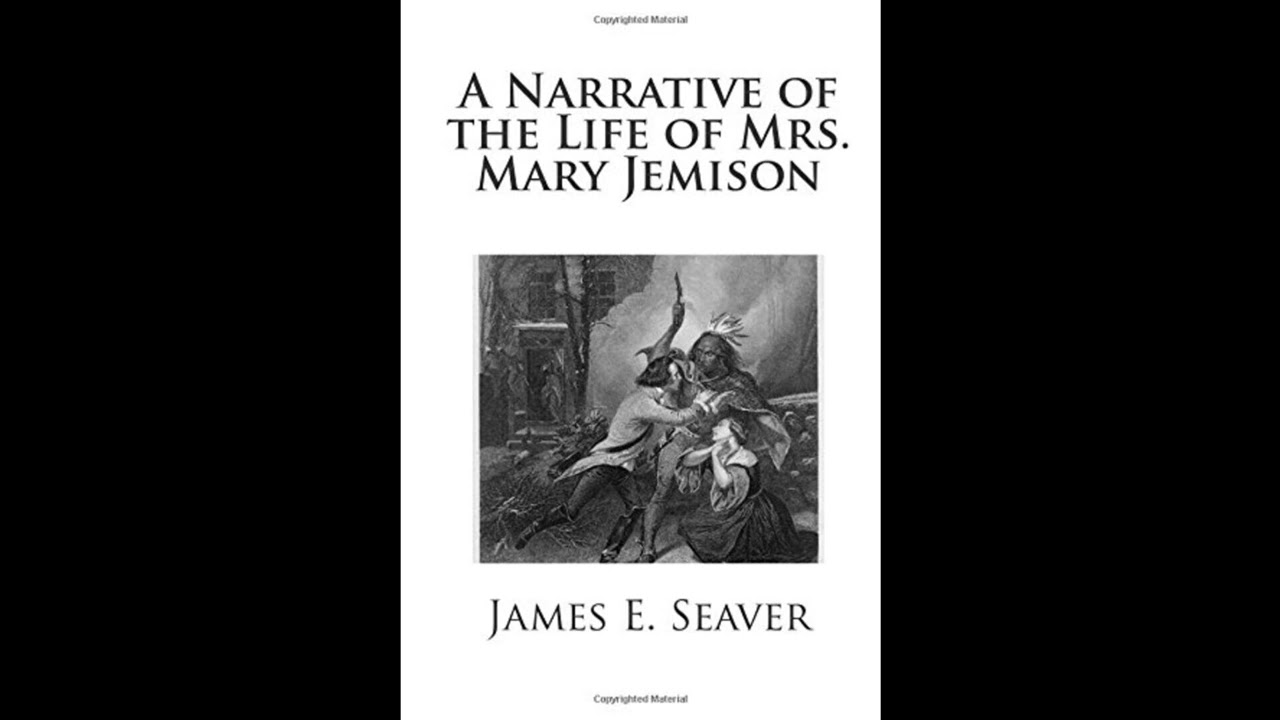
A Narrative of the Life of Mrs. Mary Jemison
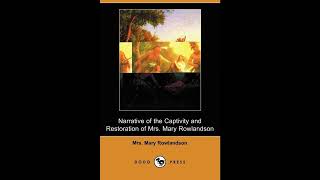
From the brutal shock of capture to a life lived across two radically different worlds, A Narrative of the Life of Mrs. Mary Jemison stands as a unique and unforgettable account of survival, adaptation, and the enduring human spirit. This extraordinary book, first published in 1824, is more than just a historical document; it is a profoundly personal testament to a woman's resilience, forced to forge an identity between cultures during a tumultuous period in American history. It offers listeners today a rare window into the complexities of cultural exchange, the arbitrary nature of belonging, and the choices that define a life, making us question preconceived notions about loyalty, family, and home. The story opens in the mid-18th century on the western frontier of Pennsylvania, where young Mary Jemison, an Irish immigrant girl, lives with her family. Their tranquil existence is shattered in 1758 during the height of the French and Indian War when a raiding party of Shawnees and Frenchmen violently attacks their homestead. Mary witnesses unspeakable horrors, including the murder of her parents and siblings, before being taken captive. She is separated from her remaining family members and forced on a harrowing march through the wilderness, an experience that marks the definitive end of her childhood and the beginning of a new, terrifying existence. Mary's initial fear and grief are palpable as she is sold to two Seneca women who adopt her into their family to replace a fallen warrior. She is renamed "Deh-he-wä-mis," meaning "a pretty girl," and begins the slow, often painful process of assimilation into Seneca culture. The narrative meticulously details her gradual learning of their language, customs, hunting, farming, and daily life. As the years pass, she marries a Delaware warrior and later a Seneca chief, bearing children and establishing deep roots within the Seneca nation. Despite opportunities to return to white society—including an offer during the post-Revolutionary War period—Mary makes the profound choice to remain with her adopted people, a decision that speaks volumes about where she found her truest sense of belonging and family. The "author" of this remarkable book, James E. Seaver, was not its originator in the traditional sense, but rather its diligent and faithful recorder. Born in 1789 and passing in 1827, Seaver was a physician and local historian residing in western New York. He understood the immense historical and cultural value of Mary Jemison's lived experience. In 1823, recognizing that Mary, then an elderly woman, held an unparalleled perspective on early American frontier life and Seneca culture, he spent time with her, meticulously transcribing her oral account. Seaver's dedication preserved a voice that might otherwise have been lost to time, ensuring Mary Jemison's narrative became one of the most significant and widely read captivity narratives in American history. While he is not known for other extensive literary works, his profound contribution here lies in his role as an editor and transcriber, lending his skill to shape Mary's spoken words into a cohesive written narrative. This makes the book not just a work of literature, but also a crucial act of historical preservation, placing Seaver firmly in the canon of early American chroniclers who captured the raw, firsthand experiences of a rapidly changing continent. At its core, Mary Jemison's story grapples with profound themes of identity and assimilation. From an Irish immigrant girl to a Seneca woman, her transformation illustrates the fluidity of self when confronted with extreme circumstances. The narrative shows how she learns to find comfort and purpose in new traditions, ultimately choosing to identify with her adopted culture, raising her children according to Seneca ways, and finding a family bond that superseded her memories of her birth family. Her story is also a powerful testament to survival and resilience. Despite enduring unimaginable trauma and loss—from witnessing horrific violence to navigating the harsh realities of frontier life and warfare—Mary continually adapts, finds strength, and builds a meaningful existence, emphasizing the inherent human capacity to overcome adversity. Furthermore, the book explores the complex dynamics of cultural clash and empathy. While it begins with an act of violence, it evolves to showcase the deep human connections Mary forged with her Seneca family, challenging the prevalent stereotypes of "savage" and "civilized" that dominated the era. Her account provides a rare, insider perspective that humanizes Native American life and customs, contrasting sharply with many contemporary narratives that demonized indigenous peoples. It offers a nuanced view of intercultural relations, highlighting the capacity for love, loyalty, and community across cultural divides, even amidst conflict and suspicion. When James Seaver published Mary Jemison's narrative in 1824, America was a young nation still grappling with its identity and its westward expansion. The early 19th century was a period marked by ongoing land disputes with Native American tribes, the lingering effects of the American Revolution, and a burgeoning interest in "frontier" stories. Captivity narratives were immensely popular, often serving as cautionary tales, religious testimonies, or propaganda against Native American populations. However, Jemison's account stands apart. Rather than demonizing her captors, her narrative offered a surprisingly empathetic and detailed portrayal of Seneca life, providing a counter-narrative to the prevailing prejudices. The work emerged at a time when figures like Washington Irving and James Fenimore Cooper were beginning to shape American literature with romanticized visions of the frontier, but Mary Jemison’s unvarnished, firsthand account provided a stark, realistic counterpoint. Her story contributed significantly to the growing body of American letters, not as a fictional creation, but as a primary source documenting the lived experience of someone caught between two worlds, offering invaluable insights into both settler and indigenous cultures during a pivotal era. It helped lay foundational groundwork for understanding the complexities of American history, far beyond simple tales of conquest. Listening to A Narrative of the Life of Mrs. Mary Jemison as an audiobook offers a uniquely intimate experience of this pivotal historical document. The spoken word brings Mary's recounted experiences to life with an immediacy that transcends the page. As the story unfolds over several hours, the narration allows ample time for reflection on the profound shifts in her life—from the initial shock of capture to the gradual adoption of new customs and the forging of new relationships. Listen closely for the subtle inflections in the narrator's voice, which can convey the passage of time, the weight of difficult decisions, and the emotional resilience that defined Mary Jemison's existence. The auditory experience enhances the atmospheric details, painting vivid soundscapes of the frontier wilderness, the Seneca villages, and the quiet moments of daily life, drawing listeners deeper into a world long past but powerfully present through this enduring voice.
Enjoyed A Narrative of the Life of Mrs. Mary Jemison? A few ways to support us
Audible & Amazon links are affiliate; we may earn a small commission at no extra cost.
About this production
Human narration by a volunteer reader from LibriVox.org, the public-domain audiobook project. LibriVox volunteers record literary works whose copyright has expired in the United States, releasing the resulting recordings into the public domain.
A Narrative of the Life of Mrs. Mary Jemison by James E. Seaver. The underlying text is in the U.S. public domain. We do not republish any modern copyrighted edition, translation, or commentary.
The 4K cinematic visuals accompanying this audiobook are generated by an AI image model from prompts derived from the source text. No copyrighted photos, paintings, or stock footage are used. AI generation is disclosed on every video on our YouTube channel as required by YouTube's altered/synthetic content policy.
English subtitles are transcribed from the LibriVox recording with OpenAI Whisper. Translations into the 11 other supported languages are produced by Meta's NLLB-200 neural translation model. No human translator's copyrighted translation is used.
Questions about sourcing or rights? See our DMCA & Sourcing policy or contact us.
Enjoyed this audiobook?
If you'd like to own a copy of A Narrative of the Life of Mrs. Mary Jemison or hear a professionally produced edition, the links below help support free audiobook production at no extra cost to you.
As an Amazon Associate we earn from qualifying purchases. Audible / print links are affiliate.