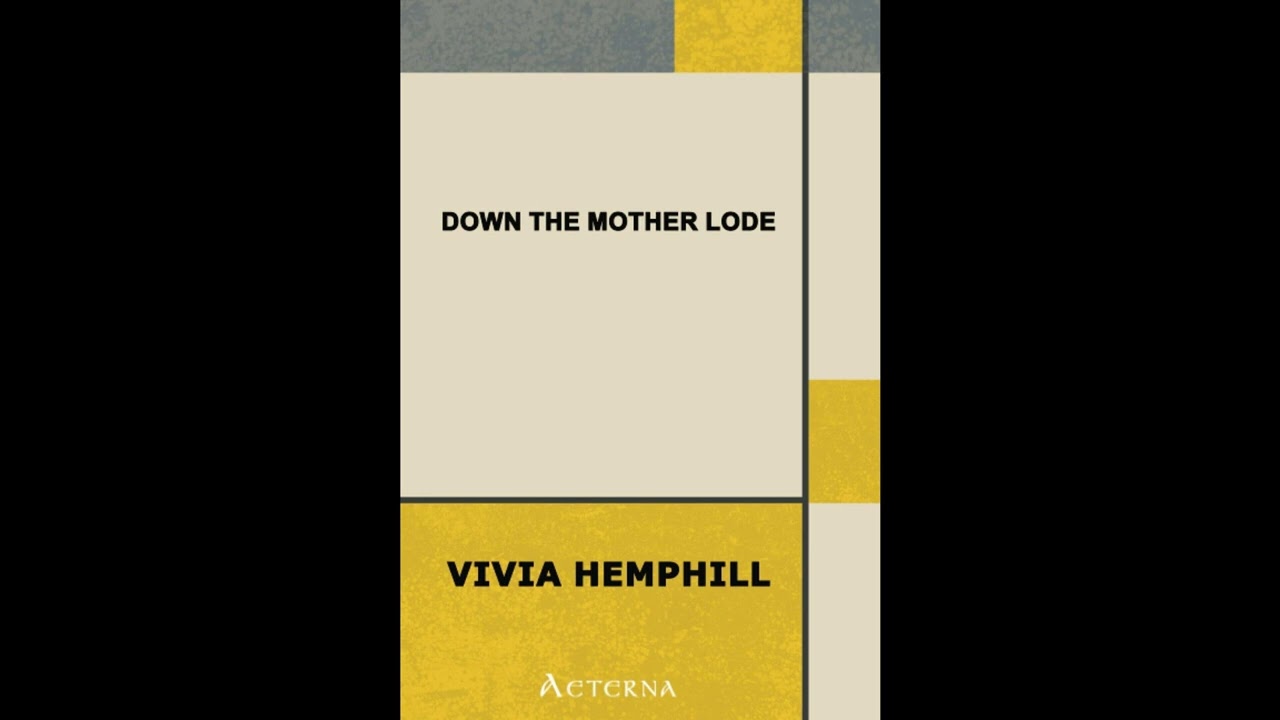
Down the Mother Lode
From the stark, sun-baked hills of California’s gold country emerges a narrative as enduring as the Sierra granite itself: Vivia Hemphill’s Down the Mother Lode. This resonant work, a cornerstone of American literary realism, plunges listeners into a world where dreams were carved from rock and ambition often outweighed humanity. It is a story not just of the search for precious metals, but of the far more profound human struggle for meaning, survival, and a flicker of dignity amidst the relentless grind of frontier life. Why should listeners care today? Because the yearning for sudden fortune, the clash between individual aspiration and the common good, and the enduring question of what truly constitutes wealth – these are themes that continue to shape our world, making Hemphill’s observations as piercingly relevant now as they were upon its initial publication. The story unfolds in the rugged, unforgiving terrain of California's gold country, specifically in the fictional but vividly rendered mining settlement of Redemption Gulch, some decades after the initial frenzy of the Gold Rush. This is not the boom time of instant riches, but an era of more systematic, often brutal, extraction, where the easy pickings are long gone and only the most tenacious or desperate remain. We meet Elias Thorne, a man whose life has been a succession of near misses and faded hopes. He arrives in Redemption Gulch drawn by the legend of an untouched vein of gold, a final, almost mythical promise whispered in saloons and campfires. Elias is a figure etched by hard experience, yet within him burns a stubborn fire, a conviction that this time, his luck will turn. His solitary quest quickly brings him into contact with the established, if precarious, community of the Gulch. Among them is Maeve, a young woman who runs the settlement’s general store, burdened by her family’s history of loss in the mines yet possessing a steely resolve and a pragmatic outlook that sets her apart. Their initial interactions are marked by wary distrust – Elias sees Maeve as a symbol of the cynical commercialism that profits from prospectors’ dreams, while Maeve views Elias as another deluded fool destined for ruin. As Elias pushes deeper into his claim, facing treacherous rockfalls, scarce resources, and the avarice of rival miners, the narrative gradually uncovers the complex web of relationships and unspoken compromises that hold Redemption Gulch together. The central conflict intensifies as Elias’s obsession with his hidden lode threatens to consume him, forcing him to confront not only the dangers of the land but the eroding boundaries of his own morality. The story follows his mounting struggle, charting the subtle shifts in his character as the weight of his quest presses down, illustrating the profound and often corrosive impact of aspiration when divorced from human connection. Vivia Hemphill stands as a compelling voice from the American literary landscape of the late nineteenth and early twentieth centuries. Though details of her early life are somewhat sparse, her distinctive perspective on the American West suggests a writer deeply familiar with its rugged beauty and the often-harsh realities beneath its golden veneer. Scholars often place Hemphill within the broad movement of American realism, perhaps with a touch of the emerging naturalism, as she meticulously observed human character under environmental and economic pressures. She distinguished herself by focusing not merely on adventure, but on the psychological toll of ambition and the often-unseen struggles of those who shaped the frontier. Hemphill’s writing brought a keen, unsentimental eye to the lives of ordinary people caught in extraordinary circumstances. While Down the Mother Lode remains her most widely recognized achievement, her shorter fiction, often collected in volumes that painted unvarnished portraits of pioneering life, further cemented her reputation. She was a writer who understood the quiet desperation and profound resilience that characterized so many lives on the edges of society, particularly in the transforming American West. Her place in the literary canon is secured by her honest representations, her ability to make the specific struggles of a forgotten mining camp echo with universal truths about human nature. At its core, Down the Mother Lode grapples with several profound themes. One primary concern is the insidious nature of greed and the corrosive effects of unchecked aspiration. We see this vividly in Elias Thorne’s increasing isolation and moral compromises as his singular focus on the gold vein eclipses all other considerations. He pushes away help, ignores warnings, and justifies increasingly dubious actions, all for the promise of the hidden metal. Another significant theme is the myth versus reality of the American frontier. Hemphill deftly strips away the romantic notions of easy wealth and endless opportunity, replacing them with a stark depiction of backbreaking labor, environmental destruction, and social alienation. The dusty streets of Redemption Gulch, with their broken promises and transient populations, serve as a stark counterpoint to the glorified images often presented in popular narratives of the era. Beyond these, Hemphill also keenly examines the theme of human resilience in the face of overwhelming odds. Characters like Maeve, despite their personal losses and the harshness of their environment, maintain a practical tenacity and a quiet strength that allows them not just to endure but to foster fragile communities. The author’s observation of how individuals find ways to adapt, to carve out lives, and even to offer moments of grace amidst hardship, offers a counterbalance to the destructive forces at play. Finally, the story implicitly addresses the environmental cost of progress. The scarred landscapes, diverted rivers, and abandoned claims are not merely backdrop; they are tangible consequences of human exploitation, illustrating a deeply felt connection between human ambition and its impact on the natural world, a resonance that continues to reverberate today. Hemphill’s book emerged during a fascinating period in American history, roughly coinciding with the closing of the frontier and the rise of industrialization, somewhere around the turn of the twentieth century. The romantic era of westward expansion was giving way to a more sober assessment of its costs and consequences. Culturally, there was a growing appetite for realistic portrayals of American life, often driven by writers who sought to challenge idealized notions of progress and opportunity. Politically, the country was grappling with questions of labor rights, environmental conservation, and the concentration of wealth – issues that mirrored the micro-scale struggles depicted in Redemption Gulch. The work thus stands as a literary response to a nation in transition, reflecting a shift from the optimistic expansionism of earlier decades to a more critical examination of the price paid for such growth. Listening to Down the Mother Lode as an audiobook offers a singular opportunity to be immersed in the stark beauty and raw humanity of Hemphill’s world. The narrator’s voice becomes the conduit for the parched earth, the distant ring of pickaxes, the creak of wooden structures, and the quiet desperation of the characters. Imagine the carefully paced delivery bringing out the slow build of tension as Elias digs deeper, or the nuanced inflections that reveal the quiet strength in Maeve’s determined dialogue. The very length of this audiobook allows for a gradual unfolding of the story’s atmosphere, letting the listener settle into the rhythms of frontier life. Pay attention to how the narration highlights the subtle shifts in character, the undercurrents of hope and despair, and the vivid, unsentimental descriptions of a landscape both alluring and unforgiving. It is through this auditory experience that the grit and the enduring spirit of these lives truly come into focus.
Enjoyed Down the Mother Lode? A few ways to support us
Audible & Amazon links are affiliate; we may earn a small commission at no extra cost.
About this production
Human narration by a volunteer reader from LibriVox.org, the public-domain audiobook project. LibriVox volunteers record literary works whose copyright has expired in the United States, releasing the resulting recordings into the public domain.
Down the Mother Lode by Vivia Hemphill. The underlying text is in the U.S. public domain. We do not republish any modern copyrighted edition, translation, or commentary.
The 4K cinematic visuals accompanying this audiobook are generated by an AI image model from prompts derived from the source text. No copyrighted photos, paintings, or stock footage are used. AI generation is disclosed on every video on our YouTube channel as required by YouTube's altered/synthetic content policy.
English subtitles are transcribed from the LibriVox recording with OpenAI Whisper. Translations into the 11 other supported languages are produced by Meta's NLLB-200 neural translation model. No human translator's copyrighted translation is used.
Questions about sourcing or rights? See our DMCA & Sourcing policy or contact us.
Enjoyed this audiobook?
If you'd like to own a copy of Down the Mother Lode or hear a professionally produced edition, the links below help support free audiobook production at no extra cost to you.
As an Amazon Associate we earn from qualifying purchases. Audible / print links are affiliate.