Wild Bill's Last Trail
"Wild Bill's Last Trail" transports listeners directly into the heart of the American frontier, a land of untamed wilderness and shifting moral codes, as imagined and popularized by one of its most influential myth-makers, Ned Buntline. This classic work stands as a cornerstone of the Western genre, offering a vivid glimpse into the legends that shaped a nation's understanding of its rugged past. More than just a historical relic, Buntline's narrative provides a window into the origins of American hero worship, the enduring allure of the self-reliant individual, and the creation of larger-than-life figures whose names continue to echo through popular culture. For anyone curious about how the West was truly won in the public imagination, this story remains as essential and compelling today as it was over a century ago. The story plunges into the sun-baked, dust-choked landscapes of the American West, where civilization is a distant rumour and survival hinges on swift wits. At the center stands James Butler Hickok, known as Wild Bill. Buntline’s narrative introduces Hickok not merely as a man, but as an icon, whose reputation as a lawman, scout, and gunfighter precedes him like a prairie fire. He is a figure of quiet authority, marked by preternatural calm, his piercing blue eyes holding both the vastness of the plains and the grim realities of frontier justice. As the plot unfolds, Hickok finds himself embroiled in conflicts testing his legendary capabilities. The narrative often centers on his pursuit of elusive outlaws or efforts to maintain order, frequently placing him in opposition to forces threatening nascent settlements. These antagonists are typically ruthless, representing the unbridled greed and violence flourishing on society's edges. The story follows a pattern of perilous encounters, dramatic standoffs, and calculated chases, each designed to highlight Wild Bill's unparalleled skill with a revolver and his unwavering moral compass. He might be protecting an innocent family or defending a community against overwhelming odds. The narrative typically builds towards a climactic confrontation, where Wild Bill faces off against lawlessness. Buntline focuses on Hickok's strategic brilliance and mythical prowess, ensuring each challenge solidifies his status as a quintessential American hero. The path to resolution is fraught with peril, but Buntline’s purpose is clear: to immortalize a figure who epitomized the struggle for justice and individualism. The tale never fully reveals its ultimate outcome, leaving the listener on the edge of anticipation as Hickok navigates his final, defining challenge. The author behind this iconic rendering of Wild Bill was Edward Zane Carroll Judson, Sr., better known as Ned Buntline. Born in 1822, Buntline led a life as dramatic as his fictional creations. He ran away to sea as a boy, served in the U.S. Navy and later for the Union in the Civil War, experiencing firsthand the violence that fueled his narratives. He was a controversial figure, frequently involved in duels and legal troubles—a true adventurer whose personal experiences blurred the lines between fact and his sensationalized fiction. Buntline's lasting legacy stems primarily from his prolific output as a dime novelist in the latter half of the nineteenth century. These inexpensive paperbacks brought tales of heroism and adventure to a wide audience, creating the genre of popular Western fiction. He wrote hundreds of stories. His most significant contribution, however, was shaping the public image of real-life figures. Buntline recognized the dramatic potential in men like William F. "Buffalo Bill" Cody and Wild Bill Hickok. He not only wrote about them but actively promoted them, crafting narratives that often exaggerated their deeds and transformed them into national symbols. He famously convinced Cody to leave his life as a scout, inventing the Buffalo Bill persona that became globally renowned through Buntline's theatrical productions. Through his popular writings, Buntline manufactured myths. He was a master publicist and showman, understanding the power of celebrity and branding. His works, while sometimes dismissed as crude pulp, were immensely influential in defining the archetypes of the American West. He helped establish the image of the stoic, virtuous frontiersman facing down savagery—an image that would persist in literature, film, and television for generations. He died in 1886, leaving behind a body of work that captured the imagination of a nation grappling with its identity during rapid westward expansion. "Wild Bill's Last Trail" resonates with several potent themes that underscore its enduring cultural impact. One prominent theme is the myth-making of the American frontier hero, with Buntline actively constructing Hickok's legend rather than merely chronicling events. We see this in how characters speak of Wild Bill before he even appears, his reputation preceding him, often exaggerated in whispers around campfires. This highlights how a real man can be transformed into a symbol, embodying a nation's hopes and fears for its unsettled territories. Hickok becomes more than a person; he is the embodiment of justice, courage, and self-reliance in a lawless land, serving as a template for countless Western heroes. Another significant theme is the clash between civilization and wilderness, often personified through the actions of its characters. The book depicts the encroachment of settlers and nascent towns against an untamed landscape where natural dangers and human depravity still hold sway. Wild Bill often stands at this frontier, understanding the wilderness intimately but striving to bring order. We see him negotiating this precarious balance when he intervenes in disputes or defends a community from outlaws, demonstrating the tension between the freedom of the wild and the security of society. The story also touches upon personal codes of honor and justice, contrasting them with formal legal systems often absent or weak in the territories. "Wild Bill's Last Trail" emerged during a period of profound transformation in America, roughly in the late nineteenth century, after the devastating Civil War and amidst Westward Expansion. The actual frontier was rapidly vanishing, giving way to railroads and settled communities. Simultaneously, a growing nostalgia for a romanticized past, a yearning for simpler times and heroic figures, met the public hunger. The dime novel, pioneered by writers like Buntline, perfectly filled this need. These cheap, accessible books provided an escape for millions, many dealing with the realities of industrialization and urban growth. They offered thrilling narratives where moral choices seemed clearer, and brave individuals could still make a tangible difference. The fascination with real-life figures like Wild Bill Hickok, who had achieved genuine fame, allowed Buntline to tap into a collective imagination already primed for hero worship. His stories, perceived as heightened versions of events from a recent, mythologized past, solidified the image of the cowboy, the lawman, and the pioneer in the national consciousness. Listening to "Wild Bill's Last Trail" as an audiobook offers a unique and immersive way to experience Buntline's foundational narrative. The spoken word breathes new life into the often-florid yet propulsive prose, allowing listeners to fully appreciate the distinctive rhythm of a classic dime novel. A skilled narrator can amplify the atmosphere of the untamed West—the creaking saddles, the crack of gunfire, the tense silences before a showdown—bringing an added dimension to the vivid descriptions. The several hours of listening provide ample opportunity to settle into the period, following Wild Bill's measured dialogue and the dramatic pronouncements of his foes. Pay attention to how the narrator renders the stark, often terse exchanges between characters, and the way they convey the urgency and peril inherent in every turn of the trail. The experience transforms a historical text into a direct encounter with the very spirit of frontier storytelling.
Enjoyed Wild Bill's Last Trail? A few ways to support us
Audible & Amazon links are affiliate; we may earn a small commission at no extra cost.
About this production
Human narration by a volunteer reader from LibriVox.org, the public-domain audiobook project. LibriVox volunteers record literary works whose copyright has expired in the United States, releasing the resulting recordings into the public domain.
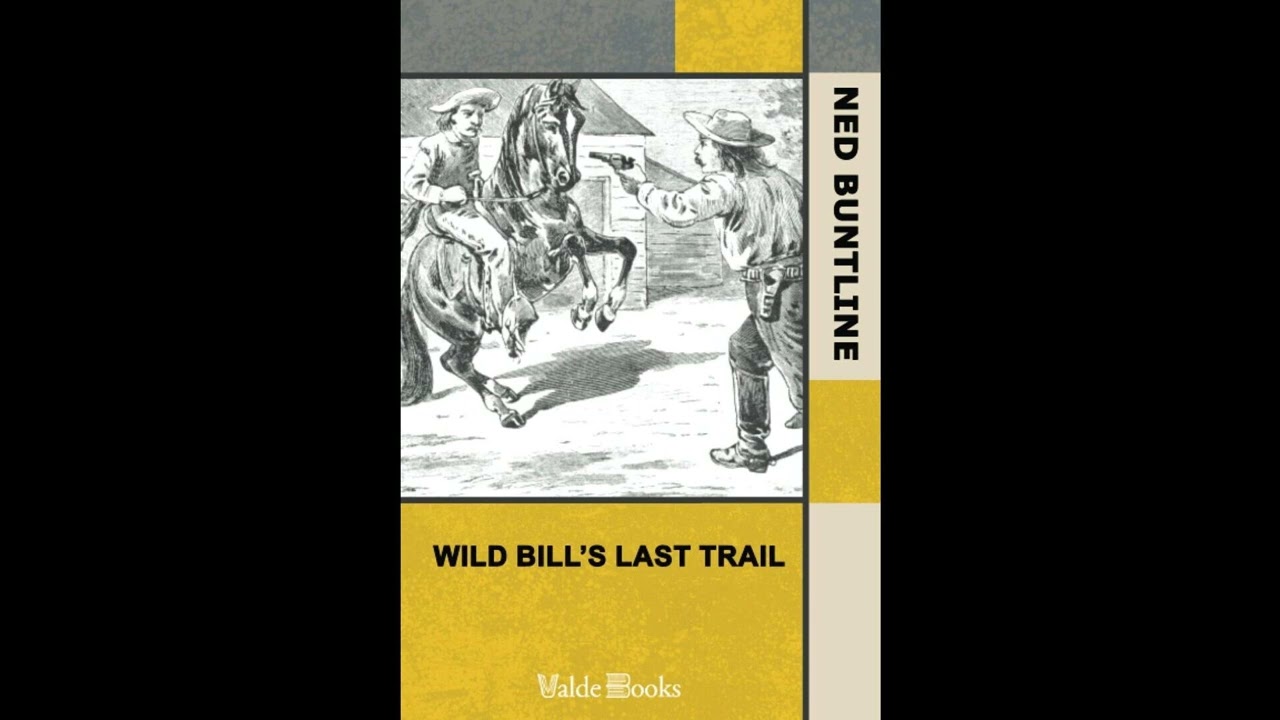
Wild Bill's Last Trail by Ned Buntline. The underlying text is in the U.S. public domain. We do not republish any modern copyrighted edition, translation, or commentary.
The 4K cinematic visuals accompanying this audiobook are generated by an AI image model from prompts derived from the source text. No copyrighted photos, paintings, or stock footage are used. AI generation is disclosed on every video on our YouTube channel as required by YouTube's altered/synthetic content policy.
English subtitles are transcribed from the LibriVox recording with OpenAI Whisper. Translations into the 11 other supported languages are produced by Meta's NLLB-200 neural translation model. No human translator's copyrighted translation is used.
Questions about sourcing or rights? See our DMCA & Sourcing policy or contact us.
Enjoyed this audiobook?
If you'd like to own a copy of Wild Bill's Last Trail or hear a professionally produced edition, the links below help support free audiobook production at no extra cost to you.
As an Amazon Associate we earn from qualifying purchases. Audible / print links are affiliate.