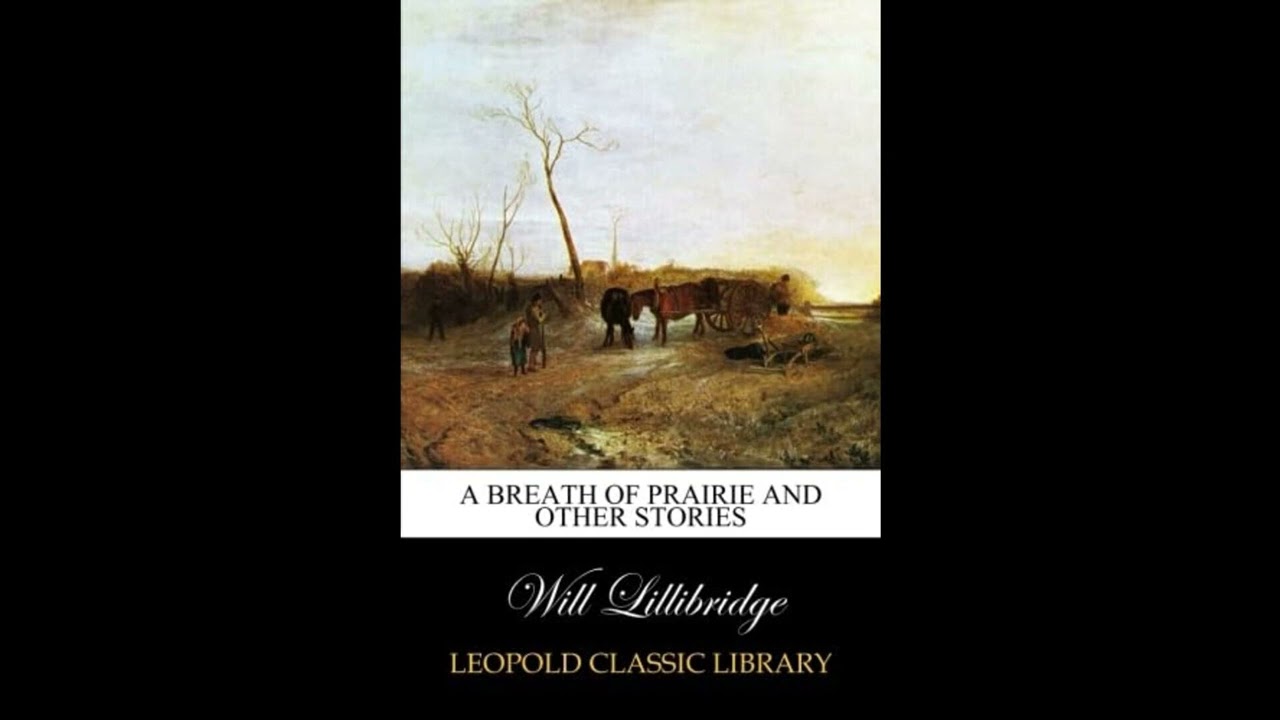
A Breath of Prairie and other stories
Step back in time to an era when the American West was still largely untamed, a place of immense promise and crushing hardship, with Will Lillibridge's "A Breath of Prairie and other stories." This collection of tales offers a stark, yet compelling, look at the lives of those who carved out an existence on the vast, windswept plains. Far from the romanticized dime-novel visions, Lillibridge presents a grounded reality, a landscape of both brutal beauty and relentless challenge, populated by characters whose struggles and triumphs resonate with a profound human authenticity. These stories are more than mere historical snapshots; they are a vital reminder of the resilience of the human spirit when confronted with the raw power of nature and the demanding crucible of a new frontier, making them as relevant today as they were when first penned. Across these collected stories, the setting itself becomes a character: the expansive, often unforgiving prairie of the upper Midwest, particularly South Dakota, where nascent towns are little more than scattered collections of buildings against an endless sky, and homesteads stand in stark isolation. We encounter a diverse cast of characters: the stoic homesteader battling drought and blizzards; the lone prospector with dreams as vast as the landscape; the pioneer woman striving to build a home and community against overwhelming odds; and the spirited individualist, often at odds with both nature and nascent societal norms. Each story is a window into their lives, illustrating the daily grind, the sudden moments of crisis, and the quiet joys that punctuated their existence. The central conflicts are manifold, often pitting humanity against the overwhelming forces of nature – a devastating blizzard, a relentless drought, the isolation of distance. Yet, equally significant are the internal struggles: the fight against despair, the search for connection, the pull between personal ambition and the needs of a budding community. Lillibridge masterfully crafts narratives where small victories feel monumental, and even setbacks carry a weight of universal human experience. We see characters grappling with moral dilemmas, facing down natural disasters, or simply trying to make sense of their place in a world that is both offering them opportunity and threatening to swallow them whole. The overall arc is not a single narrative progression, but rather a mosaic, each piece adding texture and depth to a larger portrait of an America in transition, where courage and tenacity were not merely virtues, but necessities for survival. Will Lillibridge, though his life was tragically short, left a distinct mark on early twentieth-century American literature. Born in 1878, he spent a significant portion of his too-brief life in the burgeoning state of South Dakota, a relocation driven by a desperate search for a drier climate to combat his tuberculosis. This personal struggle and his direct experience of the prairie landscape deeply informed his writing, lending his work an authenticity rarely found in the more romanticized Westerns of the period. He wasn’t merely an observer; he lived among the people and endured the conditions he so vividly described. His literary output, constrained by his early death in 1909, includes several novels that established his reputation, such as "Ben Blair" (1905) and "Where the Trail Divides" (1906). Lillibridge was a voice of American Regionalism, focusing on a specific geographic area and its unique culture, but his keen eye for detail and unflinching portrayal of struggle also placed him on the fringes of Naturalism. He depicted characters shaped by their environment and heredity, often facing overwhelming forces beyond their control. Though not as widely remembered as some of his contemporaries, Lillibridge holds a significant place in the canon as one of the authors who began to shift the perception of the American West from pure adventure to a more grounded, realistic, and often poignant reflection of human life. The stories collected in "A Breath of Prairie" powerfully enact several enduring themes. One prominent thread is resilience and adaptation. We witness characters like the stubborn farmer whose crops have failed year after year but still turns the soil one more time, or the lonely pioneer woman who, despite devastating personal losses, finds the strength to rebuild her home and spirit. A compelling scene might show a family huddled together during a blizzard, their meager resources dwindling, yet their determination to survive shining through their fear, demonstrating the sheer will to endure against overwhelming odds. Another significant theme is the lure and peril of the frontier. Lillibridge showcases the magnetic pull of new land and opportunity, drawing people westward with promises of independence and prosperity. Yet, he unflinchingly contrasts this with the immense dangers and isolation. Consider the story of a young couple, fresh with hope, arriving at their new claim, only for their initial optimism to slowly erode as they confront relentless droughts, disease, and the crushing loneliness of being miles from any neighbor. This dual nature of the West – a land of both boundless potential and brutal reality – is central to the collection's emotional weight, highlighting humanity’s constant dance between aspiration and consequence. Lillibridge was writing at a pivotal moment in American history, roughly from the late 1890s to the first decade of the twentieth century. This was a period when the myth of the "closing of the frontier" was taking hold, following the 1890 census report, which suggested there was no longer a discernible frontier line in the contiguous United States. Culturally, there was a growing fascination with, and simultaneous re-evaluation of, the American West. While popular culture often presented romanticized tales of cowboys and outlaws, a counter-current in literature sought to present a more realistic, grittier vision. Authors like Hamlin Garland and Stephen Crane were pioneering literary realism and naturalism, shifting away from the sentimentalism of earlier eras. Lillibridge’s work emerged within this literary landscape, contributing to the growing body of literature that stripped away the veneer of adventure to expose the hardscrabble lives, moral complexities, and profound struggles of those who truly lived on the edge of civilization. His stories provided an authentic voice from the heart of the prairie, validating the experiences of ordinary people and offering a vital counterpoint to the more fanciful narratives that dominated popular imagination. Listening to "A Breath of Prairie and other stories" as an audiobook offers a unique opportunity to immerse oneself completely in Lillibridge's world. The spoken word brings a palpable immediacy to the harsh beauty of the landscape and the raw emotion of its inhabitants. A skilled narrator can evoke the vast silence of the plains, the subtle nuances of dialogue among people accustomed to few words, and the dramatic tension of a sudden storm or a quiet act of kindness. The run length of several hours makes this collection perfect for extended listening sessions, allowing you to settle in and let each story unfold, or for breaking it into segments to accompany your daily activities. Listen for the narrator's pacing, which can mirror the slow, deliberate rhythm of prairie life, and their ability to differentiate voices, bringing each character – from the gruff rancher to the resilient schoolmarm – vividly to life, transporting you directly to a time and place that shaped the American spirit.
Enjoyed A Breath of Prairie and other stories? A few ways to support us
Audible & Amazon links are affiliate; we may earn a small commission at no extra cost.
About this production
Human narration by a volunteer reader from LibriVox.org, the public-domain audiobook project. LibriVox volunteers record literary works whose copyright has expired in the United States, releasing the resulting recordings into the public domain.
A Breath of Prairie and other stories by Will Lillibridge. The underlying text is in the U.S. public domain. We do not republish any modern copyrighted edition, translation, or commentary.
The 4K cinematic visuals accompanying this audiobook are generated by an AI image model from prompts derived from the source text. No copyrighted photos, paintings, or stock footage are used. AI generation is disclosed on every video on our YouTube channel as required by YouTube's altered/synthetic content policy.
English subtitles are transcribed from the LibriVox recording with OpenAI Whisper. Translations into the 11 other supported languages are produced by Meta's NLLB-200 neural translation model. No human translator's copyrighted translation is used.
Questions about sourcing or rights? See our DMCA & Sourcing policy or contact us.
Enjoyed this audiobook?
If you'd like to own a copy of A Breath of Prairie and other stories or hear a professionally produced edition, the links below help support free audiobook production at no extra cost to you.
As an Amazon Associate we earn from qualifying purchases. Audible / print links are affiliate.