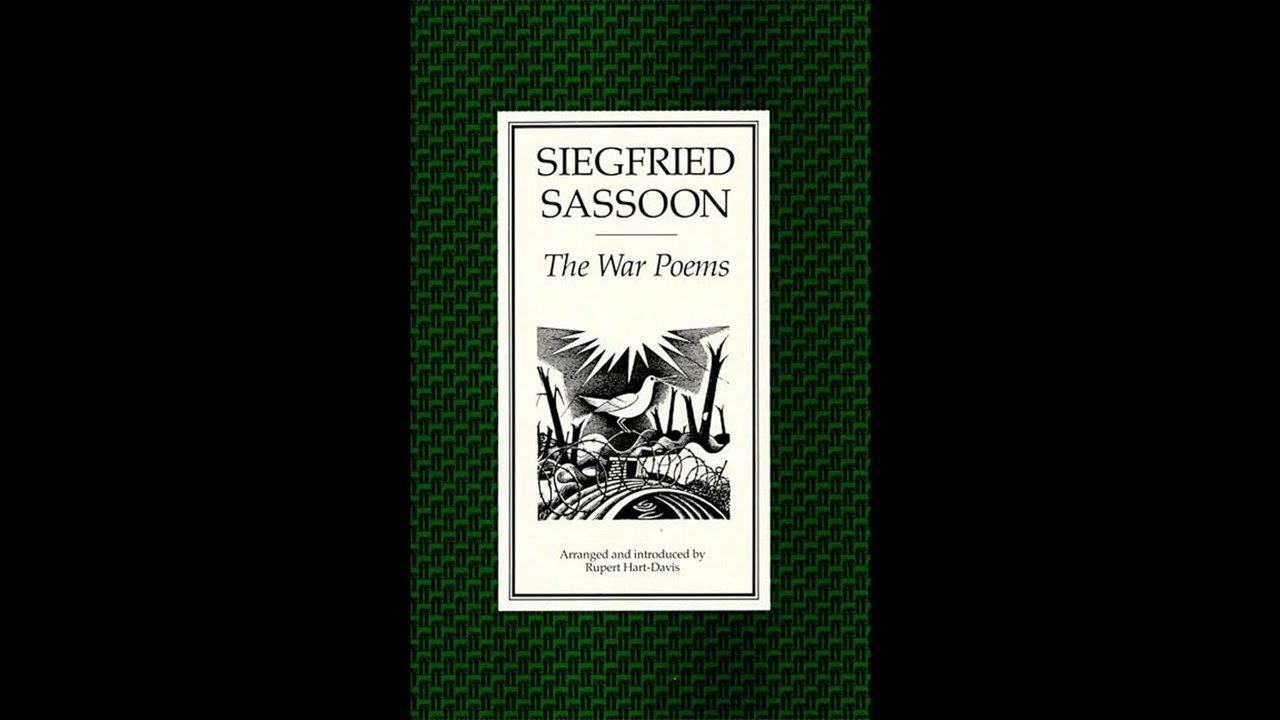
War Poems of Siegfried Sassoon
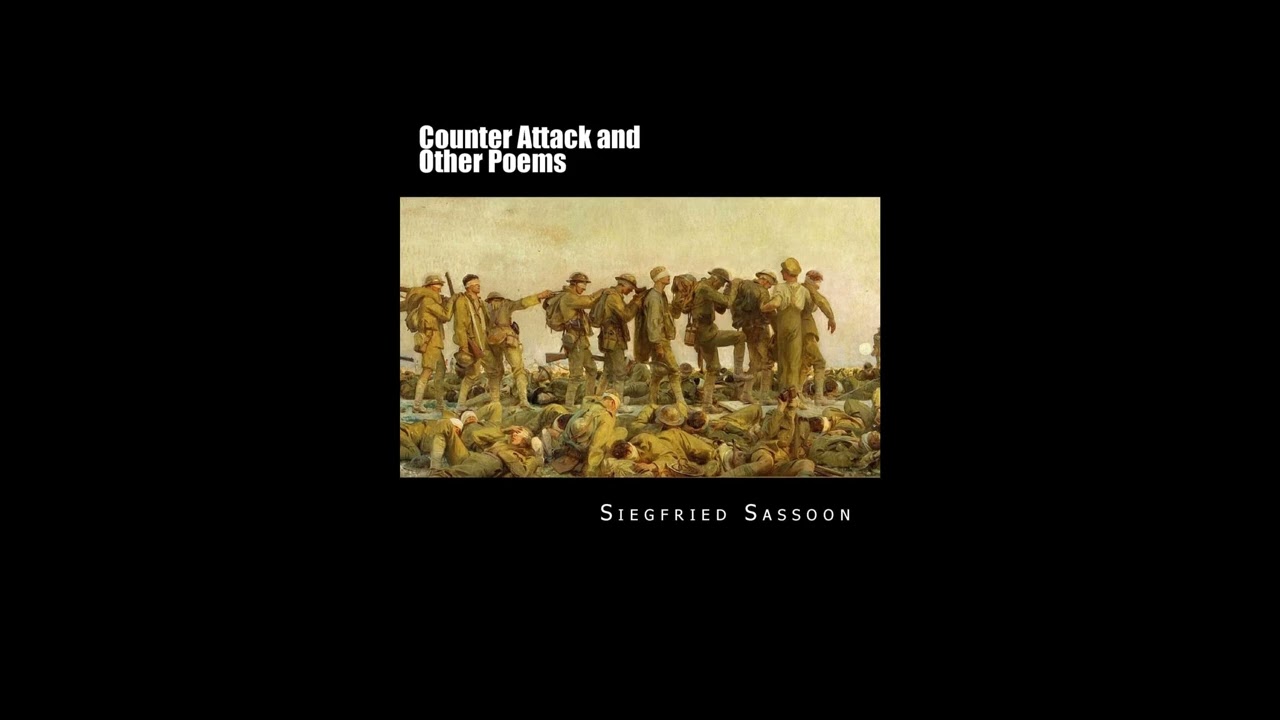
To listen to Siegfried Sassoon’s War Poems is to enter a harrowing, essential conversation that began over a century ago yet resonates with striking clarity today. This collection is far more than historical verse; it is a raw, unflinching reckoning with the brutal realities of the First World War, penned by a man who lived through its mud and horror. Sassoon tore down the romantic veils shrouding combat, exposing the physical and psychological devastation with a voice that is at once indignant, mournful, and profoundly human. For anyone seeking to understand the true cost of conflict, the enduring trauma it inflicts, and the courage it takes to speak truth to power, these poems remain a vital, immediate statement. The collection itself unfolds as a powerful, if fragmented, chronicle of one man's descent from initial participation in a patriotic cause to a fervent, almost desperate, protest against its continuation. We are first transported to the trenches of the Western Front, where the idyllic English countryside gives way to a landscape of craters, wire, and omnipresent death. The "characters" here are not individuals in a novel, but rather archetypes etched in stark detail: the anonymous common soldier facing unimaginable conditions, the detached general in his safe headquarters, the oblivious civilians at home cheering for a war they cannot comprehend. The central conflict erupts from the terrifying chasm between the propaganda of heroic sacrifice and the squalid, terrifying truth of trench warfare – the constant threat of gas attacks, the cries of the wounded, the endless waiting, the futile charges across no man's land. As the poems progress, the initial shock gives way to a biting, cynical anger. Sassoon details the relentless suffering, the dehumanizing conditions, and the tragic waste of young lives with a searing honesty. His observations move from the specific horrors of the battlefield—the stench of decay, the sight of shattered bodies—to the broader injustices perpetrated by those in command and those at home who refuse to acknowledge the true price of their policies. The arc of this poetic narrative is one of intensifying disillusionment, transforming from lament to furious accusation, challenging the very fabric of societal lies that perpetuated the slaughter. Siegfried Sassoon, born in 1886 into a wealthy Anglo-Jewish family in Kent, England, initially pursued a life of rural leisure, indulging in fox-hunting and writing what he later dismissed as "minor Georgian verse." The outbreak of the First World War in 1914 profoundly altered his trajectory. He enlisted immediately, serving first in the Sussex Yeomanry and later as an officer in the Royal Welsh Fusiliers. His exceptional courage in the trenches of France earned him the Military Cross, along with the nickname "Mad Jack" for his seemingly reckless acts of bravery, such as capturing a German trench single-handedly. However, the sustained exposure to the war's brutality, particularly the loss of his brother and close friends, transformed his early patriotic fervor into a deep-seated revulsion. By 1917, Sassoon's conscience compelled him to make a public act of protest, releasing his "Soldier's Declaration" which condemned the war as a politically motivated and unjustifiable conflict. Rather than facing a court-martial, he was declared to be suffering from "shell shock" and sent to Craiglockhart War Hospital in Scotland. There, he met and profoundly influenced fellow poet Wilfred Owen, encouraging Owen to refine his own powerful anti-war verse. After the war, Sassoon continued to write prolifically, producing acclaimed memoirs like Memoirs of a Fox-Hunting Man, further poetry, and biography, establishing himself as a significant literary figure who chronicled the trauma of his generation. He lived until 1967, later converting to Catholicism and finding a quieter solace in his later years. At the heart of Sassoon's War Poems lies a stark examination of the brutality and futility of modern warfare. He relentlessly depicts the physical horrors, as in "The Rear-Guard," where a soldier stumbles upon a decaying body in a dugout, emphasizing the gruesome, pervasive presence of death. He lays bare the senselessness of repeated charges and the industrial scale of slaughter, highlighting the utter waste of human life for dubious tactical gains. This theme is often juxtaposed with the disillusionment with patriotism and jingoistic propaganda. Sassoon lashes out at the "kind old men" and "purgatorial generals" who preached noble ideals from afar while sending young men to their deaths. In poems like "They," he satirizes the church's sanitized view of combat, contrasting its hollow pronouncements with the grim reality faced by soldiers. Another crucial theme is the psychological toll of conflict and trauma. Sassoon's verse frequently touches on the invisible wounds, the "shell-shocked" figures, and the lasting scars on the survivors. The poem "Suicide in the Trenches" tragically illustrates this, depicting a young soldier driven to self-destruction by the constant terror and despair, casting blame squarely on the "smug-faced crowds" who "cheer when Siegfried goes to war." Finally, Sassoon’s work reveals a sharp social critique and class divide. He often contrasts the suffering of the ordinary "Tommy" with the comfortable ignorance of those in positions of power, pointing out how the lower ranks bear the brunt of decisions made by an aloof upper class. His direct, often satirical language, combined with vivid, often grotesque imagery, marked a pivotal shift in poetic expression, moving away from Victorian romanticism towards a stark, modern realism that influenced generations of writers and shaped how the world remembered the Great War. Sassoon's most impactful work emerged during and immediately after the First World War, a period of unprecedented global upheaval and seismic cultural shifts. Before 1914, much of Europe harbored a romantic, almost chivalric, view of warfare, fueled by imperial ambitions and nationalistic fervor. Yet, the advent of industrialized killing – machine guns, long-range artillery, poison gas – quickly shattered these illusions. The conflict devolved into the stalemate of trench warfare, a grinding, dehumanizing experience unimaginable to those at home. The initial public enthusiasm for the war gradually gave way to disillusionment as casualty lists mounted and the true nature of the fighting became apparent. Sassoon’s poems provided a visceral, unfiltered voice from the front lines, a direct challenge to the official narratives and the public's manufactured optimism. His writing arrived at a crucial moment when society was grappling with the psychological scars of combat, the collapse of old certainties, and a burgeoning questioning of traditional authority. His raw honesty was a radical act, forcing his contemporaries to confront the unspeakable, and fundamentally reshaping the literary landscape by initiating a tradition of anti-war literature that continues to this day. Listening to War Poems of Siegfried Sassoon as an audiobook offers a uniquely powerful engagement with this foundational text. The spoken word imbues Sassoon's biting satire and visceral descriptions with an immediate emotional weight that reading on the page alone cannot always convey. A skilled narrator brings out the subtle shifts in tone—from the quiet despair of a soldier contemplating death to the furious indignation directed at generals and politicians—making the progression of Sassoon's disillusionment palpable. The rhythm and meter, often so crucial to a poet's intent, become clearer when heard, allowing the listener to fully appreciate Sassoon's craft in shaping his messages. The several hours of run time provide ample opportunity to absorb the collection deeply, perhaps in quiet moments, allowing the atmosphere of the trenches, the pain of the wounded, and the poet's defiant voice to truly settle into the mind. It is a chance to hear history speak, not as a dry account, but as a living, breathing testament to courage and conviction.
Enjoyed War Poems of Siegfried Sassoon? A few ways to support us
Audible & Amazon links are affiliate; we may earn a small commission at no extra cost.
About this production
Human narration by a volunteer reader from LibriVox.org, the public-domain audiobook project. LibriVox volunteers record literary works whose copyright has expired in the United States, releasing the resulting recordings into the public domain.
War Poems of Siegfried Sassoon by Siegfried Sassoon. The underlying text is in the U.S. public domain. We do not republish any modern copyrighted edition, translation, or commentary.
The 4K cinematic visuals accompanying this audiobook are generated by an AI image model from prompts derived from the source text. No copyrighted photos, paintings, or stock footage are used. AI generation is disclosed on every video on our YouTube channel as required by YouTube's altered/synthetic content policy.
English subtitles are transcribed from the LibriVox recording with OpenAI Whisper. Translations into the 11 other supported languages are produced by Meta's NLLB-200 neural translation model. No human translator's copyrighted translation is used.
Questions about sourcing or rights? See our DMCA & Sourcing policy or contact us.
Enjoyed this audiobook?
If you'd like to own a copy of War Poems of Siegfried Sassoon or hear a professionally produced edition, the links below help support free audiobook production at no extra cost to you.
As an Amazon Associate we earn from qualifying purchases. Audible / print links are affiliate.