A Textbook of Theosophy
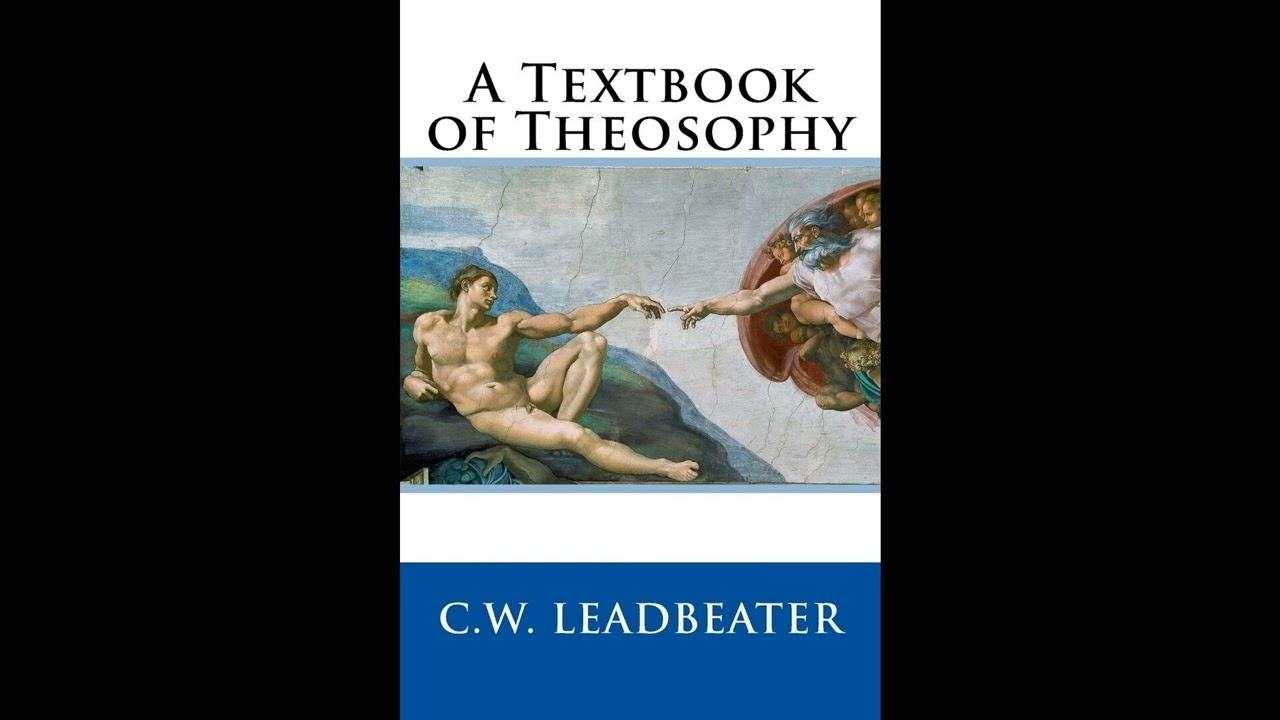
For those seeking to understand the fundamental mechanics of existence, to peer beyond the veil of everyday perception and grasp the spiritual architecture of the cosmos, C.W. Leadbeater’s A Textbook of Theosophy offers an illuminating guide. Far from a dry academic treatise, this work presents a systematic exposition of esoteric wisdom, inviting the listener to consider profound questions about life, death, and humanity’s place in an evolving universe. It proposes a coherent framework for understanding spiritual phenomena and personal growth, making it just as relevant today for anyone grappling with materialism, searching for deeper meaning, or looking to integrate spiritual insight into a modern worldview. This is not merely a historical document; it is an invitation to reshape one's perception of reality. This Textbook functions less as a story with conventional characters and a linear plot, and more as a meticulously constructed intellectual edifice, built piece by piece to reveal a grander vision of reality. Its "setting" is nothing less than the entire cosmos, understood as a series of interconnected planes of existence, each vibrating at different frequencies and populated by varying forms of consciousness. Leadbeater introduces the listener to the core "characters" in this universal drama: the human soul, an evolving entity undergoing countless lifetimes; the Mahatmas, or Masters of Wisdom, guiding humanity from higher spiritual realms; and the very forces of karma and reincarnation that shape every individual's experience. The central "conflict" addressed is humanity’s ignorance of its true nature and the underlying laws governing existence—a conflict the book aims to resolve through clear explanation and reasoned argument. The "arc" of this extraordinary text begins with foundational principles, laying out the concept of a divine, omnipresent life force animating all things. It systematically progresses through the constitution of man, detailing the various "bodies" or vehicles of consciousness beyond the physical, from the etheric to the mental and causal. Listeners are then guided through the intricate mechanisms of reincarnation—not as a mystical belief, but as a logical process of soul evolution—and the inescapable law of karma, where every thought, word, and deed creates consequences that shape future experiences. Leadbeater then addresses life after death, describing the various planes of subtle existence souls pass through, before returning to new physical births. The book culminates in a vision of humanity’s ultimate destiny: achieving perfected consciousness and contributing to the greater spiritual evolution of the planet and beyond, offering a profound sense of purpose and interconnectedness without revealing the final, transformative insights that await the dedicated student. Charles Webster Leadbeater (1854-1934) was an influential and often controversial figure in the early Theosophical movement. Born in Stockport, England, he was ordained as an Anglican priest in 1879, serving in Hampshire. However, a deep spiritual restlessness led him to resign his curacy in 1883 after reading A. P. Sinnett’s Occult World, which introduced him to Theosophy. The following year, he met Helena Petrovna Blavatsky, one of the co-founders of the Theosophical Society, during her visit to London. This meeting proved pivotal. Leadbeater soon traveled to India to live with Blavatsky, becoming her pupil and dedicating himself entirely to the Society’s work. Throughout his life, Leadbeater became a prolific author, lecturer, and clairvoyant. He claimed to have developed advanced psychic abilities under Blavatsky’s guidance, which he used to investigate the subtle planes of existence, past lives, and the inner workings of nature. His writings, including Clairvoyance, The Chakras, and Occult Chemistry (co-authored with Annie Besant), offered detailed descriptions of these hidden realities, significantly shaping Theosophical thought and popularizing many esoteric concepts in the West. His later years were marked by controversies regarding his personal conduct and his role in "discovering" and mentoring Jiddu Krishnamurti as a potential World Teacher, which ultimately led to a significant schism within the Theosophical Society. Despite these challenges, Leadbeater remained a central figure, his works enduring as primary texts for understanding Theosophical cosmology. One of the central themes woven throughout A Textbook of Theosophy is the unity of all life and the universality of religious truth. Leadbeater posits that all religions, at their core, stem from a single, ancient wisdom tradition, albeit expressed through different cultural lenses. He often illustrates this by showing how concepts like karma and reincarnation, though prominent in Eastern faiths, have echoes and veiled references within Western mystical traditions, suggesting a shared, underlying reality rather than disparate, competing doctrines. The book consistently returns to the idea that beneath the superficial differences of creed and ritual, a profound spiritual brotherhood binds all humanity. Another significant theme is the methodical nature of spiritual evolution. Leadbeater meticulously details the processes of karma and reincarnation not as random events or divine judgment, but as predictable, precise laws governing the soul’s development across successive lives. For instance, he explains how actions generate specific types of karma, shaping future opportunities and challenges, and how the soul progressively sheds limitations through repeated earthly experiences. This systematic approach demystifies spiritual concepts, presenting them as an observable "science" of the unseen, rather than abstract articles of faith. The book’s structure itself reinforces this theme, moving from simple, observable principles to more complex, interconnected concepts, mirroring the gradual unfolding of spiritual understanding. The turn of the 20th century, when A Textbook of Theosophy first appeared in 1912, was a period of immense intellectual and social ferment. The Victorian era’s rigid social structures and religious certainties were eroding under the weight of scientific advancements—Darwin’s theory of evolution, Einstein’s relativity, and Freud’s psychoanalysis were challenging traditional worldviews. In this environment, many people, disillusioned with conventional religion yet wary of reductionist scientific materialism, sought alternative explanations for existence and human purpose. Theosophy, with its synthesis of Eastern philosophy, Western esotericism, and a claim to scientific rigor in investigating spiritual phenomena, offered a compelling third path. Culturally, there was a growing fascination with the occult, spiritualism, and non-Western spiritual traditions, partly fueled by increasing global connections through the British Empire. Writers like W.B. Yeats and artists connected to the Symbolist movement were actively engaging with esoteric ideas. Leadbeater’s work emerged precisely to fill this void, providing a comprehensive, accessible explanation of Theosophical principles for a public hungry for spiritual insight that could stand alongside scientific understanding. It provided a framework for understanding human suffering, explained paranormal phenomena, and offered a hopeful vision of human and cosmic evolution, resonating deeply with those seeking a rational spirituality in an increasingly complex world. Listening to A Textbook of Theosophy as an audiobook offers a uniquely immersive and contemplative experience. The material, though presented as a "textbook," benefits immensely from clear, measured narration, which guides the listener through complex metaphysical concepts without the visual distractions of a printed page. The run length, several hours in total, allows for extended periods of focused listening, making it ideal for reflection during commutes, walks, or quiet evenings. A skilled narrator will imbue the prose with a guiding authority, allowing the listener to absorb the intricate details of karma, reincarnation, and the planes of existence at a comfortable pace. The clarity of the voice becomes a crucial element, transforming what might otherwise be dense philosophical exposition into an accessible, almost meditative, intellectual experience. The atmosphere cultivated by a thoughtful reading encourages deep consideration of the concepts presented, fostering a sense of discovery and personal insight with each unfolding idea.
Enjoyed A Textbook of Theosophy? A few ways to support us
Audible & Amazon links are affiliate; we may earn a small commission at no extra cost.
About this production
Human narration by a volunteer reader from LibriVox.org, the public-domain audiobook project. LibriVox volunteers record literary works whose copyright has expired in the United States, releasing the resulting recordings into the public domain.
A Textbook of Theosophy by C.W. Leadbeater. The underlying text is in the U.S. public domain. We do not republish any modern copyrighted edition, translation, or commentary.
The 4K cinematic visuals accompanying this audiobook are generated by an AI image model from prompts derived from the source text. No copyrighted photos, paintings, or stock footage are used. AI generation is disclosed on every video on our YouTube channel as required by YouTube's altered/synthetic content policy.
English subtitles are transcribed from the LibriVox recording with OpenAI Whisper. Translations into the 11 other supported languages are produced by Meta's NLLB-200 neural translation model. No human translator's copyrighted translation is used.
Questions about sourcing or rights? See our DMCA & Sourcing policy or contact us.
Enjoyed this audiobook?
If you'd like to own a copy of A Textbook of Theosophy or hear a professionally produced edition, the links below help support free audiobook production at no extra cost to you.
As an Amazon Associate we earn from qualifying purchases. Audible / print links are affiliate.