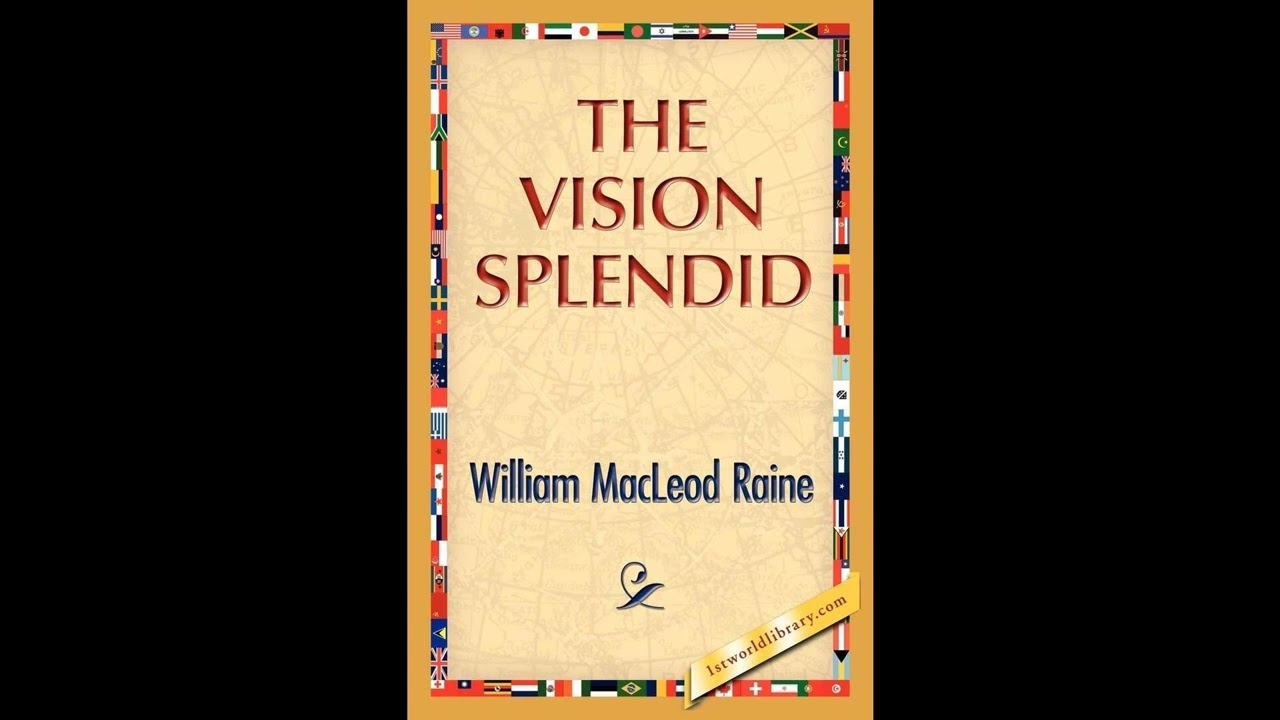
The Vision Splendid
Step into the stark, breathtaking landscape of the American West with William MacLeod Raine’s "The Vision Splendid," an enthralling tale that captures the essence of frontier life, the struggle for justice, and the unwavering pursuit of an ideal. Originally published in the early twentieth century, this novel presents more than just a thrilling narrative of cowboys and conflict; it offers a profound look at the choices individuals make when faced with adversity, and how a personal code of honor can shape an entire destiny. Listeners today will find its core message—the enduring power of a clear moral vision against a backdrop of chaos—as relevant and inspiring as it was generations ago, a testament to the timeless appeal of courage and conviction. The story unfolds in the vast, unforgiving expanse of open range country, a land where fortunes are made and lost with the turn of a season, and where law often feels a distant echo rather than a present force. Here, we meet Halcyon ‘Hal’ Miller, a man shaped by the rugged beauty and brutal realities of his surroundings. Miller is not simply a rancher; he embodies the spirit of self-reliance and quiet strength that defines the Western hero. His life, while seemingly peaceful, is shadowed by the encroaching threat of those who would exploit the land and its people for their own gain. The central conflict ignites with the arrival of outside forces—scheming cattle barons or land grabbers, their motives veiled in deceit, who threaten to shatter the fragile balance of life in Miller's community. As the narrative progresses, Hal Miller finds himself not only defending his own holdings but standing as a bulwark for his neighbors against a tide of injustice. He encounters a range of vivid characters: loyal allies whose steadfastness is a beacon, treacherous adversaries whose ambition knows no bounds, and a compelling figure whose presence adds a layer of personal stakes to the unfolding drama. Miller's resolve is tested at every turn, forcing him to confront not only external dangers—stampedes, gunfights, and the harsh elements—but also internal dilemmas about the right path forward when the lines between law and personal vengeance blur. The arc of the story sees him navigate these treacherous waters, relying on his wit, his courage, and an unshakeable belief in the "vision splendid" that guides his actions and defines his character. William MacLeod Raine, the author behind this stirring account, stands as a pivotal figure in the history of American Western literature. Born in England in 1871, Raine moved to the United States as a child, settling in the burgeoning American West. This direct exposure to the landscapes and narratives of the frontier deeply influenced his prolific career. He began publishing in the early 1900s, just as the mythos of the cowboy and the "closing of the frontier" was cementing its place in the national imagination. Over his lifetime, Raine penned more than eighty novels, establishing himself as a foundational voice in the genre and earning him the moniker "the dean of Western writers." He wrote consistently until his death in 1954, producing a body of work that included titles such as "A Man Four-Square," "Bucky O'Connor," and "Gunsight Pass," each contributing to his legacy of authentic and thrilling tales of the West. His writing style, characterized by clear prose, compelling action, and strong moral undertones, helped define the popular Western novel for generations of readers. "The Vision Splendid" enacts several enduring themes relevant to both its era and our own. One central idea is the perennial struggle between law and lawlessness, exemplified by Hal Miller’s efforts to uphold a moral code in a land where official justice is often absent or corrupt. Listeners witness Miller not merely react to threats but actively work to establish order and fairness, such as when he organizes a group of honest ranchers to counter cattle rustling or exposes the deceit of a powerful land speculator. This speaks to the individual’s responsibility in shaping a just society, even when institutions fail. Another significant theme is the pursuit of an ideal, hinted at by the title itself. Miller is driven by a personal "vision"—a belief in the possibility of a settled, prosperous, and ethical community—and he dedicates his actions to realizing this future, often at great personal cost. This is illustrated in his refusal to compromise his principles for short-term gain, or his steadfast protection of those who cannot defend themselves, striving to build something lasting and good in a transient world. The novel also effectively portrays resilience and self-reliance, cornerstones of the frontier spirit. Miller consistently faces overwhelming odds, from natural disasters that threaten his livelihood to direct confrontations with armed adversaries, yet he rarely wavers. His ability to adapt, to think on his feet, and to endure hardship without complaint showcases the rugged individualism celebrated in Westerns. Furthermore, the story touches on the evolving nature of the American West, depicting a region in transition from untamed wilderness to a more settled, albeit still turbulent, society. The conflicts often arise from this very tension—the clash between the old ways of open range and freedom, and the new demands of fences, property rights, and nascent legal structures. William MacLeod Raine’s "The Vision Splendid" emerged during a period of immense change in American culture and literature. Published in 1913, it appeared at a time when the physical frontier was officially declared "closed," yet public fascination with the West remained fervent. This era, stretching from the late nineteenth century into the early twentieth, saw a romanticization of the cowboy and the pioneering spirit, often viewed with a sense of nostalgia for a perceived simpler, more heroic past. The country was grappling with industrialization, urbanization, and the rise of complex societal issues, leading many to seek solace and inspiration in tales of individual heroism and clear-cut moral struggles against wild backdrops. Raine's works, including "The Vision Splendid," resonated deeply with a readership looking for stories that celebrated American fortitude, independence, and the triumph of good over evil, offering a moral compass in a rapidly modernizing world. Listening to "The Vision Splendid" as an audiobook offers a singular opportunity to immerse oneself in Raine's world. The narrator’s voice becomes a direct conduit to the sweeping vistas of the plains and mountains, the tense quiet of a standoff, and the crackle of a campfire under a starlit sky. Over several hours, the pacing allows for a natural build-up of suspense, letting the listener fully absorb the setting’s atmosphere and the weight of each decision Hal Miller faces. Pay particular attention to the nuances in the voice work for dialogue—the gruff authority of an old ranch hand, the chilling calm of an antagonist, or the steadfast resolve in Miller’s own words. The spoken word brings a heightened sense of drama and immediacy to the vivid descriptions, transforming the printed page into an expansive auditory experience where the sounds of galloping horses, distant gunshots, and the raw wind through the sagebrush are almost palpable.
Enjoyed The Vision Splendid? A few ways to support us
Audible & Amazon links are affiliate; we may earn a small commission at no extra cost.
About this production
Human narration by a volunteer reader from LibriVox.org, the public-domain audiobook project. LibriVox volunteers record literary works whose copyright has expired in the United States, releasing the resulting recordings into the public domain.
The Vision Splendid by William MacLeod Raine. The underlying text is in the U.S. public domain. We do not republish any modern copyrighted edition, translation, or commentary.
The 4K cinematic visuals accompanying this audiobook are generated by an AI image model from prompts derived from the source text. No copyrighted photos, paintings, or stock footage are used. AI generation is disclosed on every video on our YouTube channel as required by YouTube's altered/synthetic content policy.
English subtitles are transcribed from the LibriVox recording with OpenAI Whisper. Translations into the 11 other supported languages are produced by Meta's NLLB-200 neural translation model. No human translator's copyrighted translation is used.
Questions about sourcing or rights? See our DMCA & Sourcing policy or contact us.
Enjoyed this audiobook?
If you'd like to own a copy of The Vision Splendid or hear a professionally produced edition, the links below help support free audiobook production at no extra cost to you.
As an Amazon Associate we earn from qualifying purchases. Audible / print links are affiliate.