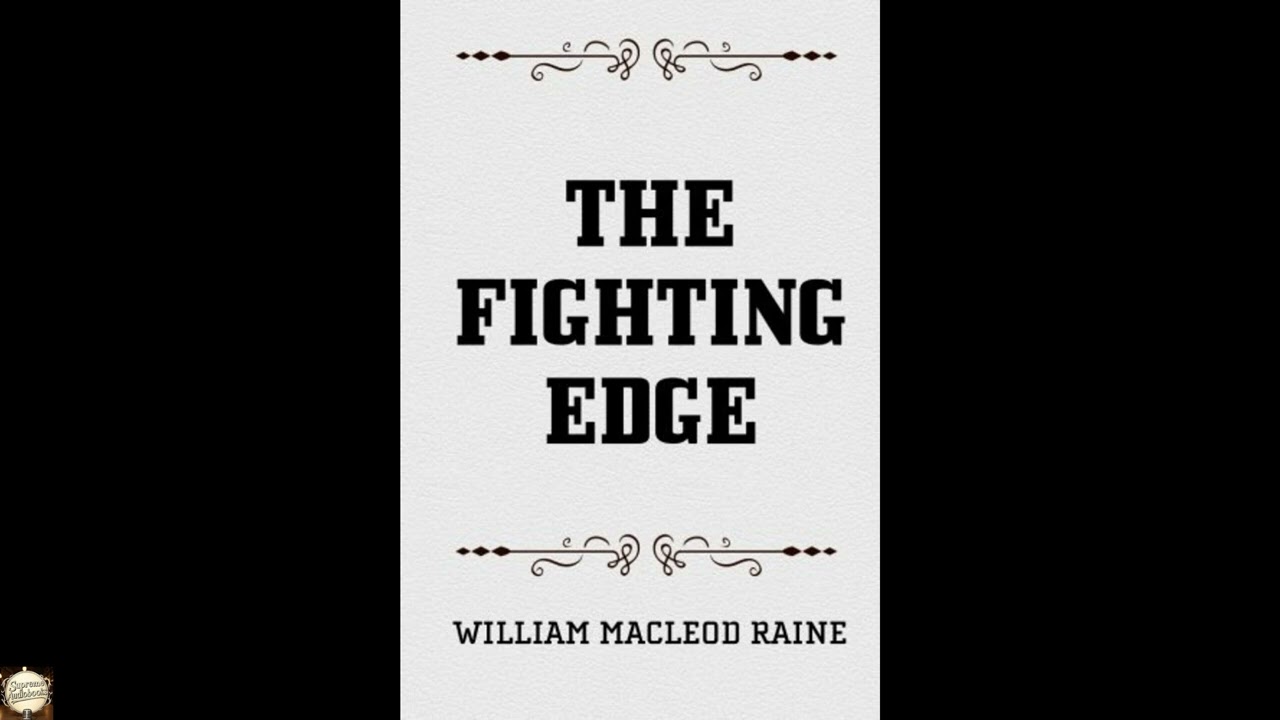
The Fighting Edge
Step into a world where courage is currency and honor is often tested at the barrel of a gun with William MacLeod Raine’s The Fighting Edge. This classic Western, first published in 1922, plunges listeners into the untamed American frontier, a landscape as perilous as it is beautiful, where individual resolve defines destiny. It’s a compelling narrative that transcends its setting, offering insights into human nature under pressure—the drive for justice, the pull of revenge, and the complex choices that shape a life. For anyone seeking a gripping tale of adventure, moral dilemma, and the enduring spirit of the West, this story remains as relevant today as it was a century ago, a testament to the power of a well-told saga. Our story unfolds in the sun-baked plains and rugged mountains of the American West, a land still grappling with the last vestiges of lawlessness and the relentless march of civilization. At its center stands Claypool, a man whose past casts a long shadow over his present. He arrives in a small, simmering frontier town carrying a secret burden and a quiet determination to right a grievous wrong. The community he enters is one caught in a vise of simmering feuds and power struggles, dominated by a formidable cattle baron whose influence often stretches beyond the bounds of legality. Claypool, initially an enigma, soon finds himself drawn into the town's volatile dynamics, his presence stirring unease among those who benefit from the status quo. As Claypool navigates this dangerous new environment, he encounters characters who both challenge and aid him: a young woman whose independence and spirit match his own stoic resolve, a grizzled sheriff attempting to maintain order, and the henchmen of the powerful rancher, ever watchful for threats to their boss’s dominion. The central conflict crystallizes around Claypool’s quest for justice, which inevitably puts him on a collision course with the established, corrupt order. He must carefully choose his allies, outwit his enemies, and confront the very forces that shaped his past. The narrative builds with escalating tension as secrets begin to unravel, allegiances shift, and the stakes grow higher with each confrontation, leading to a relentless pursuit of truth and vindication that threatens to explode into open warfare. William MacLeod Raine, the prolific author behind The Fighting Edge, was born in London, England, on January 9, 1871, but became a quintessential voice of the American West. He immigrated to the United States as a young man, eventually settling in Colorado, a region that would profoundly influence his literary output. Raine’s experiences living and working in the West—as a cowboy, reporter, and prospector—provided him with an unparalleled understanding of the landscapes, people, and conflicts that defined the era. He later studied at Oberlin College, broadening his intellectual horizons before dedicating himself fully to writing. Over a career spanning more than five decades, Raine penned over eighty novels and numerous short stories, establishing himself as one of the most successful and enduring authors of Western fiction. His reputation grew steadily from his first novel, A Daughter of the High Country (1902), and he continued to publish consistently until his passing on July 24, 1954. Raine was known for his meticulous research, his believable characterizations, and his ability to craft narratives that resonated with both adventure and moral depth. He belonged to a generation of writers who, in the early 20th century, sought to document and interpret the rapidly vanishing frontier, often romanticizing its rugged individualists while still acknowledging its harsh realities. Along with contemporaries like Zane Grey and Clarence E. Mulford, Raine helped define the tropes and enduring appeal of the Western genre, influencing countless writers and filmmakers who followed in his footsteps. His other notable works include Ridgeway of Montana, Oh, You Tex!, and Bucky O'Connor, all contributing to a legacy that firmly places him within the canon of classic American Western literature. The Fighting Edge masterfully brings several powerful themes to the forefront, giving its adventure story a resonant depth. One prominent theme is the concept of justice versus revenge. Claypool’s initial motivations are deeply rooted in a past grievance, pushing him to seek retribution. However, as the story progresses, his quest subtly shifts, evolving into a broader fight for what is right for the entire community, demonstrating the fine line between personal vengeance and true, impartial justice. For example, a pivotal scene involving a rigged cattle auction forces Claypool to decide whether to simply disrupt the unlawful act or expose the systemic corruption benefiting the rancher, thus protecting future victims. Another central theme is courage under pressure. The narrative consistently places Claypool and his allies in situations demanding immense bravery, not just in gunfights, but in moral stands. Whether it’s facing down armed thugs alone or defying the powerful cattle baron in a town council meeting, characters are continually tested. A particularly tense moment where a witness is intimidated into silence underscores the quiet fortitude required to speak truth to power in a lawless land, highlighting that courage comes in many forms beyond physical confrontation. The book also subtly examines the struggle for moral clarity in an ambiguous world, where even those on the side of justice might employ questionable methods, and heroes are rarely without their flaws. When The Fighting Edge was published in 1922, America was experiencing a post-World War I boom, often referred to as the Roaring Twenties. Culturally, there was a widespread fascination with the romanticized past, especially the “Old West,” even as society rapidly modernized. The frontier had officially been declared "closed" by the U.S. Census Bureau decades earlier, creating a powerful sense of nostalgia and a desire to preserve stories of its formative years. This period saw the rise of the film industry, which quickly embraced the Western as a definitive American genre, further cementing its place in the popular imagination. Raine’s work emerged into a receptive market hungry for tales of rugged individualism, clear-cut morality, and high adventure set against vast, unblemished landscapes. His novels provided a literary counterpart to the silent Western films that were captivating audiences, offering thrilling narratives that reinforced the mythic ideals of the American spirit and the enduring appeal of heroes who lived by their own code in a land where law was still finding its footing. Listening to The Fighting Edge as an audiobook offers a uniquely immersive experience, allowing you to truly sink into the dusty, sun-drenched atmosphere of the American West. The narrator’s voice becomes your guide through the wide-open spaces and tense encounters, bringing the characters to life with distinct inflections and nuanced delivery. You’ll find yourself transported by the pacing, which builds suspense with a slow burn before exploding into sudden, dramatic action sequences that keep you on the edge of your seat. Pay attention to the authenticity of the dialogue, capturing the laconic speech and directness of frontier folk, and the way the narration paints vivid pictures of desolate canyons, bustling saloons, and the quiet determination etched on the faces of men and women facing profound challenges. This multi-hour adventure provides an ideal companion for long drives, quiet evenings, or any moment you wish to escape into a compelling, classic tale of courage and conviction.
Enjoyed The Fighting Edge? A few ways to support us
Audible & Amazon links are affiliate; we may earn a small commission at no extra cost.
About this production
Human narration by a volunteer reader from LibriVox.org, the public-domain audiobook project. LibriVox volunteers record literary works whose copyright has expired in the United States, releasing the resulting recordings into the public domain.
The Fighting Edge by William MacLeod Raine. The underlying text is in the U.S. public domain. We do not republish any modern copyrighted edition, translation, or commentary.
The 4K cinematic visuals accompanying this audiobook are generated by an AI image model from prompts derived from the source text. No copyrighted photos, paintings, or stock footage are used. AI generation is disclosed on every video on our YouTube channel as required by YouTube's altered/synthetic content policy.
English subtitles are transcribed from the LibriVox recording with OpenAI Whisper. Translations into the 11 other supported languages are produced by Meta's NLLB-200 neural translation model. No human translator's copyrighted translation is used.
Questions about sourcing or rights? See our DMCA & Sourcing policy or contact us.
Enjoyed this audiobook?
If you'd like to own a copy of The Fighting Edge or hear a professionally produced edition, the links below help support free audiobook production at no extra cost to you.
As an Amazon Associate we earn from qualifying purchases. Audible / print links are affiliate.