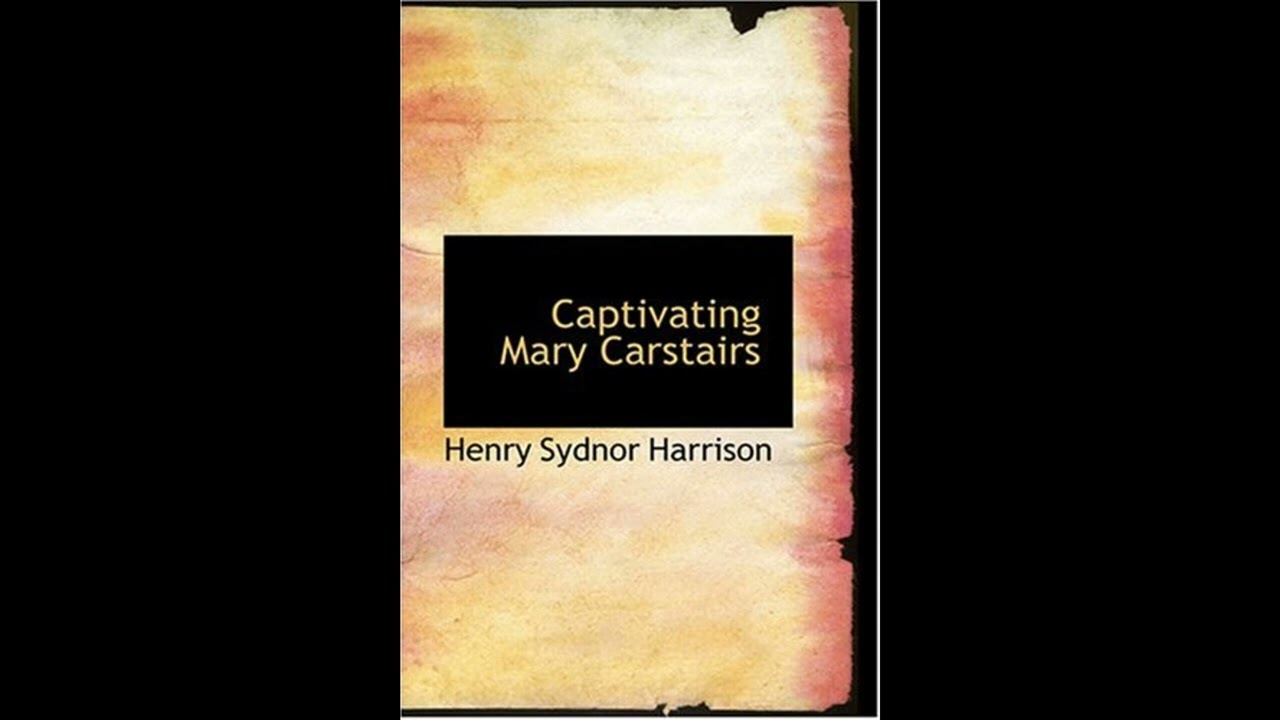
Captivating Mary Carstairs
Henry Sydnor Harrison's novel, "Captivating Mary Carstairs," introduces a character whose very presence challenges the settled expectations of her world. Published in 1914, during a pivotal moment in American history, this novel invites listeners to consider what it means to truly see and understand another person, especially when they defy easy categorization. It is a story that asks us to look beyond initial impressions, to question societal norms, and to appreciate the quiet strength of individuals who live by their own internal compass. Listeners today will find its insights into human perception and social judgment remarkably relevant, as it subtly dissects the ways in which reputation is built, dismantled, and ultimately re-imagined. This is more than a period piece; it is a detailed study of character and the quiet revolution of a woman who dares to simply be herself. The story opens in the bustling, socially stratified world of a Southern American city in the early twentieth century. Here, Mary Carstairs arrives, a young woman whose background and intentions are largely unknown, generating considerable speculation among the entrenched social circles. She is an enigma: described by some as aloof, by others as strangely compelling, and by many as simply unfathomable. Her quiet demeanor and unconventional independence quickly set her apart from the more outwardly social and conventionally minded young women of her acquaintance. Central to the narrative is the evolving perception of Mary through the eyes of various townspeople, particularly a young, somewhat jaded journalist named Peyton Clark. Initially dismissive, Clark finds himself drawn into the mystery of Mary Carstairs, observing her interactions, piecing together fragments of her past, and slowly revising his own preconceptions. He watches as Mary navigates a society eager to categorize her, to fit her into a familiar mold, or failing that, to ostracize her for her difference. The core conflict revolves around Mary’s refusal to conform to these expectations and the community’s struggle to reconcile her genuine self with their preconceived notions of what a woman in her position ought to be. As the narrative unfolds, relationships shift and the truth about Mary—and indeed, about the town itself—begins to emerge, forcing everyone to confront their own biases and the limitations of surface judgments, all without resorting to melodrama. Henry Sydnor Harrison, the author of this insightful novel, was an American writer active in the early decades of the twentieth century. Born in Tennessee in 1880 and passing away in 1930, Harrison spent much of his life in Virginia, graduating from Columbia University and later working as a journalist before dedicating himself to fiction. His background in journalism undoubtedly sharpened his observational skills and his ability to construct narratives that resonated with the daily realities and social concerns of his era. While not prolific in terms of sheer output, his novels achieved significant popularity and critical notice during his lifetime, establishing his reputation as a keen observer of American life. Harrison's early literary successes, such as "Queed" (1911) and "V.V.'s Eyes" (1913), solidified his reputation for creating memorable characters and for addressing contemporary issues with a blend of earnestness and subtle satire. "Queed," in particular, became a bestseller, admired for its portrayal of an eccentric intellectual's transformation and integration into society, a theme that echoes in the broader concerns of "Captivating Mary Carstairs." He was known for his sharp wit, his clear prose, and his talent for developing narratives driven by character psychology and social commentary rather than overt action or melodrama. His work belongs to a period of transition in American literature, moving away from strict Victorian sensibilities towards a more realistic and psychologically nuanced approach to storytelling, often questioning societal norms and celebrating individual integrity against the backdrop of changing American society. The novel effectively brings several enduring themes into sharp focus through Mary Carstairs's story. One central theme is the power of societal perception and judgment. Mary’s quiet refusal to explain herself allows others to project their own expectations, fears, and biases onto her, creating a social persona that often bears little resemblance to her true self. This is evident in the varied gossip and speculation that surrounds her, from accusations of mysterious pasts to attempts to define her solely by her beauty or lack of conventional charm. Harrison demonstrates how a community often resists individuals who do not fit neatly into their pre-established categories, preferring easy labels over genuine understanding. Another prominent theme is individual autonomy versus societal expectation, particularly for women in the early twentieth century. Mary Carstairs is a woman who chooses her own path, lives independently, and largely ignores the pressures to conform to traditional roles of wife or social ornament. Her quiet independence serves as a subtle yet powerful challenge to the restrictive gender norms of her time. A scene where she calmly declines a suitor's advances, not out of coyness but out of a clear understanding of her own desires and priorities, highlights this internal strength. Furthermore, the narrative subtly examines the nature of truth and authenticity. As Peyton Clark grapples with his shifting understanding of Mary, the book suggests that true character is revealed not through declarations, but through consistent, understated action and an unwavering commitment to one's genuine self, even in the face of widespread misunderstanding. "Captivating Mary Carstairs" emerged from the dynamic Progressive Era in American history, specifically the years leading up to the nation’s entry into the First World War. This period was marked by widespread social activism and political reform, driven by a belief in progress and a desire to address the ills of industrialization and urbanization. Crucially, women’s rights, particularly the suffrage movement, gained considerable momentum, challenging traditional notions of women's roles in public and private life. Authors like Harrison witnessed seismic shifts in gender dynamics, as more women pursued education, entered the workforce, and asserted their independence. The novel reflects these societal currents by presenting a woman who, through her very being, embodies a quiet form of "new womanhood." Mary Carstairs is not a political activist, but her personal choices and independent spirit mirror broader cultural conversations about female agency and identity, offering a literary lens on a rapidly changing society. The era’s fascination with psychology and character analysis also influenced literature, moving narratives beyond simple moralizing towards a deeper interest in internal motivations and the complexities of human personality, which Harrison expertly applies to Mary and her observers. Listening to "Captivating Mary Carstairs" as an audiobook offers a particularly immersive way to experience its nuanced character development and its atmospheric setting. The several hours of narration allow ample time for the listener to become fully accustomed to the rhythms of early twentieth-century dialogue and the specific cadence of the Southern social scene. A skilled narrator can bring out the subtleties in Mary's quiet strength, the earnestness of Peyton Clark's observations, and the underlying tones of gossip and judgment among the townspeople. The narrator’s pacing will often mirror the deliberate unfolding of information in the novel, building understanding through carefully delivered detail. The spoken word underscores the novel's subtle humor and its profound insights into human nature, making its themes resonate with particular clarity.
Enjoyed Captivating Mary Carstairs? A few ways to support us
Audible & Amazon links are affiliate; we may earn a small commission at no extra cost.
About this production
Human narration by a volunteer reader from LibriVox.org, the public-domain audiobook project. LibriVox volunteers record literary works whose copyright has expired in the United States, releasing the resulting recordings into the public domain.
Captivating Mary Carstairs by Henry Sydnor Harrison. The underlying text is in the U.S. public domain. We do not republish any modern copyrighted edition, translation, or commentary.
The 4K cinematic visuals accompanying this audiobook are generated by an AI image model from prompts derived from the source text. No copyrighted photos, paintings, or stock footage are used. AI generation is disclosed on every video on our YouTube channel as required by YouTube's altered/synthetic content policy.
English subtitles are transcribed from the LibriVox recording with OpenAI Whisper. Translations into the 11 other supported languages are produced by Meta's NLLB-200 neural translation model. No human translator's copyrighted translation is used.
Questions about sourcing or rights? See our DMCA & Sourcing policy or contact us.
Enjoyed this audiobook?
If you'd like to own a copy of Captivating Mary Carstairs or hear a professionally produced edition, the links below help support free audiobook production at no extra cost to you.
As an Amazon Associate we earn from qualifying purchases. Audible / print links are affiliate.