Old Fritz and the New Era
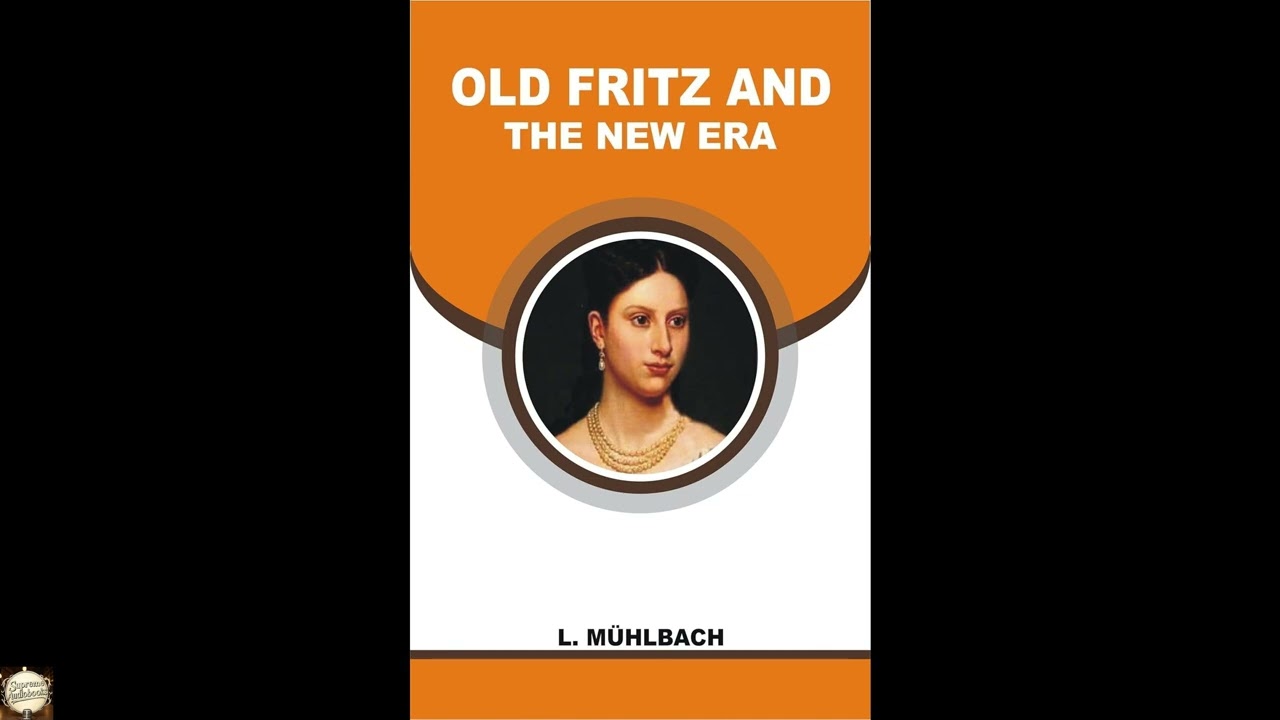
“Old Fritz and the New Era” invites listeners into a crucial hinge point of German history, a period poised between the celebrated legacy of a legendary monarch and the tumultuous dawn of a new age. This book is not merely a recounting of historical facts; it is a dramatic narrative, a sweeping historical romance that brings to life the personal struggles and political anxieties of a nation attempting to redefine itself. Why should a listener care today? Because it masterfully portrays the universal human challenge of living up to a towering past, adapting to irreversible change, and forging an identity in the shadow of greatness – themes that resonate deeply in any era of transition and re-evaluation. The story plunges us into late eighteenth-century Prussia, a kingdom still reverberating with the policies and personality of Frederick the Great, affectionately known as "Old Fritz." His reign was one of military brilliance, Enlightenment philosophy, and a profound, if sometimes austere, dedication to the state. With his death, a colossal void opens, and his nephew, Frederick William II, ascends to the throne. This new king faces an unenviable task: to govern a nation forged by his uncle’s iron will, yet increasingly susceptible to new currents of thought, from burgeoning Romanticism to the whispers of revolutionary ideals drifting across Europe. The setting is one of opulent courts and intellectual salons, but also of a populace grappling with shifting loyalties and expectations. Our central characters include the new king himself, a man of more sensual and mystic inclinations than his pragmatic predecessor, struggling with the immense expectations placed upon him. We meet his advisors, some clinging to the old Frederickian ways, others eager to push Prussia into a more modern, perhaps more perilous, future. Personal attachments and rivalries within the royal household add layers of intrigue, reflecting the broader political shifts. The central conflict arises from the fundamental differences between Frederick the Great's rational, almost Spartan, vision for Prussia and Frederick William II's more indulgent, less disciplined approach. He is a king who seeks to assert his own identity, yet constantly finds himself measured against the impossibly high standard set by Old Fritz. The narrative arc follows his attempts to navigate these choppy waters, to find his own path amidst political machinations, personal passions, and the ever-present specter of his uncle's legacy. L. Mühlbach, the pen name of Clara Mundt, was one of the most prolific and popular German authors of the nineteenth century. Born Clara Müller in 1814 in Neubrandenburg, she later married Theodor Mundt, a prominent literary critic and journalist, a union that certainly influenced her literary career. She became renowned for her historical novels, which often centered on European royalty and significant historical figures. Her extensive bibliography, comprising over one hundred volumes, found an immense readership in Germany and was widely translated into English, particularly in the United States, where her books were immensely popular throughout the latter half of the nineteenth century. Mühlbach's novels, sometimes labeled historical romances or chronicle novels, sought to breathe life into historical periods through vivid characterization and dramatic plotting. She possessed a remarkable ability to blend researched historical detail with engaging storytelling, often placing personal dramas at the heart of grand historical events. While literary critics of her time and after sometimes questioned the absolute accuracy of every historical detail, her enduring popularity cemented her place as a significant figure in the development of popular historical fiction. She showed how the genre could connect readers with the past through human stories rather than dry historical accounts, paving the way for countless historical novelists who followed. At its core, "Old Fritz and the New Era" examines the enduring themes of legacy and succession. The narrative vividly portrays the immense burden on Frederick William II as he struggles to govern in the shadow of his brilliant uncle. Consider the scenes where the new king agonizes over state documents, knowing his decisions will inevitably be compared to Frederick the Great's decisive actions, or the quiet moments where he contemplates the immense challenges of a kingdom accustomed to a different kind of rule. Another potent theme is the clash between tradition and innovation. The "Old Fritz" represents a firmly established, albeit demanding, set of principles, while the "New Era" introduces ideas of romanticism, spiritualism, and social change. We see this enacted in court debates, where veteran ministers loyal to the old ways argue against younger, more progressive voices advocating for new policies, often with personal stakes tied to their differing philosophies. The book also grapples with the complexities of power and personal morality. Frederick William II's reign is marked by personal relationships and spiritual leanings that sometimes diverge from the stoic, rational governance of his predecessor. The text subtly demonstrates how a ruler's private life—his affections, his convictions, even his weaknesses—can have profound public consequences, shaping not just his immediate circle but the destiny of a nation. Finally, the novel touches on the very nature of leadership, asking what qualities truly define a great ruler. Is it primarily military genius, intellectual rigor, or perhaps an ability to adapt and connect with the evolving spirit of the age? Mühlbach uses the contrasting styles of the two Fredericks to allow listeners to ponder these questions for themselves. The mid-nineteenth century, when Clara Mundt was writing, was a period of intense cultural and political transformation across Europe, particularly in the German states. The aftermath of the Napoleonic Wars had sparked a potent wave of German nationalism, and there was a widespread interest in defining a distinct German identity through its history, literature, and folklore. The genre of historical fiction, popularized by authors like Sir Walter Scott, perfectly suited this nationalistic mood, offering narratives that could both entertain and educate about a nation's past glories and trials. Mundt's novels, with their focus on German royalty and significant historical junctures, resonated deeply with this sentiment. Her works provided a sense of continuity and shared heritage during a time when Germany was still a collection of disparate states moving uncertainly toward unification. This work, in particular, would have appealed to readers contemplating the strength and vulnerabilities of their own historical foundations. Listening to “Old Fritz and the New Era” as an audiobook provides an immediate immersion into this fascinating historical period. A skilled narrator can bring to life the grand atmosphere of the Prussian court, distinguishing the voices of its various inhabitants – from the burdened king to his ambitious advisors and the courtiers who orbit them. The run length of several hours makes this a substantial but manageable experience, perfect for savoring over a few days or during commutes and long walks, allowing the unfolding drama to truly sink in. Listen for the narrator’s pacing, which should modulate between moments of political tension and intimate reflection, guiding you through the complexities of the era. The nuances in voice and dialogue are crucial; they allow the listener to discern character and motivation, making the historical figures feel immediate and human. The overall atmosphere, subtly conveyed through narration, should transport you to a world of powdered wigs, philosophical debates, and the ever-present weight of a legendary past.
Enjoyed Old Fritz and the New Era? A few ways to support us
Audible & Amazon links are affiliate; we may earn a small commission at no extra cost.
About this production
Human narration by a volunteer reader from LibriVox.org, the public-domain audiobook project. LibriVox volunteers record literary works whose copyright has expired in the United States, releasing the resulting recordings into the public domain.
Old Fritz and the New Era by L. Mühlbach. The underlying text is in the U.S. public domain. We do not republish any modern copyrighted edition, translation, or commentary.
The 4K cinematic visuals accompanying this audiobook are generated by an AI image model from prompts derived from the source text. No copyrighted photos, paintings, or stock footage are used. AI generation is disclosed on every video on our YouTube channel as required by YouTube's altered/synthetic content policy.
English subtitles are transcribed from the LibriVox recording with OpenAI Whisper. Translations into the 11 other supported languages are produced by Meta's NLLB-200 neural translation model. No human translator's copyrighted translation is used.
Questions about sourcing or rights? See our DMCA & Sourcing policy or contact us.
Enjoyed this audiobook?
If you'd like to own a copy of Old Fritz and the New Era or hear a professionally produced edition, the links below help support free audiobook production at no extra cost to you.
As an Amazon Associate we earn from qualifying purchases. Audible / print links are affiliate.