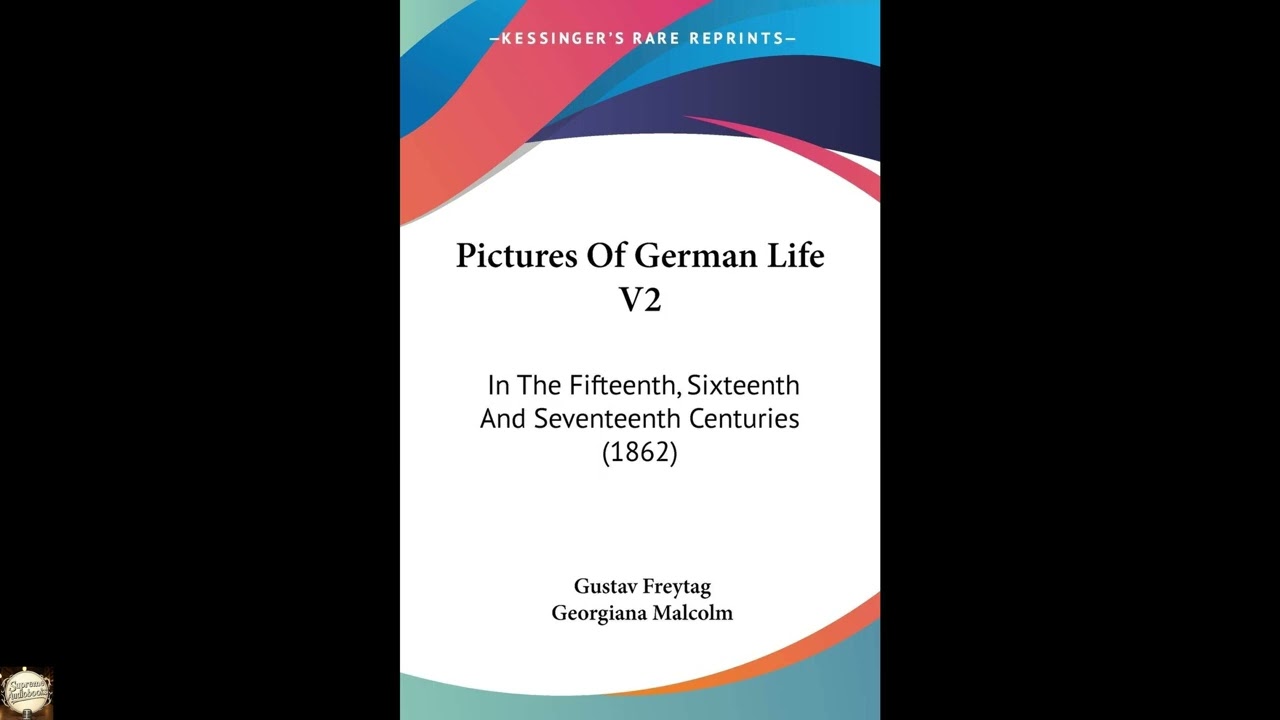
Pictures Of German Life V2: In The Fifteenth, Sixteenth And Seventeenth Centuries
Step back into a pivotal era that shaped modern Europe, a time of profound transformation, religious upheaval, and emergent national identities. 'Pictures Of German Life V2: In The Fifteenth, Sixteenth And Seventeenth Centuries' offers an extraordinary window into the very soul of a nation during three centuries of relentless change. This is not merely a historical account; it is a meticulously crafted series of insights, sketches, and observations that bring to life the daily realities, grand ambitions, and enduring struggles of people living through the Renaissance, the Reformation, and the devastating Thirty Years' War. We care today because within these pages lies the genesis of many contemporary societal structures, cultural values, and political divisions, revealing how human resilience and folly played out on a grand historical stage. The narrative canvas of 'Pictures Of German Life' is as broad and ambitious as the centuries it encompasses. Beginning in the twilight of the medieval age, the collection opens a vista onto the burgeoning Renaissance, where classical learning challenged entrenched dogma. Listeners find themselves transported to bustling market towns, witnessing rigid social hierarchies, with princely states vying for influence, while common folk navigated existence bound by ancient customs. These initial chapters illuminate a society on the cusp, where the printing press began disseminating knowledge, subtly undermining traditional authorities and setting the stage for monumental shifts. As the narrative progresses into the sixteenth century, the shadow of the Reformation lengthens. We witness fervent debates and religious schisms that tore through communities, pitting neighbor against neighbor, prince against emperor. The work renders portraits of those who embraced new theological doctrines and those who steadfastly defended the old order. From reformers' cloistered studies to public squares where sermons ignited passions, the book captures intellectual and emotional intensity, showing ordinary families grappling with questions of faith and the very fabric of their moral universe. The final segments bring us into the seventeenth century, a period perhaps most defined by the cataclysmic Thirty Years' War. Here, the focus shifts to the brutal realities of sustained conflict—movements of armies, devastation of the countryside, famine, and disease. The book depicts immense suffering, but also highlights unwavering human spirit, attempts to rebuild, and the nascent stirrings of a new political landscape. Through individual anecdotes and broader historical trends, 'Pictures Of German Life' paints a vivid mural of a people enduring, adapting, and forging a new path amidst relentless change. The authorship of 'Pictures Of German Life V2' remains, in the tradition of some historical compilations, attributed simply to 'Unknown'. This anonymity places the focus squarely upon its meticulously compiled content and the periods it illuminates. Such works often emerged from a scholarly collective or were commissioned projects, where emphasis was on historical accuracy and comprehensive coverage rather than individual literary celebrity. Compilers would draw upon a vast array of primary sources—chronicles, letters, legal documents—to construct a rich, multi-perspectival narrative. The lack of a named author suggests a dedication to presenting a broad, perhaps objective, view of German history, allowing the 'pictures' themselves to speak with minimal authorial interjection. This approach aligns with a particular strand of historical writing popular in the late nineteenth or early twentieth century, a time when national histories were rigorously defined and disseminated, reflecting a commitment to cultural preservation and education. At its heart, 'Pictures Of German Life' grapples with several profound themes that resonate far beyond the specific centuries it details. One prominent theme is the transformative power of belief and dissent. The period covered, particularly the sixteenth century, is dominated by the Protestant Reformation. The book illustrates how deeply religious conviction shaped not only individual lives but also political alliances and social divisions. We see the fervor of reformers challenging the established Church, the persecution faced by those who deviated, and the devastating consequences of ideological clashes. Accounts of theological disputes or public sermons would convey this theme, showing how ideas can entirely remake a society. Another crucial theme is the fragility and resilience of human community in the face of conflict. The seventeenth century, overshadowed by the Thirty Years' War, starkly reveals the disintegration of social order and immense suffering. Yet, amidst destruction, the book also highlights acts of courage, community rebuilding, and the enduring human spirit. It depicts how towns were ravaged and rebuilt, and how cultural practices persisted. Furthermore, the work examines the evolution of identity, from regional loyalties to nascent ideas of a broader German consciousness. Its literary significance lies in its ability to synthesize disparate historical details into a coherent, compelling narrative, offering a human-centered perspective on monumental historical forces. While 'Pictures Of German Life' recounts events from the fifteenth to the seventeenth centuries, its likely creation and publication date would place it in the late nineteenth or early twentieth century. This was a period marked by burgeoning nationalism across Europe, particularly in Germany, which had only recently unified under Bismarck. There was a widespread cultural and intellectual impetus to understand and codify national histories, to trace the origins of modern states, and to instill a sense of collective identity. Scholarly endeavors often aimed to present sweeping historical narratives that not only educated but also inspired a sense of shared heritage. In the literary world, there was also a growing appetite for historical non-fiction that combined meticulous research with engaging prose. 'Pictures Of German Life V2' would have emerged from this intellectual environment, catering to a public eager to understand the historical roots of their contemporary society. Bringing this sweeping historical account to life as an audiobook offers a uniquely immersive experience. The narration is not merely a reading; it is a gateway to the past, allowing the carefully researched descriptions and historical insights to unfold with compelling clarity. Over its several hours of listening time, the pacing is designed to allow listeners to absorb the depth of information without feeling rushed, whether during a morning commute or a quiet afternoon. A skilled narrator's voice can lend distinct character to the various historical situations described, enhancing the atmosphere of each 'picture.' The auditory experience helps bridge the centuries, transforming historical fact into a palpable sense of human experience, making the grand narratives of German life feel immediate and deeply personal. Listeners can savor the language and truly connect with the struggles and triumphs that forged a nation.
Enjoyed Pictures Of German Life V2: In The Fifteenth, Sixteenth And Seventeenth Centuries? A few ways to support us
Audible & Amazon links are affiliate; we may earn a small commission at no extra cost.
About this production
Human narration by a volunteer reader from LibriVox.org, the public-domain audiobook project. LibriVox volunteers record literary works whose copyright has expired in the United States, releasing the resulting recordings into the public domain.
Pictures Of German Life V2: In The Fifteenth, Sixteenth And Seventeenth Centuries by Gustav Freytag. The underlying text is in the U.S. public domain. We do not republish any modern copyrighted edition, translation, or commentary.
The 4K cinematic visuals accompanying this audiobook are generated by an AI image model from prompts derived from the source text. No copyrighted photos, paintings, or stock footage are used. AI generation is disclosed on every video on our YouTube channel as required by YouTube's altered/synthetic content policy.
English subtitles are transcribed from the LibriVox recording with OpenAI Whisper. Translations into the 11 other supported languages are produced by Meta's NLLB-200 neural translation model. No human translator's copyrighted translation is used.
Questions about sourcing or rights? See our DMCA & Sourcing policy or contact us.
Enjoyed this audiobook?
If you'd like to own a copy of Pictures Of German Life V2: In The Fifteenth, Sixteenth And Seventeenth Centuries or hear a professionally produced edition, the links below help support free audiobook production at no extra cost to you.
As an Amazon Associate we earn from qualifying purchases. Audible / print links are affiliate.