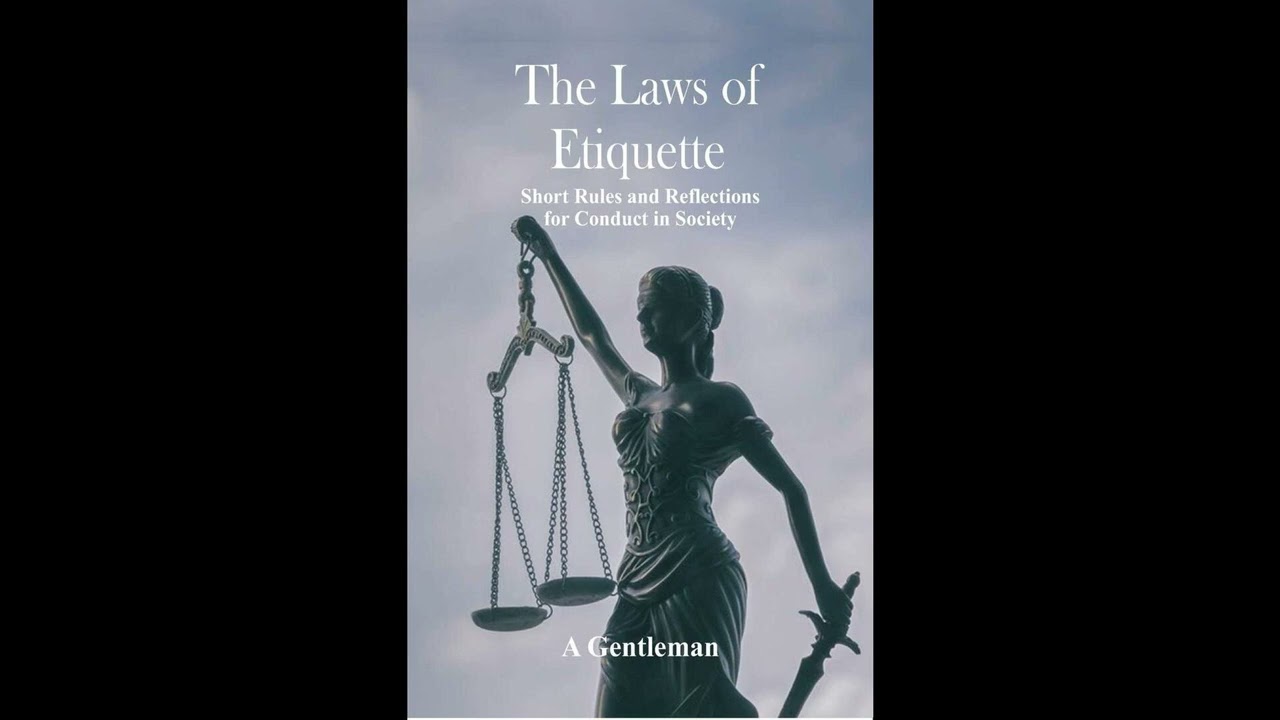
The Laws of Etiquette: Short Rules and Reflections for Conduct in Society
Social rules, though ever-shifting, remain a fundamental aspect of human interaction. We yearn to understand the unspoken codes, to navigate gatherings with grace, and to leave a favorable impression. The Laws of Etiquette: Short Rules and Reflections for Conduct in Society offers a fascinating lens into this timeless human endeavor, specifically tailored for a bygone era, yet holding surprising resonance for contemporary listeners. Far from a dusty relic, this guide presents not just a historical curiosity, but a profound meditation on the very foundations of polite society, urging us to consider what it truly means to conduct ourselves with consideration and respect in any age. It’s an invitation to examine the enduring principles behind social harmony, and perhaps, to find reflections of our own anxieties and aspirations within its pages. Imagine an aspiring individual stepping into the bewildering array of social circles in a bustling, rapidly changing society. This book serves as their discreet, yet firm, mentor. It begins by establishing the bedrock of personal presentation—the neatness of one’s dress, the composure of one’s bearing, the sincerity of a handshake. From this foundation, the narrative moves into the delicate art of introductions, explaining precisely how one person is presented to another, and the careful phrasing required to ensure ease rather than awkwardness. The "story" then unfolds through a series of increasingly complex social scenes, guiding the reader through the intricacies of visiting cards, formal calls, and the proper duration of each. The central conflict, if one can call it that, is the individual’s earnest desire to achieve social fluency and avoid the myriad pitfalls of public conduct. The arc progresses from private self-cultivation to public performance. We are led through the labyrinth of dinner table manners: the correct use of cutlery, the etiquette of offering toasts, and the appropriate topics of conversation—and, crucially, those to avoid. Further chapters address the decorum required at balls, parties, and evening receptions, outlining dance floor protocols, appropriate flirtation (or lack thereof), and the graceful exit. The ultimate aim is not mere conformity, but the cultivation of an effortless elegance that allows one to move through any gathering with confidence and respect, fostering an atmosphere of mutual appreciation and good will. The author, known only as “A Gentl-,” deliberately chose anonymity, a common practice for works of this nature in its time. This decision allowed the advice to stand on its own authority, presenting a universal code without attaching it to a specific, fallible individual. One can infer from the meticulous detail and the cultivated tone that the author was indeed a person of considerable social experience and refined taste—a true gentleman, perhaps, or a well-placed lady observing the social landscape with an astute eye. Such guides were often compiled by those deeply embedded in the social fabric, keen observers of both the triumphs and faux pas of their peers, intending to elevate the general standard of conduct. This practice of anonymous authorship conferred a sense of collective wisdom, as if the rules were not invented by one person, but distilled from the collective experience of polite society itself. This work, therefore, stands not as the singular voice of a specific author, but as a codification of an entire era’s understanding of grace and decorum, a valuable document reflecting the aspirations of an evolving social order. At its core, this guide enacts several enduring themes. One prominent theme is that of social aspiration and self-improvement. For example, the detailed instructions on table manners, from the silent passing of dishes to the delicate handling of wine glasses, illustrate the belief that refinement could be learned, practiced, and ultimately mastered, allowing individuals to ascend or maintain their position within society. Another significant theme is the performative nature of identity. The book repeatedly emphasizes not just what one should do, but how one should appear to do it—with an air of ease and naturalness. The chapter on conversation, advising against gossip or overly technical discussions and instead advocating for pleasant, general topics, showcases the idea that one’s social persona is a carefully constructed presentation, designed to contribute positively to the collective atmosphere. A third theme is the subtle yet rigid delineation of social class and hierarchy. While not explicitly stated as rules for different classes, the advice inherently outlines a particular standard of conduct associated with the upper and aspiring middle classes. The rules for acknowledging a social superior versus an equal, or the protocol for calling on a new acquaintance, subtly reinforce the structured nature of society. The book thus acts as a practical handbook for navigating and affirming one’s place within this intricate social order. Finally, there's the underlying theme of mutual respect and consideration. Every rule, from returning a borrowed item promptly to refraining from interrupting others, is ultimately geared towards fostering an environment where individuals treat each other with dignity and courtesy, ensuring smooth and pleasant interactions for all involved. The period in which a book like The Laws of Etiquette would have emerged was marked by significant societal shifts. The rise of an increasingly prosperous middle class, fueled by industrialization and expanding commerce, created a new demographic eager to understand and assimilate the customs of established society. As people moved from rural areas to burgeoning cities, or experienced upward mobility, they encountered new social situations and longed for a clear guide to navigate them. Old aristocratic hierarchies were gradually giving way to more fluid social structures, but with this fluidity came uncertainty. Such etiquette manuals provided a much-needed compass, offering a standardized code of conduct that helped individuals feel secure and confident in diverse social settings, bridging gaps between inherited traditions and emergent social realities. It was a time when the visible markers of cultivation—speech, dress, and comportment—were crucial indicators of one’s character and standing, making books like this an invaluable tool for personal and social advancement. Listening to The Laws of Etiquette as an audiobook transforms a historical text into an intimate, guiding experience. The narrator’s voice becomes that of the kindly, knowledgeable mentor, delivering each rule and reflection with a measured pace that allows the advice to settle and resonate. One might notice the crisp enunciation, the gentle inflections that emphasize a particularly vital point, or the subtle shift in tone when moving from advice on public appearances to more personal interactions. The lengthy duration of the audiobook allows for an immersive encounter with the social landscape it describes, perfect for thoughtful listening during a commute, while tending to household tasks, or simply as an evening companion. Pay attention to how the phrasing often combines practical instruction with gentle moral suasion, painting a picture of an entire worldview centered on grace, propriety, and the subtle art of harmonious human connection.
Enjoyed The Laws of Etiquette: Short Rules and Reflections for Conduct in Society? A few ways to support us
Audible & Amazon links are affiliate; we may earn a small commission at no extra cost.
About this production
Human narration by a volunteer reader from LibriVox.org, the public-domain audiobook project. LibriVox volunteers record literary works whose copyright has expired in the United States, releasing the resulting recordings into the public domain.
The Laws of Etiquette: Short Rules and Reflections for Conduct in Society by A Gentl. The underlying text is in the U.S. public domain. We do not republish any modern copyrighted edition, translation, or commentary.
The 4K cinematic visuals accompanying this audiobook are generated by an AI image model from prompts derived from the source text. No copyrighted photos, paintings, or stock footage are used. AI generation is disclosed on every video on our YouTube channel as required by YouTube's altered/synthetic content policy.
English subtitles are transcribed from the LibriVox recording with OpenAI Whisper. Translations into the 11 other supported languages are produced by Meta's NLLB-200 neural translation model. No human translator's copyrighted translation is used.
Questions about sourcing or rights? See our DMCA & Sourcing policy or contact us.
Enjoyed this audiobook?
If you'd like to own a copy of The Laws of Etiquette: Short Rules and Reflections for Conduct in Society or hear a professionally produced edition, the links below help support free audiobook production at no extra cost to you.
As an Amazon Associate we earn from qualifying purchases. Audible / print links are affiliate.