An Iceland Fisherman
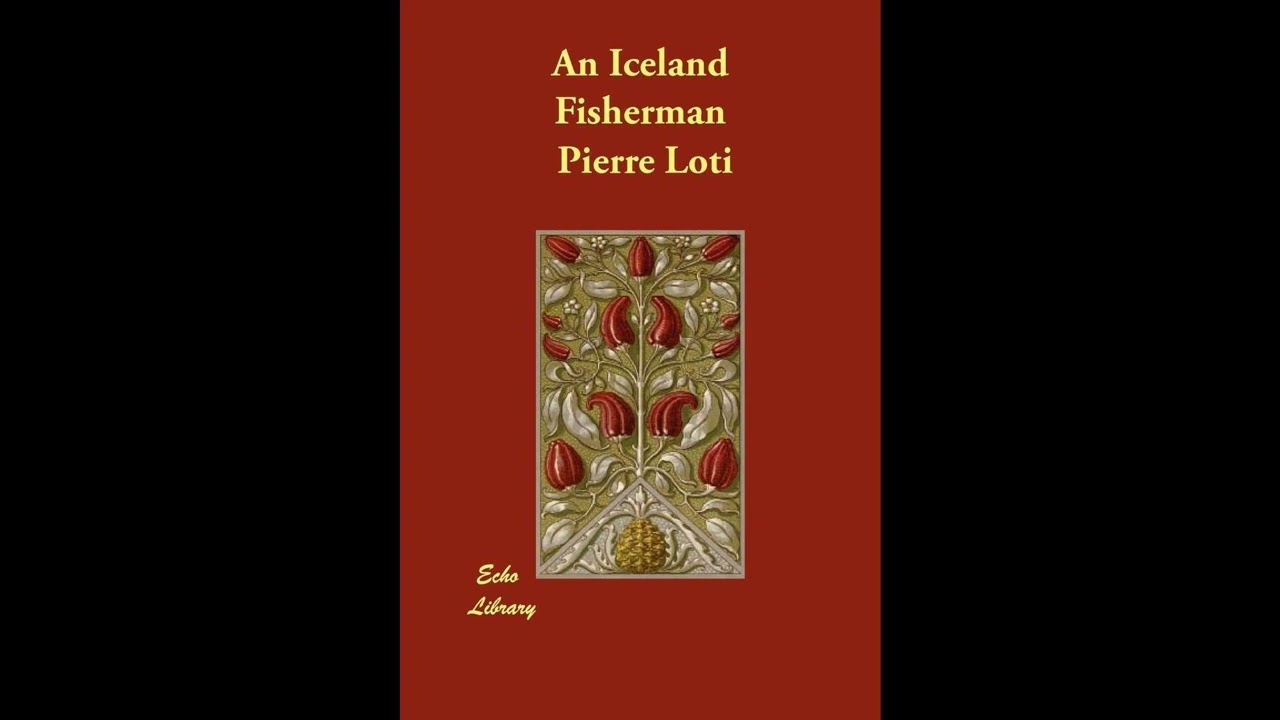
Pierre Loti’s An Iceland Fisherman pulls listeners into a world where human passion clashes with the raw, indifferent power of the sea. It is a story steeped in the salt spray and the quiet heroism of lives lived on the edge, a poignant elegy to a way of life that demands everything and often gives little in return. This classic from the late nineteenth century remains deeply moving today because it speaks to universal themes of love, loss, and the unyielding forces that shape our destinies, rendered with a realism and emotional depth that transcend its specific setting and era. It presents a stark, beautiful testament to enduring love and the quiet dignity found in struggle, resonating with anyone who has faced overwhelming odds or cherished a fragile hope. The novel transports us to the rugged, windswept coast of Brittany, France, and from there, to the perilous fishing grounds off the remote shores of Iceland. Here, the Breton fishermen, known as "Icelanders," brave formidable gales and icy waters for months on end to secure their livelihoods. At the heart of the narrative stands Yann Gaos, a young fisherman of immense strength and quiet resolve, whose life is inextricably bound to the sea. He is a figure of stoic devotion to his dangerous calling, hardened by the elements yet possessing a deep capacity for feeling. His story becomes entwined with that of Gaud Mevel, a gentle young woman from a neighboring fishing village, who works hard and dreams of a life with Yann. Their budding affection unfolds against a backdrop of constant anxiety and long separations, as Yann and his fellow crewmen, including the youthful, spirited Sylvestre, repeatedly depart for the treacherous northern seas aboard their fishing schooners. The central tension emerges from the powerful, almost spiritual pull of the ocean on Yann, which frequently overshadows his longing for a settled life with Gaud, creating a tender, often agonizing push and pull between duty and desire. The narrative follows the relentless rhythm of the fishing seasons, each departure fraught with unspoken fears, each return celebrated with desperate joy, illustrating the profound sacrifices demanded by the sea and the community's reliance on its cruel bounty. Pierre Loti, born Louis Marie-Julien Viaud in 1850, was a singular voice in French literature, one whose life was as dramatic and itinerant as the stories he created. A career naval officer, Loti spent much of his existence sailing the world, experiencing distant cultures firsthand. This extensive travel profoundly influenced his writing, infusing his novels with vivid, often melancholic descriptions of exotic locales and the lives of the people inhabiting them. He served in various capacities, from the Franco-Prussian War to colonial campaigns, allowing him a unique perspective on human nature under duress and across varied societal structures. Beyond An Iceland Fisherman, which became an immediate success upon its publication in 1886, Loti penned numerous other celebrated works, including Madame Chrysanthème, a novella that offered a French perspective on Japan and famously influenced Puccini’s Madama Butterfly, and Ramuntcho, set in the Basque country. Elected to the Académie française in 1891, Loti’s reputation grew as a master of atmospheric prose and psychological portraiture. His works often blurred the lines between autobiography and fiction, using his own experiences as a lens through which to examine themes of nostalgia, the passage of time, and the allure of the unknown. He passed away in 1923, leaving behind a body of work that continues to attract readers with its distinct blend of realism, romanticism, and a deep appreciation for the fragility of human existence. At its core, An Iceland Fisherman enacts several profound themes that resonate with lasting power. One primary theme is the relentless power of nature over human life. The North Atlantic is not merely a setting but an active, formidable character, dictating the fates of the fishermen. We witness this vividly in the recurring scenes of fierce storms, the bone-chilling cold, and the constant threat of the sea swallowing entire ships. The men's lives are a ceaseless negotiation with these elemental forces, highlighting humanity's smallness against the vastness of the natural world. Another powerful theme is love and sacrifice. Gaud's unwavering affection for Yann, and her quiet endurance during his long absences, exemplify this. Her patience is a poignant counterpoint to the ocean’s demands, a domestic anchor against the wildness of Yann's life. Their courtship is a study in delayed gratification, fraught with the constant shadow of impending danger, showing how deeply people will commit and wait for true connection. The novel also poignantly portrays the theme of memory and loss. The fishing community is marked by a pervasive sense of the past and the ever-present likelihood of future tragedies. The older women endlessly recount tales of loved ones lost at sea, and every departure carries the weight of these shared memories. This collective grief and the individual longing for those gone lend a melancholic undercurrent to the entire narrative, suggesting that love, though powerful, is often intertwined with sorrow and separation. Furthermore, the book beautifully depicts the strength of community and tradition. The Breton fishermen share an unbreakable bond forged by common peril and shared hardship. Their rituals, their superstitions, and their mutual support—whether in celebrating a successful catch or mourning a lost one—create a rich portrayal of a close-knit culture whose identity is inextricably linked to the sea and its ancient, demanding ways. The camaraderie among the sailors and the collective vigilance of the women at home form the bedrock of their lives, providing solace in the face of overwhelming uncertainties. When An Iceland Fisherman first appeared in 1886, it arrived during a period of significant social and literary transformation in France. The late nineteenth century saw the rise of literary movements such as realism and naturalism, which sought to depict life with unvarnished truth, focusing on the lives of ordinary people, often in working-class or rural settings. Loti’s novel fit perfectly into this trend by illuminating the harsh, unglamorous existence of the Breton fishermen—a segment of society rarely given such intimate and sympathetic attention in literature before. This was a time when industrialization was altering the fabric of French society, yet pockets of traditional life, like that of the Icelandic fishermen, persisted, representing a powerful connection to ancient rhythms and customs. The book offered readers a stark contrast to the burgeoning urban centers, presenting a romanticized yet brutally honest view of human endurance against the backdrop of nature's indifference. It also emerged from a broader European fascination with "exotic" and "primitive" cultures, though Loti’s treatment here was less about the geographically distant and more about a culturally distinct, traditional way of life within France itself. His personal experiences as a naval officer also lent an undeniable authenticity to his descriptions of maritime life, setting his work apart from purely observational accounts. Listening to An Iceland Fisherman as an audiobook transforms the reading experience into something truly immersive and deeply felt. The “several hours” runtime allows for a gradual unfolding of the narrative, perfectly mirroring the slow, cyclical nature of the fishermen’s lives and the seasons at sea. A skilled narrator can bring Loti's poetic prose to life, allowing the listener to truly hear the rhythmic crash of waves, the creak of a ship's timbers, and the silent, anxious waiting of the women ashore. The pacing of the narration can enhance the story's emotional weight, from the quiet intimacy of conversations between Yann and Gaud to the dramatic tension of a storm at sea. Listen for the subtle shifts in voice that differentiate the stoic fishermen from the yearning women, and the way atmosphere is built through the spoken word, painting vivid mental pictures of windswept coasts and vast, forbidding oceans. The dialogue, often understated, carries profound emotional resonance, allowing the listener to perceive the unspoken feelings and deep bonds that define these characters. This auditory experience makes the raw beauty and the inherent tragedy of Loti's vision even more compelling and unforgettable.
Enjoyed An Iceland Fisherman? A few ways to support us
Audible & Amazon links are affiliate; we may earn a small commission at no extra cost.
About this production
Human narration by a volunteer reader from LibriVox.org, the public-domain audiobook project. LibriVox volunteers record literary works whose copyright has expired in the United States, releasing the resulting recordings into the public domain.
An Iceland Fisherman by Pierre Loti. The underlying text is in the U.S. public domain. We do not republish any modern copyrighted edition, translation, or commentary.
The 4K cinematic visuals accompanying this audiobook are generated by an AI image model from prompts derived from the source text. No copyrighted photos, paintings, or stock footage are used. AI generation is disclosed on every video on our YouTube channel as required by YouTube's altered/synthetic content policy.
English subtitles are transcribed from the LibriVox recording with OpenAI Whisper. Translations into the 11 other supported languages are produced by Meta's NLLB-200 neural translation model. No human translator's copyrighted translation is used.
Questions about sourcing or rights? See our DMCA & Sourcing policy or contact us.
Enjoyed this audiobook?
If you'd like to own a copy of An Iceland Fisherman or hear a professionally produced edition, the links below help support free audiobook production at no extra cost to you.
As an Amazon Associate we earn from qualifying purchases. Audible / print links are affiliate.