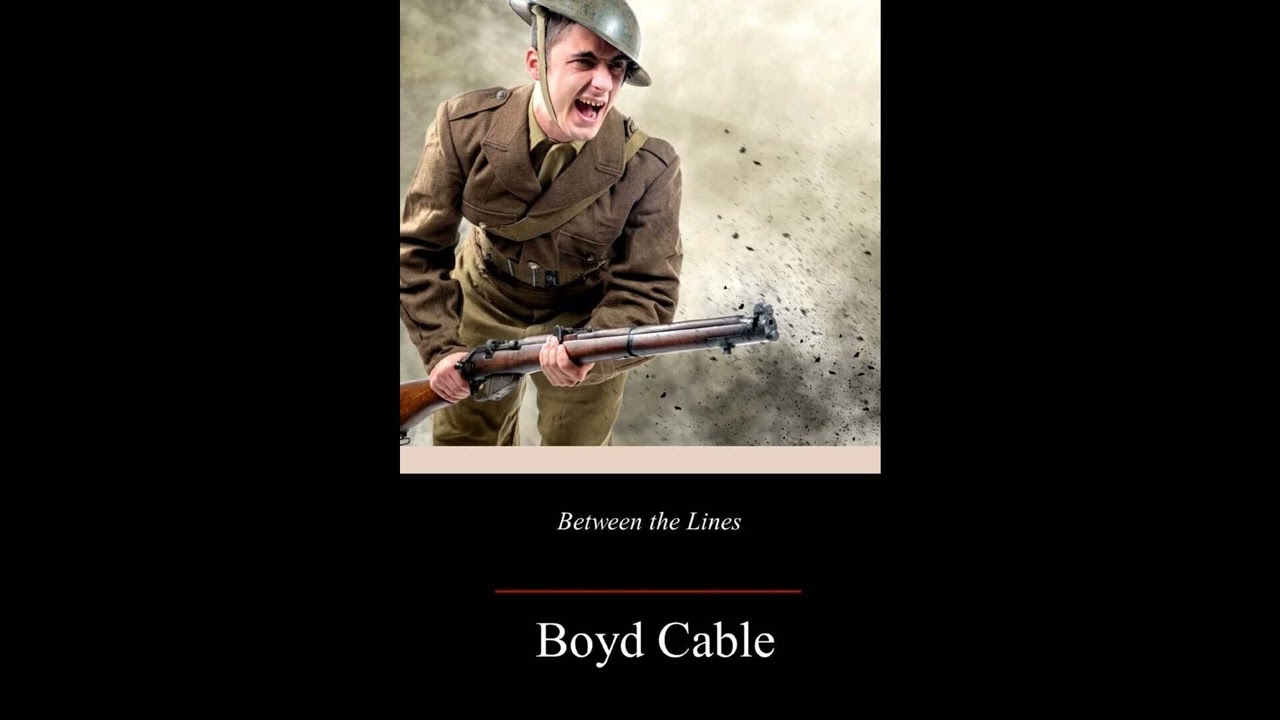
Between the Lines
Between the Lines by Boyd Cable offers a singular, immediate window into the First World War. Published while the guns still roared, this collection takes us directly into the nascent world of aerial combat, a realm then barely imagined by the general public. It's more than just historical fiction; it's a series of dispatches from the front lines of a brand-new kind of warfare, capturing the raw courage, the crushing fear, and the surprising camaraderie that defined military aviation's early days. For anyone seeking to understand the human experience of war—especially the harrowing challenges faced by air fighting pioneers—this book remains a compelling listen, offering perspectives as vital today as they were a century ago. Boyd Cable’s Between the Lines is a series of vivid vignettes, each a self-contained story contributing to a larger picture of life—and death—among the Royal Flying Corps during the Great War. Set primarily over the Western Front, the book plunges listeners into the cockpits of early biplanes, where reconnaissance missions, precarious dogfights, and daring bombing raids unfold with gripping intensity. We meet a rotating cast of young pilots, observers, and ground crew, each grappling with immense pressures: from fresh-faced subalterns facing their first aerial duels to grizzled veterans whose nerves are fraying. The central conflict is multi-layered: man against man in the vast, unforgiving sky, but also man against machine, as primitive aircraft push the limits of engineering and human endurance. Pilots contend with unreliable engines, treacherous weather, and the sheer physical demands of early flight. Cable skillfully conveys the rapid evolution of aerial tactics and technology, depicting rudimentary strategies, improvisation, and sheer audacity required to operate these flying contraptions under fire. While specific missions vary, the overarching arc illustrates the gradual professionalization of military aviation and its profound impact on those in the air. The book ultimately leaves the listener with a deep appreciation for the individuals who pioneered aerial combat. The man behind the pen name Boyd Cable was Ernest Andrew Ewart, born in London in 1878. Ewart's life experiences profoundly shaped his literary output. Before the First World War, he gained a reputation as a journalist and adventurer, traveling extensively and working in capacities from sheep farming in Australia to mining in the Yukon. This breadth of experience provided him with a keen eye for detail and a grounding in practical realities that would later inform his writing about war. When the Great War broke out, Ewart, despite being in his late thirties, volunteered for service, participating in the brutal Gallipoli Campaign. He later transferred to the Royal Flying Corps, serving as an observer and experiencing firsthand the dangers and triumphs of aerial combat. This direct involvement lent unparalleled authenticity to his fiction, making him one of the most respected war correspondents and authors of his generation. Between the Lines, published in 1915, was one of his earliest and most impactful contributions to war literature, followed by other acclaimed collections. Cable's writing stood out for its meticulous accuracy in depicting military procedures and grim combat minutiae. He passed away in 1943, leaving behind a body of work offering an invaluable historical record and a powerful testament to WWI experiences. Between the Lines enacts several profound themes. One central theme is the brutal realism of modern warfare, starkly contrasting with romanticized notions prevalent at the war’s outset. Cable's stories strip away illusions of glory, focusing instead on constant fear, immense physical strain, and the destructive power of artillery and machine guns. For example, a scene might depict a pilot struggling with a jammed gun during a dogfight, highlighting not heroics, but the randomness and mechanical failures that dictated survival. This gritty portrayal helped shape public perception of the war as a grim, mechanized struggle. Another significant theme is the powerful bond of camaraderie forged under extreme duress. Within the close-knit squadrons, pilots and observers depended on each other absolutely, sharing moments of terror and exhilaration. Cable often illustrates this through the unspoken understanding between airmen, or quiet acts of solidarity and sacrifice among ground crews. A story might show an older observer guiding a nervous young pilot through heavy anti-aircraft fire, their mutual trust becoming the bedrock of their mission. This emphasis on shared experience and loyalty provides a human counterpoint to the relentless machinery of war and underscores the psychological support vital for survival. When Between the Lines was published in 1915, the First World War was still in its early stages. Initial enthusiasm for a swift victory had begun to wane, replaced by a growing understanding of the conflict's unprecedented scale and horrific cost. It was a period of immense technological change, particularly in military aviation. Airplanes, previously seen as novelties, were rapidly being developed for reconnaissance, artillery spotting, and combat. Cable's collection emerged precisely to bridge the gap between public perception and brutal reality, offering civilians an authentic glimpse into the skies above the Western Front. His stories revealed complex strategies, primitive aircraft, and the incredible bravery demanded of those who flew them, providing context and credibility. This work represented an early, significant contribution to war literature, setting a standard for accuracy and immediacy. Listening to Between the Lines as an audiobook offers a particularly immersive and powerful experience. The very nature of these stories—intense, often brief, and designed to convey immediate sensory details—lends itself perfectly to audio. A skilled narrator brings the roar of early aircraft engines, the crackle of machine-gun fire, and the tense, clipped dialogue of pilots and observers vividly to life. The several hours of content allow for sustained immersion into the high-stakes world of aerial combat, letting the listener become fully absorbed in the moment-to-moment drama. The pacing, carefully controlled by the narrator, can heighten the suspense during a perilous mission or underscore the quiet, reflective moments between flights. It’s an opportunity to hear these pioneering accounts not just as historical documents, but as lived experiences, allowing the human element of courage and fear to truly resonate.
Enjoyed Between the Lines? A few ways to support us
Audible & Amazon links are affiliate; we may earn a small commission at no extra cost.
About this production
Human narration by a volunteer reader from LibriVox.org, the public-domain audiobook project. LibriVox volunteers record literary works whose copyright has expired in the United States, releasing the resulting recordings into the public domain.
Between the Lines by Boyd Cable. The underlying text is in the U.S. public domain. We do not republish any modern copyrighted edition, translation, or commentary.
The 4K cinematic visuals accompanying this audiobook are generated by an AI image model from prompts derived from the source text. No copyrighted photos, paintings, or stock footage are used. AI generation is disclosed on every video on our YouTube channel as required by YouTube's altered/synthetic content policy.
English subtitles are transcribed from the LibriVox recording with OpenAI Whisper. Translations into the 11 other supported languages are produced by Meta's NLLB-200 neural translation model. No human translator's copyrighted translation is used.
Questions about sourcing or rights? See our DMCA & Sourcing policy or contact us.
Enjoyed this audiobook?
If you'd like to own a copy of Between the Lines or hear a professionally produced edition, the links below help support free audiobook production at no extra cost to you.
As an Amazon Associate we earn from qualifying purchases. Audible / print links are affiliate.